How to Grow Summer Savory
Summer savory (Satureja hortensis) is a fast-growing, aromatic annual herb that deserves a spot in every organic herb garden. Known for its peppery, slightly spicy flavor, summer savory is a classic companion to beans, vegetables, and savory dishes. Beyond the kitchen, this herb is also valued for its pest-repelling qualities and ease of care.
Whether you’re a beginner gardener or a seasoned organic grower, this guide will walk you through how to grow summer savory organically—from seed to harvest.
What Is Summer Savory?
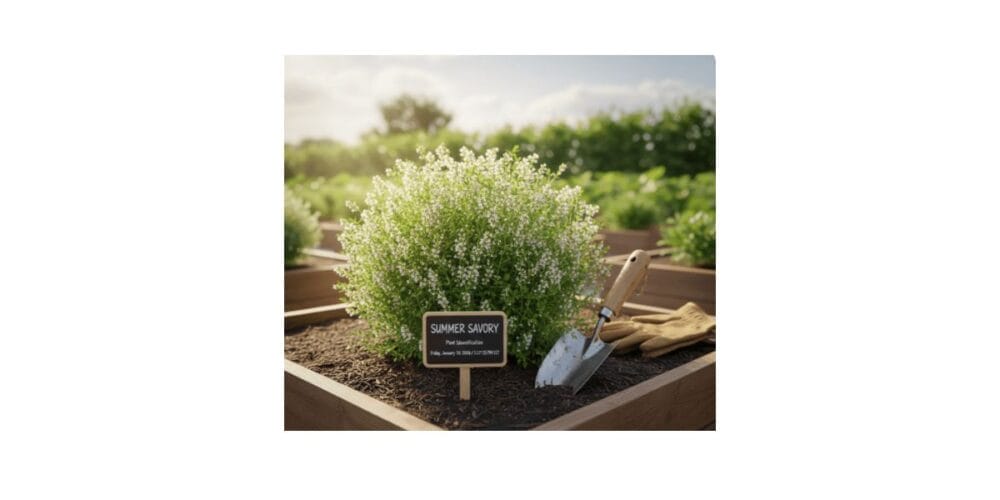
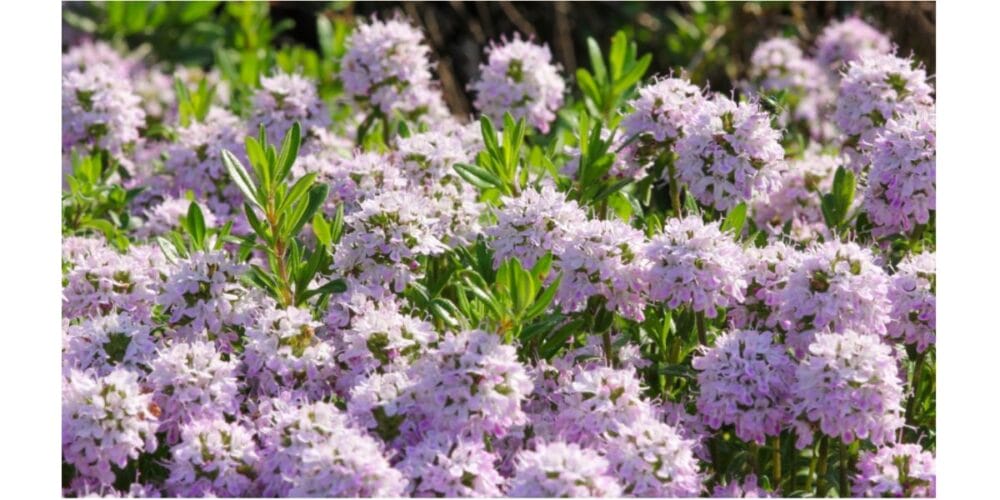
Summer savory is a tender annual herb native to the Mediterranean region. Unlike its woody cousin winter savory, summer savory has softer stems and a milder, sweeter flavor. It typically grows 12–18 inches tall and produces small white or pale pink flowers that attract beneficial insects.
Why grow summer savory?
- Enhances the flavor of beans, lentils, and vegetables
- Easy to grow from seed
- Naturally deters pests like bean beetles
- Attracts pollinators to your garden
Choosing the Right Location
Summer savory thrives in conditions similar to many Mediterranean herbs.
Ideal growing conditions:
- Sunlight: Full sun (6–8 hours daily)
- Soil: Well-draining, light, loamy soil
- pH: Slightly acidic to neutral (6.0–7.5)
Avoid heavy clay or waterlogged soil, as soggy roots can quickly lead to plant decline. Raised beds or containers work beautifully for organic herb gardens with poor native soil.
Also Read: How to Grow Winter Savory in an Organic Herb Garden
How to Grow Summer Savory from Seed
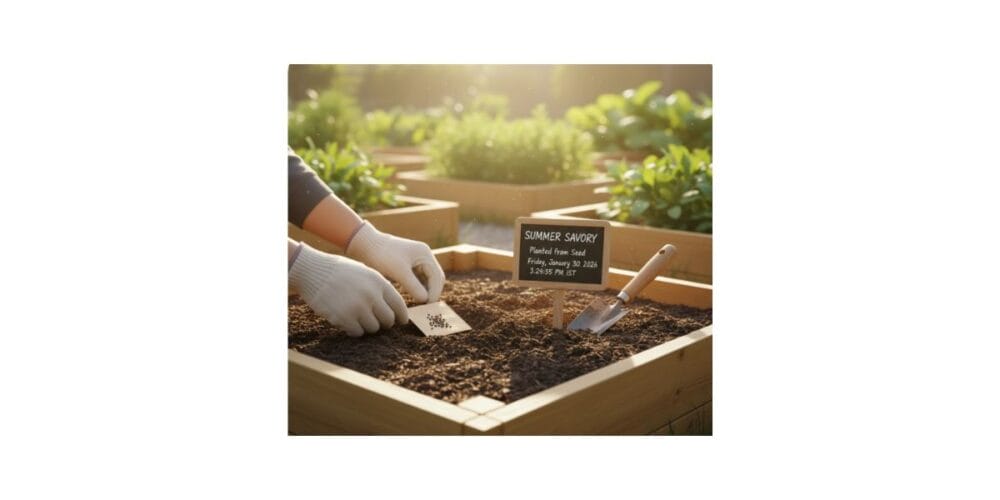
Summer savory is best grown directly from seed, as it does not transplant particularly well.
When to Sow Seeds
- Sow seeds after the last frost in spring
- Soil temperature should be at least 15°C (60°F)
How to Plant
- Prepare the soil by loosening it and adding compost.
- Scatter seeds lightly on the soil surface.
- Cover seeds with a very thin layer of soil (they need light to germinate).
- Water gently to avoid washing seeds away.
Seeds usually germinate in 7–14 days.
Spacing
- Thin seedlings to 8–10 inches apart once they’re a few inches tall.
Organic Soil Preparation and Feeding
Summer savory is not a heavy feeder, making it ideal for low-maintenance organic gardens.
Organic soil tips:
- Mix in well-rotted compost before planting
- Avoid high-nitrogen fertilizers, which cause leafy growth with weaker flavor
- A light top-dressing of compost mid-season is usually sufficient
Healthy soil is the foundation of strong, flavorful herbs.
Watering and Mulching
Once established, summer savory is moderately drought-tolerant.
Watering guidelines:
- Water regularly during early growth
- Allow soil to dry slightly between waterings
- Avoid overhead watering to reduce disease risk
Apply organic mulch such as straw or shredded leaves to:
- Retain soil moisture
- Suppress weeds
- Keep roots cool in hot weather
Companion Planting Benefits
Summer savory is well known as a beneficial companion plant.
Great companions include:
- Beans and peas (improves flavor and repels pests)
- Onions and garlic
- Lettuce and spinach
Avoid planting it too close to moisture-loving herbs like basil, as their watering needs differ.
Organic Pest and Disease Management
One of the joys of growing summer savory is its natural resistance to most pests.
Common issues (rare but possible):
- Aphids
- Root rot (from overwatering)
Organic solutions:
- Encourage beneficial insects like ladybugs
- Use neem oil or insecticidal soap if infestations occur
- Ensure good air circulation and proper drainage
Healthy, organically grown plants are naturally more resilient.
Also Read: How to Grow Pak Choi (Bok Choy): A Complete Beginner’s Guide
Harvesting Summer Savory
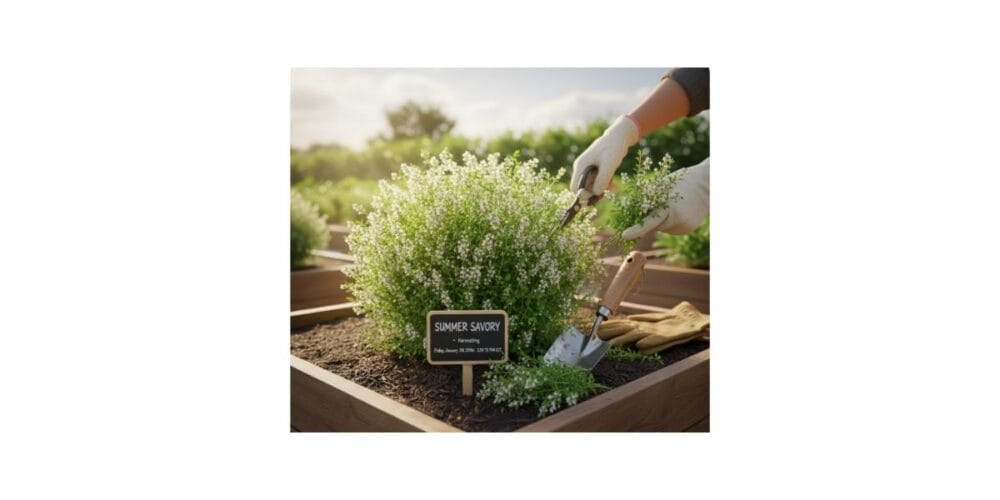
Harvesting at the right time ensures the best flavor.
How and when to harvest:
- Begin harvesting once plants reach 6–8 inches tall
- Cut stems just above a leaf node to encourage bushier growth
- Harvest in the morning after dew has dried
For the strongest aroma, harvest before flowering.
Drying and Storing Summer Savory
Summer savory dries exceptionally well and retains its flavor for months.
Drying methods:
- Bundle stems and hang them upside down in a dry, shaded area
- Or use a dehydrator on a low setting
Once dry, crumble the leaves and store them in an airtight glass container, away from light and heat.
Also Read: Marigold Farming: A Complete Guide to Profitable Flower Cultivation
Final Thoughts: Why Summer Savory Belongs in Your Organic Garden
Growing summer savory in an organic herb garden is both rewarding and practical. It’s easy to grow, naturally pest-resistant, and incredibly useful in the kitchen. With minimal care, this humble herb delivers robust flavor, garden benefits, and a steady harvest throughout the summer.
If you’re looking to expand your organic herb collection with a plant that works as hard as it tastes good, summer savory is an excellent choice.
Also Read: About How to Grow Summer Savory in an Organic Herb Garden on gardenary.com Site
-

-
-
-
-
-
-

-

-
-
-
-

-

-

-

-

-

-
-

-

-
-
-
-
-
-
-
-
-

-
-
-

-
-

-
-

-
-

-
-

-

-

-
-

-

-

-

-
-
-