What’s This White Stuff on My Squash Leaves?
If you’ve stepped into your garden one morning and noticed a mysterious white coating spreading across your squash leaves, you’re not alone—and you’re right to be concerned. That chalky, dusty layer can look harmless at first, but it’s often a sign that your plants are under stress. The good news? Once you know what it is and why it shows up, it’s very manageable.
Let’s break down what that white stuff on squash leaves really is, how to tell if it’s dangerous, and what you can do to stop it before it ruins your harvest.
The Most Common Culprit: Powdery Mildew
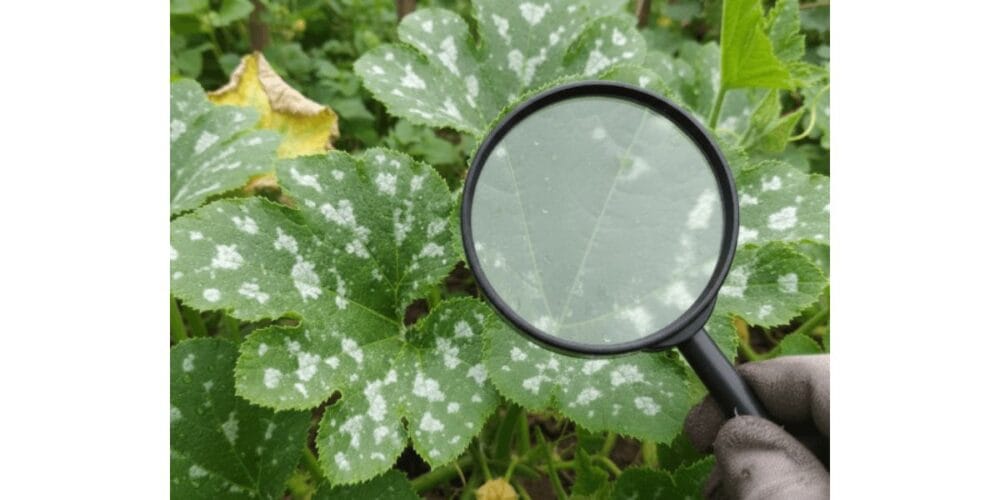
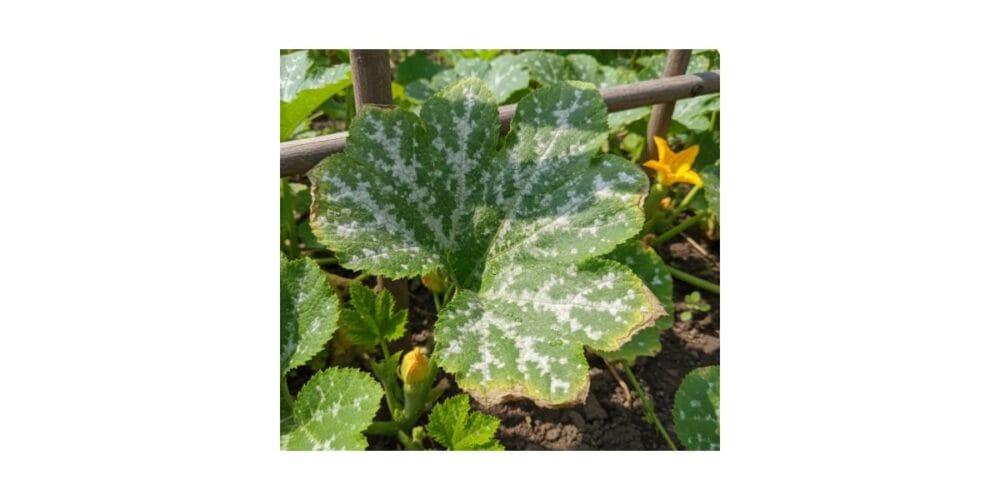
In most home gardens, the white stuff on squash leaves is powdery mildew, a common fungal disease that affects squash, zucchini, cucumbers, melons, and pumpkins.
Powdery mildew looks like:
- White or gray powdery patches on leaves
- Spots that start small and spread quickly
- Leaves that turn yellow, curl, or dry out over time
Unlike many plant diseases, powdery mildew doesn’t need wet leaves to thrive. It loves warm days, cool nights, high humidity, and poor air circulation—conditions that are common in mid- to late-season squash gardens.
Is Powdery Mildew Harmful to Squash Plants?
Yes, powdery mildew can seriously impact your plants if left untreated.
While it usually doesn’t kill squash plants outright, it:
- Reduces photosynthesis
- Weakens plant growth
- Causes early leaf drop
- Leads to smaller, fewer fruits
- Shortens the overall growing season
Once the disease takes hold, plants struggle to support developing squash, and yields drop fast.
Also Read: Your Complete Guide to Growing Organic Squash in a Kitchen Garden
Could It Be Something Else?
Although powdery mildew is the most likely cause, there are a few other possibilities worth ruling out.
1. Natural Leaf Variegation
Some squash varieties have naturally silvery or white patterns on their leaves. These markings:
- Are part of the leaf tissue
- Don’t rub off
- Appear symmetrical
- Don’t spread aggressively
If your plant has always looked this way, it’s probably normal.
2. Residue from Sprays or Hard Water
White spots can sometimes come from:
- Neem oil
- Soap sprays
- Hard water mineral residue
This type of white film usually appears evenly and washes off easily with water.
3. Insect Activity
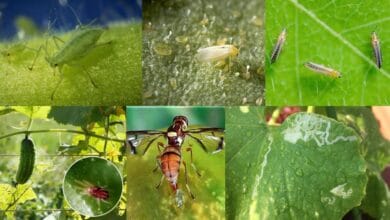
Heavy infestations of sap-sucking insects like aphids can leave behind sticky residue that later collects dust or fungal spores, giving leaves a pale appearance.
How to Confirm It’s Powdery Mildew
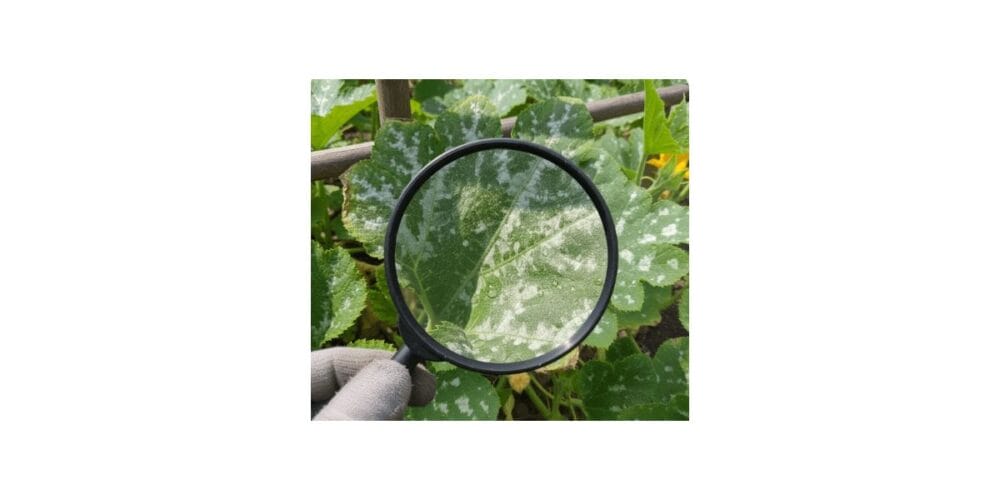
A simple test:
- Gently rub the white area with your finger
- If it smears or feels dusty, it’s likely powdery mildew
- If it’s embedded in the leaf and doesn’t move, it may be natural coloring
Early detection is key—powdery mildew spreads fast.
Why Squash Plants Are So Prone to It
Squash plants create the perfect environment for fungal growth:
- Large, dense leaves block airflow
- Vines sprawl and overlap
- Leaves often shade one another
- Plants are heavy feeders under stress
Late summer heat combined with cooler nights makes squash especially vulnerable.
Also Read: Diseases of Spinach: Identification, Prevention, and Management
How to Treat White Powder on Squash Leaves (Organically)
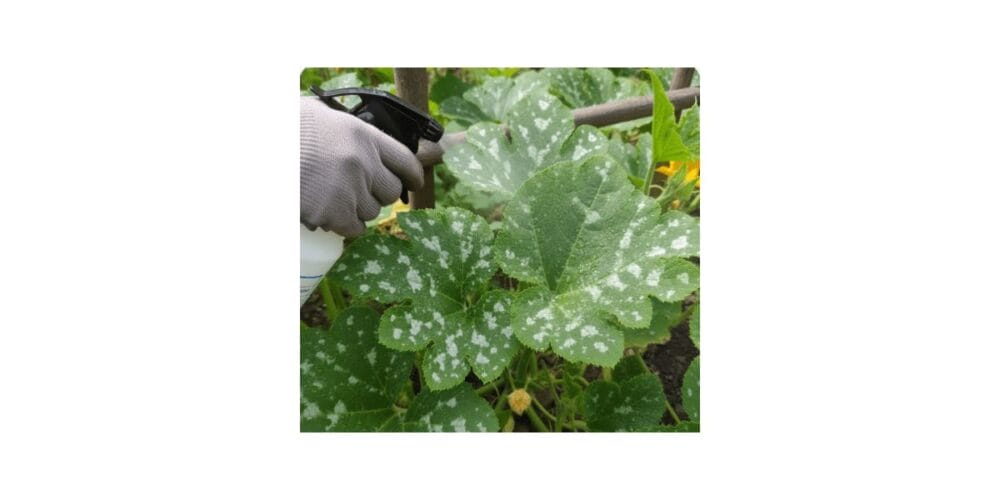
If you catch it early, organic treatments work surprisingly well.
1. Remove Infected Leaves
- Prune heavily infected leaves immediately
- Use clean tools
- Do not compost diseased leaves
This slows the spread dramatically.
2. Improve Airflow
- Space plants properly
- Prune overcrowded growth
- Train vines to spread out
Good airflow is one of the best preventions.
3. Try a Baking Soda Spray
Mix:
- 1 tablespoon baking soda
- 1 teaspoon liquid soap
- 1 liter water
Spray both sides of leaves every 7–10 days.
4. Milk Spray Method
Milk has natural antifungal properties.
- Mix 1 part milk with 2 parts water
- Spray in the morning on dry leaves
5. Neem Oil or Sulfur Fungicide
Both are effective organic options when used early and consistently. Always spray in the evening to avoid leaf burn.
Also Read: Diseases of Watermelon: Identification, Symptoms, and Management
How to Prevent White Stuff on Squash Leaves Next Season
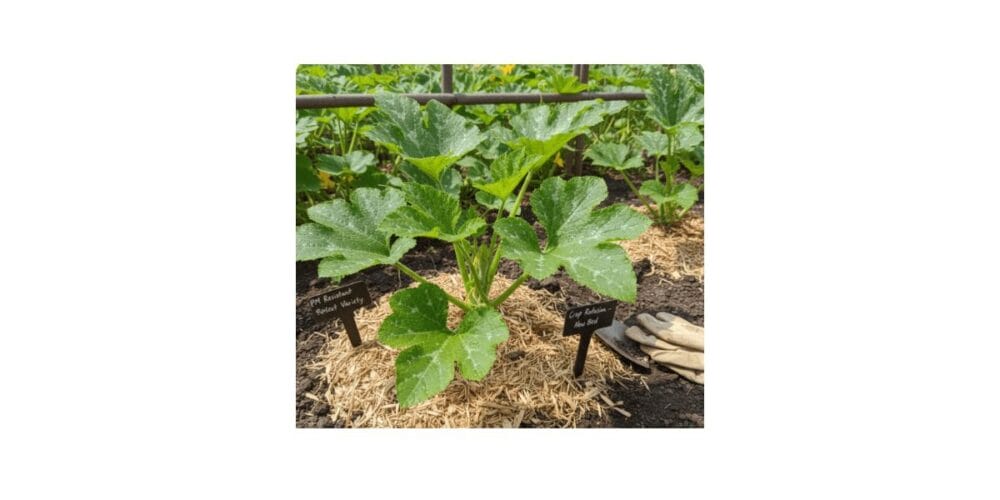
Prevention is much easier than treatment.
- Choose powdery mildew-resistant squash varieties
- Water at the soil level, not overhead
- Avoid overcrowding plants
- Rotate crops every season
- Keep garden beds weed-free
- Feed plants properly to avoid stress
Healthy plants fight disease better than weak ones.
Should You Remove the Plant?
If more than 50–60% of the plant is infected and the season is nearly over, it may be best to remove the plant and focus on protecting others nearby.
For young plants early in the season, treatment is absolutely worth trying.
Final Thoughts
Seeing white stuff on your squash leaves can be alarming, but it’s usually a sign of powdery mildew—not a death sentence. With quick action, proper pruning, and a few simple organic treatments, you can slow or even stop the spread and still enjoy a solid harvest.
Gardening is all about observation and response. Catch the problem early, give your plants what they need, and your squash will thank you with healthy vines and delicious fruits all season long.
Also Read: About What’s This White Stuff on My Squash Leaves? gardenary.com Site
-

-
-
-
-
-

-

-

-
-
-
-
-
-

-

-
-
-
-
-

-
-
-
-
-
-
-
-
-
-
-
-
-
-

-
-
-
-

-
-
-

-

-
-

-
-

-

-
-
-