
Marigold Farming
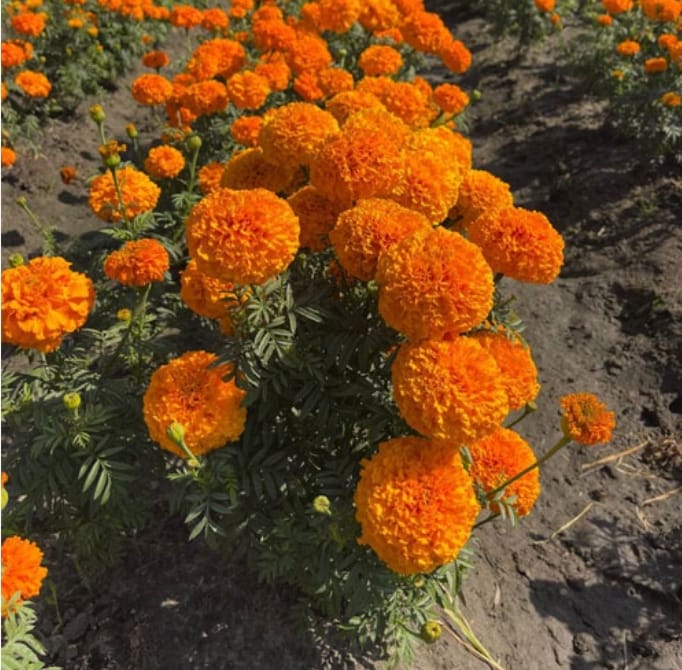
Marigold farming is one of the most popular and profitable forms of flower cultivation in India and many other tropical and subtropical regions. Known for its bright yellow and orange blooms, marigold is widely used for religious ceremonies, festivals, garlands, landscaping, and even for medicinal and industrial purposes.
Because of its short growth cycle, low investment, and high market demand, marigold farming is an excellent option for both small and large-scale farmers.
Importance and Uses of Marigold
Marigold flowers are deeply connected to cultural and religious traditions. They are commonly used in temples, weddings, festivals, and social events. Apart from ornamental value, marigold has several other uses. The petals contain natural pigments like lutein, which are used in the food and poultry industries to enhance color.
Marigold plants also have pest-repellent properties, making them useful in crop rotation and intercropping systems. Additionally, marigold extracts are used in herbal medicines and cosmetic products.
Suitable Climate for Marigold Farming
Marigold grows best in warm and mild climatic conditions. The ideal temperature range for healthy growth is between 18°C and 30°C. Extremely high temperatures can reduce flower quality, while frost conditions may damage the plants.
Marigold requires good sunlight for abundant flowering, so open and sunny fields are ideal. In India, marigold can be grown throughout the year, except during extreme summer or winter in some regions, by adjusting sowing time.

Soil Requirements
Marigold can grow in a wide range of soils, but it performs best in well-drained loamy soil rich in organic matter. The ideal soil pH ranges from 6.0 to 7.5. Waterlogged or heavy clay soils should be avoided, as they can cause root rot and poor plant growth. Before planting, the field should be plowed thoroughly and mixed with well-decomposed farmyard manure or compost to improve soil fertility.
Popular Varieties of Marigold
There are mainly two types of marigolds grown commercially: African marigold (Tagetes erecta) and French marigold (Tagetes patula). African marigolds produce large flowers and are suitable for loose flower markets and garland making. French marigolds have smaller, bushy plants with numerous flowers, making them ideal for bedding and ornamental purposes. Popular varieties include Pusa Narangi Gainda, Pusa Basanti Gainda, Calcutta Orange, Calcutta Yellow, and Crackerjack.
Seed Selection and Sowing
Quality seeds play a crucial role in achieving high yield. Seeds should be procured from reliable sources to ensure good germination and uniform growth. Marigold seeds are usually sown in nursery beds. The nursery beds should be raised, well-drained, and treated with organic manure.
Seeds are sown thinly and covered lightly with soil. Germination occurs within 5–7 days. Seedlings become ready for transplanting in about 25–30 days when they attain 8–10 cm height.
Also Read: Basics of Composting at Home: A Complete Beginner’s Guide
Transplanting and Spacing
Seedlings are transplanted into the main field during the evening hours to reduce transplant shock. Proper spacing is essential for good airflow and healthy plant development. For African marigold, spacing of 40 × 40 cm is recommended, while French marigold requires closer spacing of about 30 × 30 cm. After transplanting, light irrigation should be given immediately.
Irrigation Management
Marigold requires moderate irrigation. Overwatering should be avoided, as it can lead to fungal diseases. The first irrigation is given immediately after transplanting. Subsequent irrigation should be done at intervals of 7–10 days, depending on soil type and weather conditions. During flowering, adequate moisture is necessary to ensure proper bloom development.
Nutrient Management
For optimal growth and flowering, marigold needs balanced nutrition. Organic manure such as farmyard manure or vermicompost should be applied during land preparation. Nitrogen promotes vegetative growth, while phosphorus and potassium support flowering. Split application of nitrogen is recommended—one dose at transplanting and the remaining during early flowering stages. Excessive nitrogen should be avoided as it can lead to more leaves and fewer flowers.
Weed and Pest Management
Weeds compete with marigold plants for nutrients and water, especially during the early growth stage. Manual weeding or shallow hoeing is usually sufficient. Common pests affecting marigold include aphids, thrips, and spider mites. Diseases such as damping-off, leaf spot, and powdery mildew may also occur. Maintaining field hygiene, proper spacing, and timely irrigation helps reduce pest and disease incidence. Organic pest control methods can be adopted to ensure safe flower production.
Flowering, Harvesting, and Yield
Marigold plants start flowering 45–60 days after transplanting. Flowers should be harvested when they are fully bloomed but still fresh and firm. Harvesting is usually done in the early morning or late evening to maintain flower quality. Regular harvesting encourages more flowering. Depending on the variety and management practices, an average yield of 8–12 tons per hectare can be obtained.
Marketing and Profitability
Marigold farming offers quick returns due to its short crop duration. Flowers are sold in local markets, wholesale flower markets, temples, and for event decorations. Demand increases significantly during festivals and wedding seasons, leading to higher prices. With proper planning, input management, and timely marketing, marigold farming can be a highly profitable venture for farmers.
Frequently Asked Questions (FAQ)
1. How long does marigold farming take?
Marigold farming generally takes about 2.5 to 3 months from sowing to the first harvest, depending on the variety and climate.
2. Can marigold be grown throughout the year?
Yes, marigold can be grown almost year-round in many regions by adjusting the sowing time, except during extreme heat or frost conditions.
3. Is marigold farming profitable?
Yes, marigold farming is considered highly profitable due to low input costs, fast growth, and consistent market demand, especially during festivals.
4. How often should marigold flowers be harvested?
Flowers should be harvested every 2–3 days during peak flowering to maintain quality and encourage continuous blooming.
5. Can marigold be grown organically?
Yes, marigold can be grown organically using compost, vermicompost, and natural pest control methods, making it suitable for eco-friendly farming.
Also Read:Blue Tea Benefits: Top 8 advantages and uses
-

-

-

-

-

-

-

-

-

-
-

-

-

-

-

-

-

-

-

-

-

-

-

-

-

-

-

-

-

-

-

-

-

-

-

-

-

-

-

-

-

-

-

-

-

-

-

-

-

-