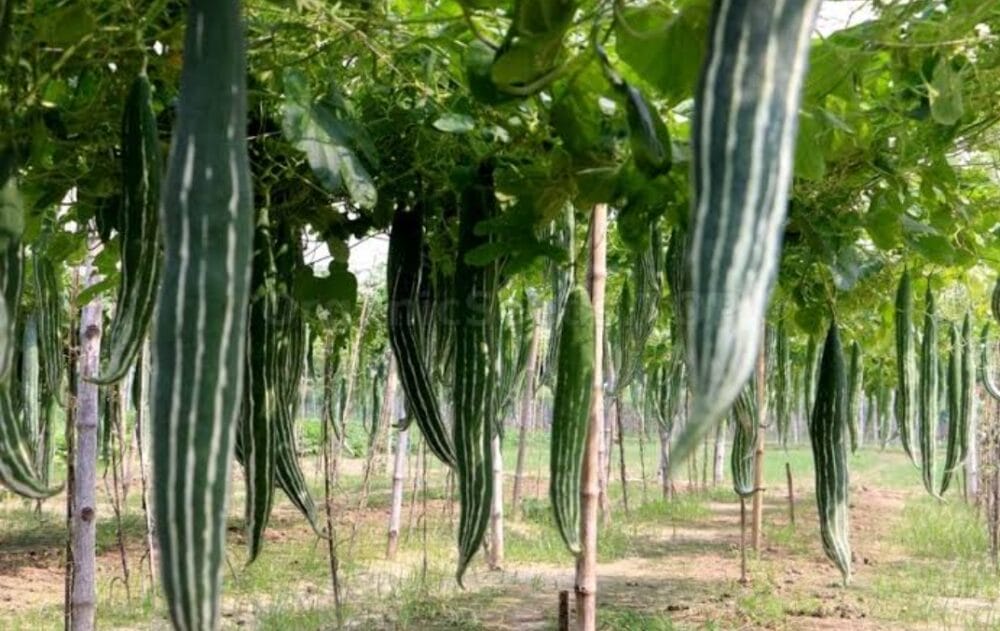
Snake gourd (Trichosanthes cucumerina) is a popular tropical vegetable widely grown in India for its long, slender fruits and excellent nutritional value.
It is commonly used in curries, stir-fries, and traditional dishes. Snake gourd cultivation is relatively easy and suitable for both home gardens and commercial farming.
With proper climate, soil, and crop management, farmers can achieve high yields and good profits.
Table of Contents
Climate Requirements for Snake Gourd Cultivation
Snake gourd thrives in a warm and humid climate. The ideal temperature range for growth is 25°C to 35°C. It is sensitive to frost and extremely cold conditions, so cultivation is best done during summer and rainy seasons. Adequate sunlight is essential for healthy vine growth and fruit development.
In India, snake gourd is commonly grown during:
- Summer season: January to March (sowing)
- Kharif season: June to July (sowing)

Soil Preparation and Soil Type
Snake gourd grows well in well-drained, fertile loamy or sandy loam soils rich in organic matter. The ideal soil pH ranges between 6.0 and 7.5. Waterlogging should be avoided, as it can cause root rot and fungal diseases.
Before sowing, the field should be ploughed 2–3 times to make the soil fine and friable. Incorporate well-decomposed farmyard manure (FYM) at the rate of 15–20 tons per hectare during land preparation to improve soil fertility.
Also Read: Why Tomato Cages Are Actually Terrible
Seed Selection and Sowing Method
High-quality seeds of improved or hybrid varieties should be selected for better yield and disease resistance. Popular snake gourd varieties include:
- CO-1
- CO-2
- Kashi Chayan
- Pusa Nasdar
- Local improved hybrids
Seeds are usually sown directly in pits or raised beds. Before sowing, seeds can be soaked in water for 12–24 hours to improve germination.
Sowing Method:
- Prepare pits at a spacing of 1.5 m × 1.5 m
- Sow 2–3 seeds per pit
- After germination, retain the healthiest seedling
Germination usually occurs within 7–10 days.
Manure and Fertilizer Management
Balanced nutrition plays a vital role in snake gourd cultivation. Along with FYM, chemical fertilizers should be applied as follows (per hectare):
- Nitrogen (N): 50–60 kg
- Phosphorus (P): 40 kg
- Potassium (K): 40 kg
Apply the full dose of phosphorus and potassium and half of nitrogen as a basal dose. The remaining nitrogen should be applied in two split doses during vine growth and flowering stages.
Organic growers can use compost, vermicompost, neem cake, and biofertilizers for sustainable cultivation.
Also Read: Top 7 Organic Fertilisers for Coconut Trees
Irrigation Requirements
Snake gourd requires regular watering, especially during flowering and fruiting stages. The first irrigation should be given immediately after sowing. Subsequent irrigations are given at intervals of 7–10 days, depending on soil moisture and weather conditions.
Avoid excessive watering, as it can lead to fungal diseases and poor root development.
Training and Pruning
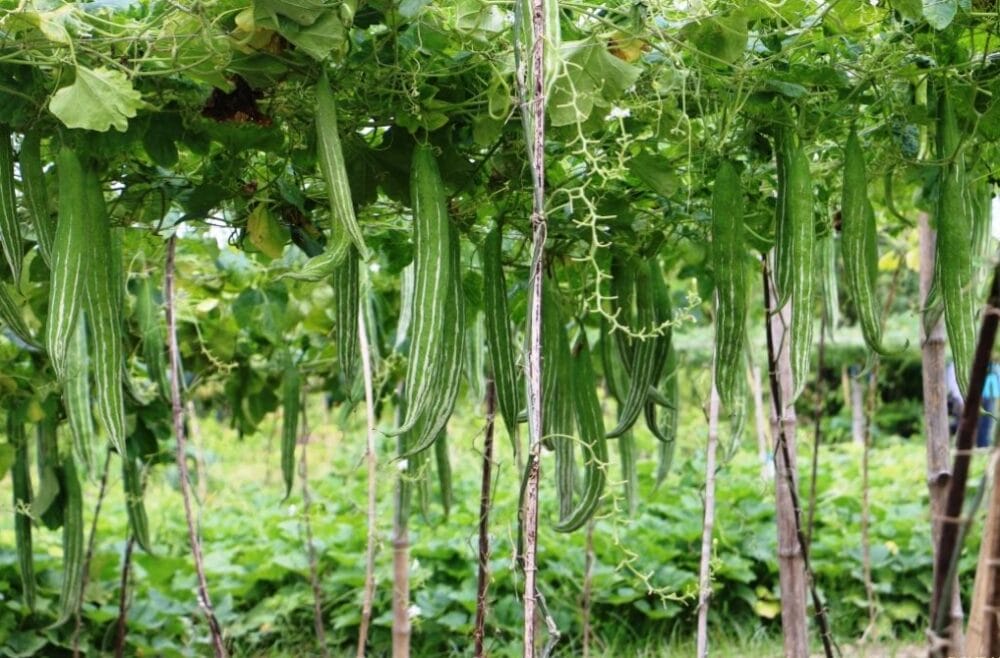
Snake gourd is a climbing vine and grows best when supported by trellis, bower, or pandal systems. Training the vines improves air circulation, reduces pest incidence, and results in straight, long fruits.
Pruning excess side shoots during early growth helps the plant focus energy on fruit production.
Pest and Disease Management
Common pests affecting snake gourd include:
- Fruit fly
- Aphids
- Red spider mites
Diseases include:
- Powdery mildew
- Downy mildew
- Mosaic virus
Preventive measures such as crop rotation, field sanitation, and use of resistant varieties are essential. Organic control methods like neem oil spray (3–5 ml per liter of water) are effective against many pests.
Harvesting and Yield
Snake gourd fruits are ready for harvest 45–60 days after sowing. Harvest fruits while they are tender and green for better taste and market value. Regular harvesting at 3–4 day intervals encourages continuous fruiting.
Average yield ranges from:
- 150–250 quintals per hectare, depending on variety and management practices
Conclusion
Snake gourd cultivation is a profitable and rewarding vegetable farming option with low input cost and high market demand. By following proper agronomic practices such as suitable climate selection, balanced fertilization, timely irrigation, and pest management, farmers and gardeners can achieve excellent yields and quality produce.
Frequently Asked Questions (FAQ)
Q1. How long does snake gourd take to grow?
Snake gourd takes about 45–60 days from sowing to first harvest.
Q2. Can snake gourd be grown in pots?
Yes, snake gourd can be grown in large pots or grow bags with proper support and regular care.
Q3. Which season is best for snake gourd cultivation?
Summer and rainy seasons are best, as the crop prefers warm and humid conditions.
Q4. How often should snake gourd be watered?
Water the crop every 7–10 days, depending on soil moisture and weather.
Q5. Why are snake gourd fruits curved or twisted?
Lack of proper support, poor pollination, or nutrient imbalance can cause curved fruits.
Q6. What is the average yield of snake gourd per hectare?
The average yield is 150–250 quintals per hectare under good management.
Also Read: Snake Gourd Farming
-

-

-

-

-

-

-

-
-

-

-

-

-

-

-

-

-

-

-

-

-

-

-

-

-

-

-

-

-

-

-

-

-

-

-

-

-

-

-

-

-

-

-

-

-

-

-

-

-

-