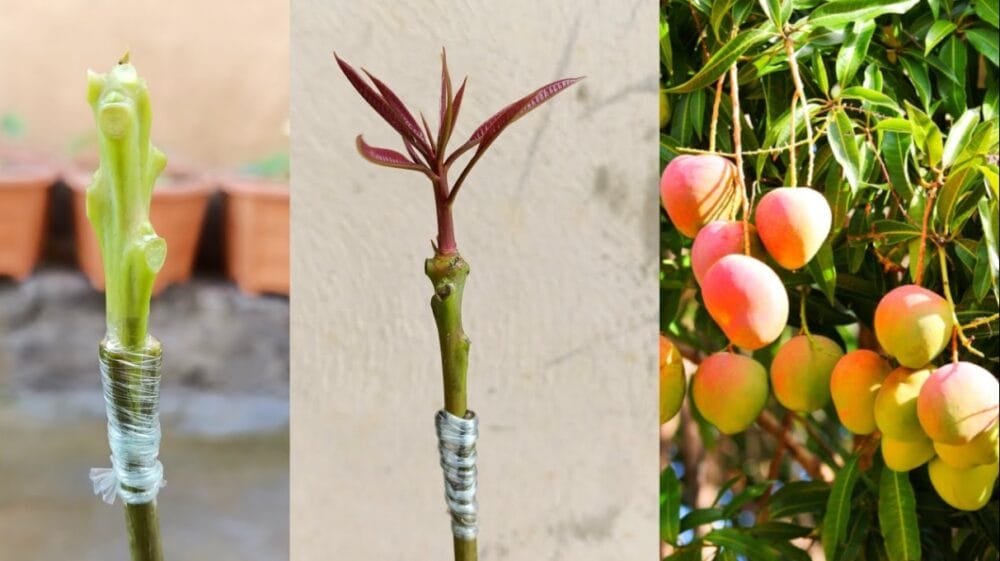
Mango tree grafting is one of the most effective methods to grow high-quality mango plants with guaranteed fruit characteristics. Instead of growing mangoes from seed—which can take many years and may not produce true-to-type fruit—grafting allows you to clone superior mango varieties and enjoy earlier, better harvests.
Whether you are a home gardener or a commercial grower, learning proper mango grafting techniques can significantly improve your success rate.
Table of Contents
What Is Mango Tree Grafting?
Mango grafting is a vegetative propagation technique where a shoot (scion) from a desired mango variety is joined to a healthy seedling (rootstock). The rootstock provides a strong root system, while the scion determines fruit quality, size, taste, and yield. Once the graft union heals, the two parts grow as a single plant.
Best Time for Mango Grafting
The ideal time for mango grafting is late winter to early monsoon, usually from February to July, depending on regional climate. In India, the best success is achieved during March to June, when temperatures range between 25–35°C and humidity is moderate. Avoid grafting during extreme heat, cold, or heavy rainfall.

Tools and Materials Required
Before starting, gather the following:
- Healthy mango rootstock (6–12 months old)
- Scion wood from a high-yielding mango variety
- Sharp grafting knife or blade
- Grafting tape or polythene strip
- Pruning shears
- Fungicide solution (optional)
- Clean cloth or paper towel
Ensure all tools are sharp and disinfected to prevent infections.
Selection of Rootstock and Scion
Rootstock:
Choose a vigorous, disease-free mango seedling with a stem thickness of about a pencil. Commonly used rootstocks are local mango varieties adapted to the soil and climate.
Scion:
Select scion wood from a healthy, high-yielding mango tree. The scion should be 3–4 months old, mature, and free from pests. It should have dormant buds and a thickness similar to the rootstock.
Popular Mango Grafting Methods
Several grafting methods are used for mango, but the most successful are:
1. Veneer Grafting (Most Common)
Veneer grafting is widely used in nurseries due to its high success rate.
Steps:
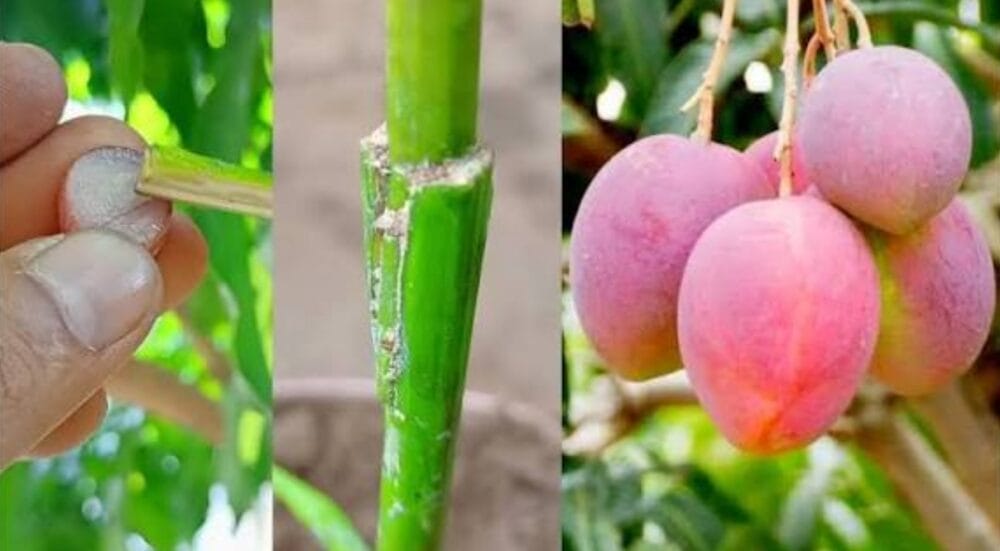
- Make a shallow downward cut (3–4 cm long) on the rootstock.
- Prepare the scion by making a matching slant cut.
- Place the scion onto the cut surface of the rootstock.
- Tie firmly with grafting tape.
- Cover the graft union to prevent moisture loss.
2. Cleft Grafting
This method is suitable for slightly thicker rootstocks.
Steps:
- Cut the rootstock horizontally and split it in the center.
- Shape the scion into a wedge.
- Insert the scion into the split.
- Tie securely and seal the joint.
3. Epicotyl (Stone) Grafting
Common in commercial mango nurseries, this method uses very young seedlings.
It offers fast results but requires skill and careful handling.
Aftercare of Grafted Mango Plants
Proper aftercare is crucial for graft success:
- Keep grafted plants in partial shade for 2–3 weeks
- Water regularly but avoid waterlogging
- Remove shoots growing below the graft union
- Protect plants from strong winds and pests
- Once the scion starts sprouting, gradually expose the plant to sunlight
The graft union usually heals within 3–4 weeks, and successful grafts show new leaf growth.
Also Read: Top Mango Producing Country in the World: A Deep Dive into the Mango Powerhouse.
Advantages of Mango Grafting
- Early fruiting (2–4 years instead of 7–10)
- True-to-type fruit quality
- Higher and consistent yields
- Better disease resistance
- Uniform orchard growth
Common Mistakes to Avoid
- Using unhealthy scion or rootstock
- Poor alignment of cambium layers
- Loose tying of graft union
- Grafting during unfavorable weather
- Using blunt or dirty tools
Avoiding these mistakes greatly increases graft success.
Also Read: Turnip Cultivation: A Complete Guide for Successful Farming
Conclusion
Mango tree grafting is a rewarding and reliable technique for growing superior mango varieties. With the right timing, healthy plant material, and proper care, even beginners can achieve excellent grafting success. Whether for home gardening or commercial farming, grafted mango plants ensure better productivity, quality, and profitability.
Frequently Asked Questions (FAQ)
Q1. Which grafting method is best for mango?
Veneer grafting is considered the best and most widely used method due to its high success rate.
Q2. How long does a grafted mango tree take to bear fruit?
Grafted mango trees usually start bearing fruit within 2–4 years.
Q3. Can mango be grafted in the rainy season?
Yes, early monsoon is suitable, but heavy rainfall should be avoided as it may cause graft failure.
Q4. How can I know if mango grafting is successful?
Successful grafts show new leaf growth from the scion within 3–4 weeks.
Q5. Can I graft mango at home without professional tools?
Yes, with a sharp clean blade, proper technique, and care, home gardeners can successfully graft mango trees.
Q6. Should I remove leaves from the scion before grafting?
Yes, removing leaves helps reduce moisture loss and improves graft success.
Also Read: Amazing New Technique
-
-

-
-

-

-

-
-
-
-

-
-
-

-
-

-

-

-

-
-
-

-

-

-

-

-

-

-

-

-

-
-

-
-
-

-

-
-

-

-

-

-

-

-

-

-
-

-

-

-