Ginger Farming:
Ginger (Zingiber officinale) is one of the most important spice crops grown in India and many tropical countries. It is valued for its culinary, medicinal, and commercial importance. Ginger is widely used in Indian kitchens, Ayurvedic medicines, herbal teas, and processed food products.
Due to its high market demand and good export potential, ginger farming can be a profitable venture for farmers when done with proper planning and management.
Here is a short and easy-to-understand table on ginger farming:
| Aspect | Details |
|---|---|
| Botanical Name | Zingiber officinale |
| Climate | Warm and humid climate |
| Temperature | 20°C – 30°C |
| Soil Type | Well-drained loamy or sandy loam soil |
| Soil pH | 5.5 – 6.5 |
| Propagation | Rhizomes (seed ginger) |
| Planting Season | April–May (rainfed), Jan–Feb (irrigated) |
| Spacing | 25 × 20 cm |
| Harvesting Time | 7–9 months after planting |
| Average Yield | 15–25 tonnes per hectare |
Climate and Soil Requirements
Ginger grows best in warm and humid climatic conditions. The ideal temperature for ginger cultivation ranges between 20°C and 30°C with moderate rainfall of 150–300 cm annually. Excessive waterlogging should be avoided, as it can cause rhizome rot.
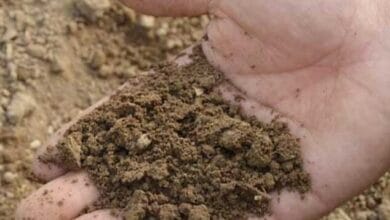
Well-drained loamy or sandy loam soil rich in organic matter is most suitable for ginger farming. The soil pH should be between 5.5 and 6.5. Fields with good drainage and partial shade conditions give better yields.
Land Preparation
Proper land preparation is essential for healthy rhizome development. The land should be ploughed 2–3 times to make it loose and friable. Raised beds of 15–20 cm height and 1 meter width are recommended, especially in areas with heavy rainfall. Adding well-decomposed farmyard manure (FYM) or compost during land preparation improves soil fertility and structure.

Selection of Seed Rhizomes
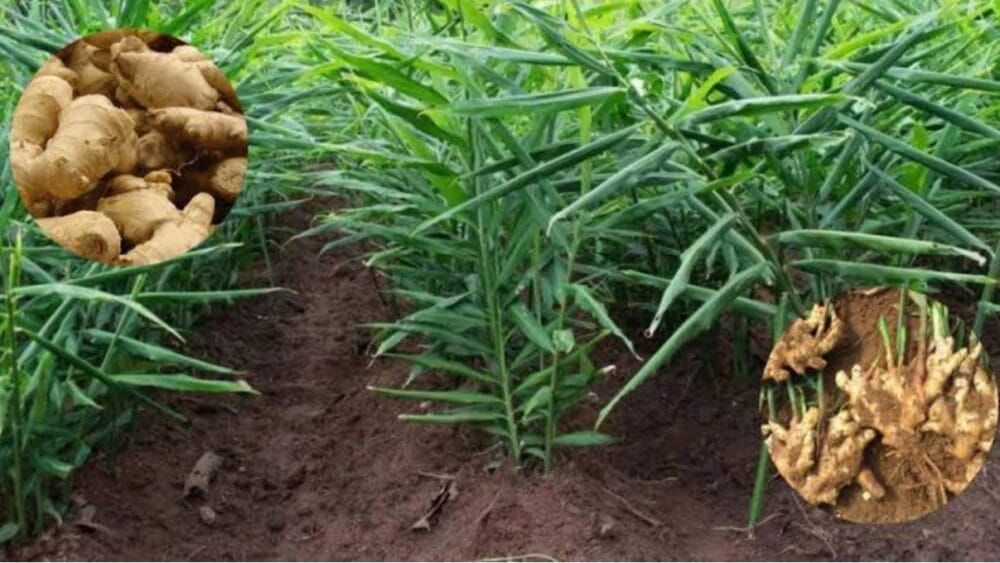
Healthy, disease-free seed rhizomes play a vital role in ginger farming success. Select rhizomes weighing 20–25 grams with at least one healthy bud. Seed rate generally ranges from 1,500 to 2,000 kg per hectare.
Before planting, seed rhizomes should be treated with organic or chemical fungicides to prevent fungal diseases. In organic farming, treatments like Trichoderma or cow urine solution are commonly used.
Also Read: Top 10 Benefits of Organic NPK Fertilizers for healthy plants
Planting Method and Time
In India, ginger is usually planted at the onset of monsoon (April to June). Planting time may vary depending on local climatic conditions.
Rhizomes are planted at a depth of 4–5 cm with a spacing of 20–25 cm between plants and 25–30 cm between rows. After planting, beds should be mulched with green leaves or straw to conserve moisture, control weeds, and regulate soil temperature.
Nutrient Management
Ginger is a nutrient-exhaustive crop and responds well to both organic and inorganic fertilizers. Apply 20–25 tons of FYM per hectare during land preparation.
Recommended fertilizer dose (per hectare):
- Nitrogen (N): 75–100 kg
- Phosphorus (P): 50 kg
- Potassium (K): 50–75 kg
Nitrogen should be applied in split doses to support continuous growth. Organic farmers can use vermicompost, neem cake, and biofertilizers for sustainable production.
Irrigation and Weed Control
Ginger requires regular but light irrigation. During dry periods, irrigation should be provided every 7–10 days. Over-irrigation must be avoided to prevent rhizome diseases.
Weeding is crucial, especially during the early growth stages. 2–3 hand weedings are usually sufficient. Mulching significantly reduces weed growth and improves soil health.
Pest and Disease Management
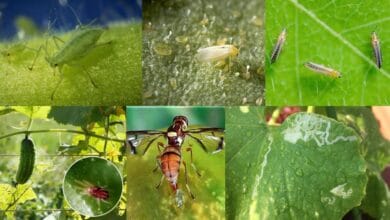
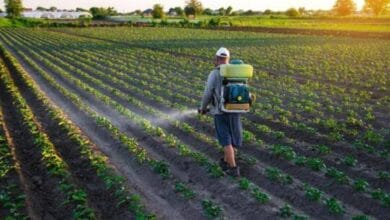
Common pests in ginger farming include shoot borers and rhizome scale insects. Regular field monitoring and timely application of recommended insecticides or organic solutions help control pests.
Major diseases include rhizome rot, leaf spot, and bacterial wilt. Using disease-free planting material, proper drainage, crop rotation, and seed treatment are effective preventive measures.
Also Read:Bayer Pesticides Products List: A Comprehensive Overview.
Harvesting and Yield
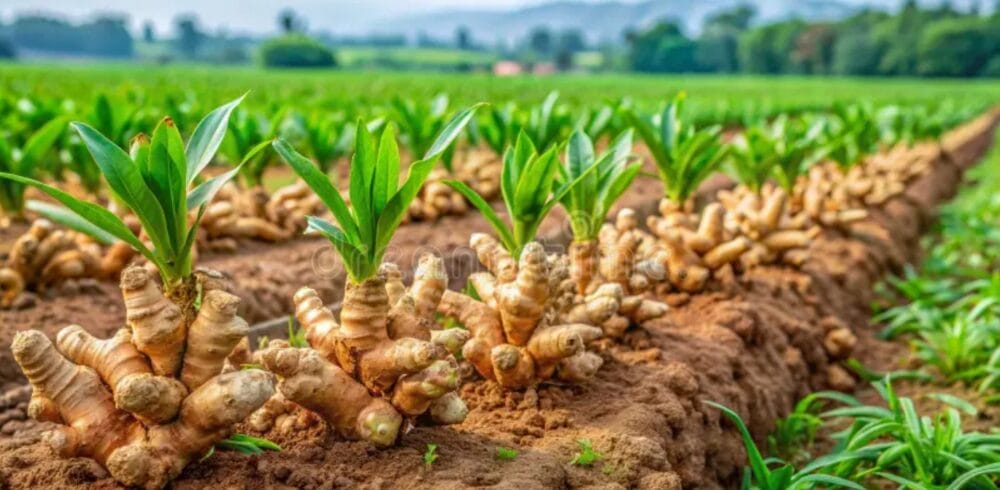
Ginger is ready for harvesting 7–9 months after planting, depending on the variety and growing conditions. For fresh ginger, harvesting can begin earlier at around 6 months.
Harvesting is done by carefully lifting the clumps and separating the rhizomes. After harvesting, rhizomes are cleaned, dried, and stored properly.
Average yield ranges from 15 to 25 tons per hectare, depending on variety, soil fertility, and crop management practices.
Storage and Marketing
Ginger should be stored in cool, dry, and well-ventilated conditions to prevent spoilage. Proper grading and packaging increase market value. Farmers can sell ginger in local markets, wholesale mandis, or directly to processing units and exporters.
Frequently Asked Questions (FAQ)
Q1. Which is the best season for ginger farming?
The best season for ginger planting is from April to June, with the onset of the monsoon.
Q2. How long does ginger take to grow?
Ginger takes about 7–9 months to mature fully after planting.
Q3. What is the ideal soil pH for ginger cultivation?
The ideal soil pH for ginger farming is between 5.5 and 6.5.
Q4. Is ginger farming profitable?
Yes, ginger farming can be highly profitable due to strong market demand, good yields, and export opportunities.
Q5. Can ginger be grown organically?
Yes, ginger can be successfully grown using organic manures, biofertilizers, and natural pest control methods.
Q6. What is the average yield of ginger per hectare?
The average yield ranges from 15 to 25 tons per hectare under good management practices.
Also Read: Ginger Health Uses: Top 9 Benefits of Ginger for a Healthy Body
-

-
-
-
-
-

-

-

-
-
-
-
-
-

-
-
-
-
-

-

-
-
-
-
-
-
-
-
-
-
-

-
-
-
-
-
-
-

-
-
-

-

-

-

-
-
-

-
-
-