
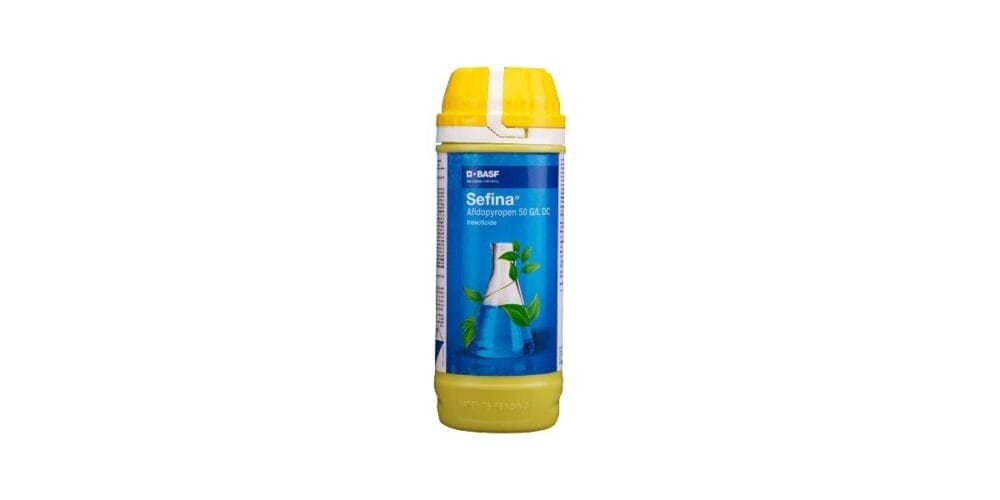
Introduction Of Sefina Insecticide
Sefina Insecticide is a modern foliar insecticide developed by BASF under the brand name Sefina®/Inscalis®. It is powered by the active ingredient Afidopyropen, which belongs to a novel chemical class (pyropenes) and is placed by the Insecticide Resistance Action Committee (IRAC) in mode-of-action subgroup 9D — making it unique among available insecticides.
In simpler terms: Sefina offers a new “tool” for controlling piercing-sucking insect pests (like aphids, whiteflies, psyllids) in a variety of crops, with a mechanism different from older insecticides.
Table of Contents
Why Sefina Insecticide Matters: Key Benefits
From the farmer’s perspective and for your blog’s educational value, here are the standout benefits of Sefina:
- Rapid feeding cessation: Sefina acts quickly to stop insect feeding and thereby reduce damage and disease transmission.
- Residual control: It offers a reasonable period of residual activity — helping protect the crop after application. (agriculture.basf.us)
- Unique mode of action (IRAC 9D): Because it works differently, it is a useful resistance-management tool, especially in situations where pests have developed resistance to older insecticides.
- Gentle on beneficials/pollinators: Unlike some broad-spectrum insecticides, Sefina is compatible with beneficial insects and poses fewer restrictions for pollinator-safety when used as directed.
- Translaminar and acropetal movement: Once applied, the formulation moves within the leaf to reach both upper and lower surfaces, improving efficacy against pests hiding underneath.
Suitable Crops & Target Pests Of Sefina Insecticide
For your blog’s crop-specific readers, list where Sefina is labeled for use and which pests it targets:
Crops where Sefina is registered include:
- Citrus
- Fruiting vegetables (tomatoes, capsicum, etc)
- Cucurbits (cucumber, melon, etc)
- Cotton
- Soybean
- Alfalfa, forage and hay crops
- Potatoes & tuberous vegetables
- More speciality/row crops depending on region.
Major pests controlled:
- Aphids (multiple species)
- Whiteflies (adult & nymph stages)
- Psyllids (including e.g., Asian citrus psyllid)
- Other piercing-sucking insects in certain crops.
Recommended Usage & Doses (Crop-Specific) Of Sefina Insecticide
Below are general guidance and examples — always follow the label for your country/region.
Example rates (from CAN/USA labelling):
- In potatoes, to control green peach aphid & potato aphid: ~ 0.2 L/ha (≈81 ml/ac) ground application.
- In soybeans for soybean aphid: ~ 0.2 L/ha (81 ml/ac).
- Minimum interval between applications: 7 days noted.
- Important: No more than two consecutive applications of Sefina before switching to a different MOA insecticide.
Key spray-coverage tips:
- Ensure thorough and uniform coverage (ground or aerial) because pests often hide underside of leaves.
- Adequate water volume is important.
Pre-harvest interval (PHI), grazing restrictions etc:
- Examples: For some crops PHI is 0 months; for others different values apply.
- Note restrictions on grazing of treated forage in some cases.
How It Works (Mode of Action) Of Sefina Insecticide
Understanding the science helps your readers appreciate the value:
The active ingredient afidopyropen works by disrupting the insect’s chordotonal organs (sensory organs) which are responsible for hearing, balance, orientation, movement etc. This leads to disorientation, feeding cessation, inability to move properly, eventually starvation/dehydration of the pest.
Because it moves translaminarly (through the leaf tissue) and acropetally (up toward growing tips), it reaches pests on upper and lower surfaces and newer growth. This enhances efficacy beyond surface contact only.
Integration with Nutrient/Plant Health Program Of Sefina Insecticide
Since you focus on plant nutrition and agriculture, here are some tips for integrating Sefina into broader crop-management:
- Use Sefina early when pest presence is detected rather than waiting for heavy infestation — early intervention reduces damage and yield loss.
- Combine Sefina use with good nutrition, irrigation and crop health: healthier plants tolerate pest pressure better and can recover more easily.
- Since Sefina is relatively gentle on beneficials, ensure you maintain beneficial-insect populations (such as ladybugs, parasitic wasps) via habitat, residues, limited broad-spectrum sprays.
- For resistance management: rotate insecticides with different modes of action and incorporate cultural/biological controls (scouting, thresholds, clean fields).
Pros & Cons — What to Know
Pros:
- Novel mode of action works where other chemistries may fail.
- Fast onset halting feeding damage and disease transmission.
- Compatible with pollinators/beneficials when used properly.
- Good for integrated pest management (IPM) programs.
Cons / Considerations:
- As with any insecticide, correct timing, coverage, rate and spray technique are critical — inadequate coverage will reduce effectiveness.
- Being a novel mode-of-action, over-reliance could lead to resistance development — hence rotate and follow label.
- Local registration, crop-specific labelling, allowed rates and PHI/grazing restrictions may differ by region (India, Odisha etc) — always check local regulatory label.
- Because it targets piercing/sucking pests, it won’t address chewing pests or entirely different pest groups — ensure correct pest ID.
FAQs
Q: Can Sefina be sprayed during flowering when pollinators are present?
A: One of the advantages is its favourable pollinator-safety profile and in many cases no pollinator-restriction bloom-period application is allowed — but always check local label/regulations. (agriculture.basf.us)
Q: Is Sefina effective against nymphs as well as adult pests?
A: Yes — the translaminar movement supports activity against early instar nymphs and adults of aphids, whiteflies etc.
Q: How many applications per season?
A: Label guidance often limits consecutive uses (e.g., no more than two in a row before rotating) and seasonal maximums differ by crop/region.
Q: Will Sefina harm beneficial insects?
A: Field reports suggest lower impact on predators/beneficials compared to older broad-spectrum chemicals, making it compatible with IPM when used correctly.
Final Thoughts & Opinion
For growers in markets like India (including Odisha and the Balangir region) who face challenges from aphids, whiteflies or other sap-sucking pests, adopting innovative tools like Sefina adds a meaningful option. Its novel mode of action, favourable pollinator/beneficial insect profile and effective pest-suppression qualities make it a strong addition—especially where resistance to older chemistries is emerging.
However, success depends on correct use: timely application, good spray coverage, correct dose, crop-specific labelling compliance, and integration into a broader pest-management and crop-nutrition programme. For blogs focused on crop-nutrition, emphasising synergy between pest control and plant health is key: a healthy crop with balanced nutrition recovers faster from damage and maintains yields more reliably.
In summary, Sefina stands out as a modern, “future-proof” insecticide option for sap-sucking pests — and, when used correctly, it can help protect crop yields, support healthier plants and align with integrated pest-management and sustainable-agriculture goals.
-

-

-

-

-

-

-

-

-

-

-

-

-

-

-

-

-

-

-

-

-

-

-
-
-
-
-

-
-
-
-

-

-
-
-
-

-

-

-
-

-
-

-

-

-
-

-

-

-

-

