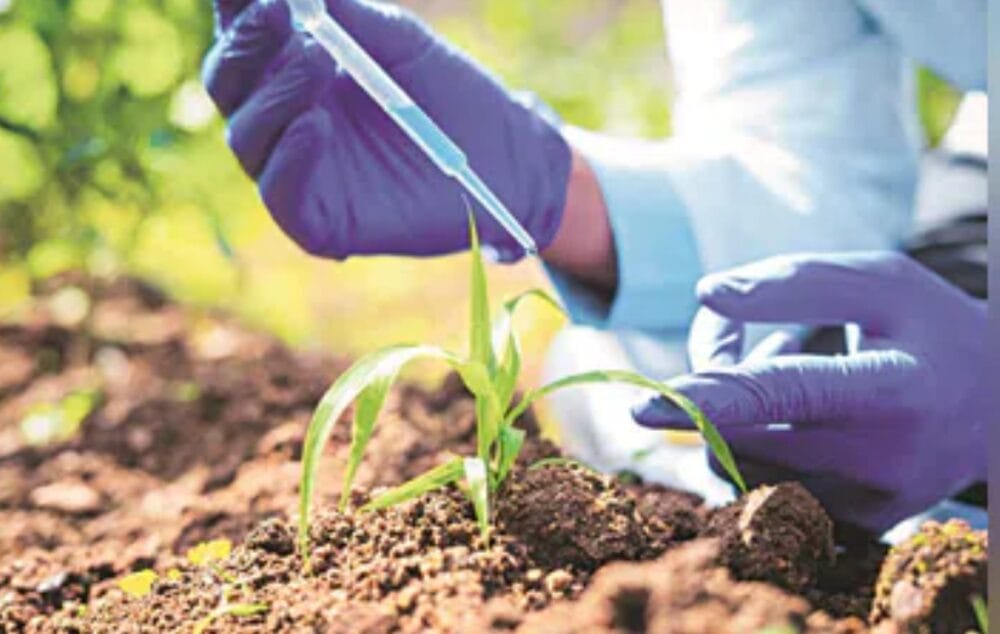
Subsidies or science?
India’s agricultural future is increasingly shaped by a critical policy dilemma—whether to continue heavy reliance on subsidies or shift decisively toward science-driven growth through research and development (R&D).
Recent analysis shows that nearly 73% of India’s agriculture budget is absorbed by subsidies and welfare schemes, particularly food and fertiliser support. These subsidies have played a vital role in stabilising farmer incomes and shielding vulnerable households from price shocks. However, experts warn that they largely address short-term distress rather than long-term productivity challenges.
The imbalance is stark. Fertiliser subsidies alone often exceed core agricultural spending, while funding for research remains modest. The budget for the Department of Agricultural Research and Education has even seen a decline, limiting investments in new labs, technology, and field trials.
Also Read : Clariant advances formulation stability and biological compatibility for improved agriculture at CAC 2026
This skewed allocation is raising concerns among policymakers and economists. Studies suggest that every ₹1 invested in agricultural research yields returns of nearly ₹13.85, making it one of the most efficient public investments in the sector. Yet India’s current model relies more on increasing inputs and price support than improving efficiency, leading to rising costs, environmental stress, and stagnant farmer incomes.
There is growing consensus that sustainable farm growth must come from innovation—climate-resilient seeds, precision farming, digital tools, and better extension systems. International examples like Brazil demonstrate how decentralised, well-funded research systems can dramatically boost productivity.
While subsidies remain politically and socially important, experts argue for gradual rebalancing. Redirecting a portion of subsidy spending toward R&D, institutional reform, and technology adoption could help Indian agriculture become more resilient, efficient, and future-ready in the face of climate change and food security challenges.
Also Read: Best Foods And Drinks To Reduce Body Heat Naturally In Summer
-

-
-

-
-

-

-
-

-

-
-

-

-

-

-

-

-

-
-

-

-
-
-

-

-

-

-

-
-
-

-

-

-
-

-
-

-
-
-
-
-

-

-

-

-

-

-

-
-

-