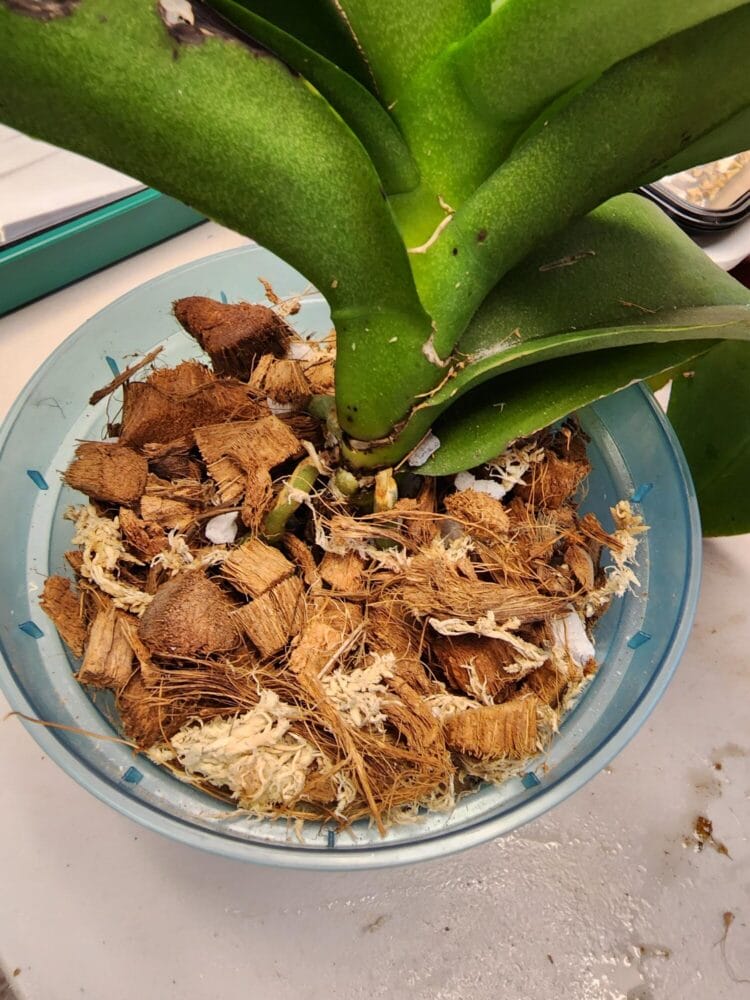
Orchids are prized for their elegant flowers and long bloom cycles—but they’re also famously picky about their growing medium. Unlike regular houseplants, most orchids don’t grow in soil. They need a special potting mixture that supports airflow, drainage, and root health. In this guide, you’ll learn precisely what a potting mixture for orchids is, why it matters, how to choose the right one, and even how to make your own at home.
What Is a Potting Mixture for Orchids?
A potting mixture for orchids is a loose, well-draining growing medium designed to mimic the orchid’s natural habitat. Many orchids are epiphytes, meaning they grow attached to trees rather than in soil. Their roots need oxygen as much as moisture, so dense garden soil can quickly cause root rot.
An ideal orchid potting mix:
- Drains quickly
- Allows excellent airflow
- Retains just enough moisture
- Resists compaction over time
Why Regular Soil Is Bad for Orchids
Using normal potting soil for orchids is one of the most common mistakes beginners make. Here’s why soil doesn’t work:
- Poor drainage leads to soggy roots.
- Low airflow suffocates orchid roots.
- High moisture retention encourages fungal disease.
- Compaction prevents healthy root growth.
Orchid roots are thick and spongy, adapted to breathing air. The right potting mixture keeps them happy and functional.
Key Ingredients in an Orchid Potting Mixture
Different orchids prefer slightly different mixes, but most high-quality orchid potting mixtures contain a combination of the following materials:


1. Bark Chips (Pine or Fir Bark)
- Most common base material
- Provides structure and airflow
- Breaks down slowly
- Ideal for beginners
2. Sphagnum Moss
- Excellent moisture retention
- Good for dry climates
- Must be used carefully to avoid overwatering
3. Perlite
- Lightweight volcanic mineral
- Improves drainage and aeration
- Prevents compaction
4. Charcoal
- Absorbs impurities and odours
- Improves drainage
- Helps prevent root rot
5. Coconut Husk Chips
- Sustainable alternative to bark
- Holds moisture while promoting air circulation
- Long-lasting and eco-friendly
Best Potting Mixtures for Popular Orchid Types
Phalaenopsis (Moth Orchids)
- Medium-grade bark
- Small amount of sphagnum moss
- Perlite for drainage
Cattleya Orchids
- Large bark chunks
- Minimal moisture retention
- Excellent airflow
Dendrobium Orchids
- Medium bark
- Charcoal and perlite
- Slightly drier mix
Oncidium Orchids
- Finer bark
- More moisture-retentive mix
- Some sphagnum moss is recommended
How to Make Your Own Orchid Potting Mix (DIY)
Creating your own potting mixture for orchids can save money and let you tailor the mix to your environment.
Simple DIY Orchid Mix Recipe
- 50% medium-grade pine bark
- 20% sphagnum moss
- 20% perlite
- 10% charcoal
Steps:
- Soak bark chips in water overnight.
- Rinse all components thoroughly.
- Mix evenly
- Use immediately or store dry.
When and How to Repot Orchids
When to Repot
- Every 12–18 months
- When the mix breaks down
- Roots growing out of the pot.
- Poor drainage or a sour smell
How to Repot Safely
- Gently remove the orchid from the pot.
- Trim dead or mushy roots.
- Place fresh potting mixture in a clean pot.
- Position roots loosely—never pack tightly.
- Water lightly after repotting
Common Mistakes to Avoid
- Using garden soil or compost
- Over-packing the potting mixture
- Keeping the mix constantly wet
- Ignoring airflow and drainage
- Skipping regular repotting
Avoiding these mistakes dramatically increases your orchid’s lifespan and flowering potential.
FAQs About Potting Mixture for Orchids
Can I use normal potting soil for orchids?
No. Regular soil retains too much moisture and lacks airflow, leading to root decay.
How often should I change the orchid potting mix?
Every 12–18 months, or sooner if the mix breaks down or smells sour.
Is bark or moss better for orchids?
Bark is better for most orchids. Moss is useful in dry climates but needs cautious watering.
Do orchids need fertilizer in the potting mix?
No. Use a diluted orchid fertilizer separately during watering.
Can orchids grow without any potting mix?
Some orchids can be mounted on wood or grown bare-root, but this requires advanced care and frequent misting.
Final Thoughts
Choosing the right potting mixture for orchids is the foundation of successful orchid care. With proper airflow, drainage, and moisture balance, your orchids will reward you with healthy roots and stunning blooms year after year. Whether you buy a ready-made mix or create your own, understanding what orchids truly need makes all the difference.
-

-

-
-

-

-

-

-

-
-
-
-

-

-

-

-

-

-
-

-

-
-
-

-
-

-
-
-

-

-

-
-
-
-

-
-

-
-

-
-

-

-

-
-

-

-

-

-

-

-