Mango Diseases
Mango is one of the most important and widely cultivated fruit crops in tropical and subtropical regions. Known as the “King of Fruits,” mango is valued for its taste, nutrition, and economic importance. However, mango cultivation faces several challenges, and diseases are among the major causes of yield loss and poor fruit quality.
Mango diseases can affect leaves, flowers, fruits, branches, and roots, leading to reduced productivity if not managed properly.
Understanding the common mango diseases, their symptoms, causes, and control measures is essential for successful mango farming.
Table of Contents
1. Powdery Mildew
Powdery mildew is one of the most destructive mango diseases, especially during flowering and fruit-setting stages.
Symptoms
- White or gray powdery growth on leaves, flowers, and young fruits
- Flower drop and poor fruit setting
- Small fruits may dry and fall prematurely
Causes
- Caused by the fungus Oidium mangiferae
- Favored by cool nights, high humidity, and dry weather
Management
- Spray wettable sulfur or systemic fungicides like hexaconazole
- Ensure good air circulation through proper pruning
- Avoid excess nitrogen fertilization

2. Anthracnose
Anthracnose is a common fungal disease affecting mango trees in humid and rainy conditions.
Symptoms
- Dark brown or black spots on leaves and fruits
- Flower blight and fruit rot
- Sunken black lesions on ripening fruits
Causes
- Caused by Colletotrichum gloeosporioides
- Spread through rain splash and infected plant debris
Management
- Prune and destroy infected plant parts
- Spray copper-based fungicides or carbendazim
- Maintain orchard sanitation
3. Bacterial Canker
Bacterial canker significantly affects mango productivity and fruit appearance.
Symptoms
- Angular water-soaked lesions on leaves
- Cracks and oozing gum on stems and fruits
- Premature fruit drop
Causes
- Caused by Xanthomonas campestris pv. mangiferaeindicae
- Spread by wind-driven rain and insects
Management
- Prune and burn infected branches
- Spray copper oxychloride mixed with streptocycline
- Avoid injuries to plants
4. Mango Malformation
Mango malformation is a serious disorder that affects both vegetative and floral parts.
Symptoms
- Bunchy top appearance in vegetative shoots
- Deformed and compact flower clusters
- Little or no fruit formation
Causes
- Associated with fungal infection (Fusarium species)
- Influenced by mites and environmental stress
Management
- Prune malformed shoots and destroy them
- Apply NAA spray during early stages
- Maintain proper nutrition and orchard hygiene
5. Dieback Disease
Dieback causes gradual drying of branches from the tip backward.
Symptoms
- Drying of twigs from the tip
- Bark discoloration and gum exudation
- Reduced flowering and fruiting
Causes
- Caused by fungi like Botryodiplodia theobromae
- Poor drainage and mechanical injuries increase risk
Also Read:Aries HD NPK Fertilizer
Management
- Prune affected branches below infected portions
- Apply Bordeaux paste on cut ends
- Improve drainage and avoid waterlogging
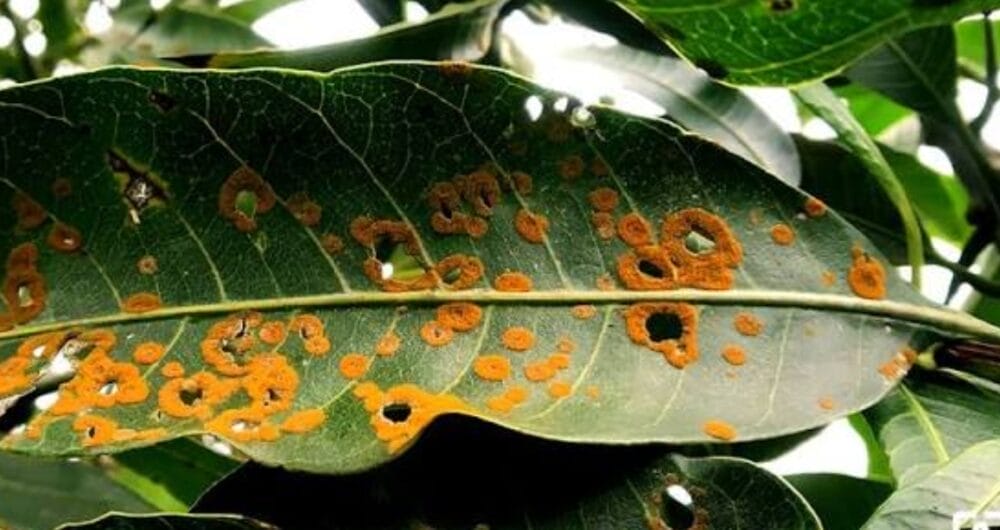
6. Red Rust
Red rust mainly affects mango leaves and reduces photosynthesis.
Symptoms
- Reddish-brown velvety patches on leaf surface
- Leaves may become weak and fall early
Causes
- Caused by algae (Cephaleuros virescens)
- Favored by high humidity and shade
Management
- Spray copper fungicides
- Reduce shade and improve sunlight penetration
- Maintain balanced fertilization
Importance of Disease Management in Mango
Mango diseases not only reduce yield but also affect fruit quality and market value. Early detection, proper cultural practices, and timely application of control measures are essential. Integrated Disease Management (IDM), which combines cultural, biological, and chemical methods, is the most sustainable approach to controlling mango diseases.
Healthy planting material, regular orchard inspection, balanced nutrition, and proper irrigation play a vital role in preventing disease outbreaks.
Frequently Asked Questions (FAQ)
1. What is the most common disease in mango?
Anthracnose and powdery mildew are the most common mango diseases, especially in humid and flowering seasons.
2. How can mango diseases be prevented naturally?
Proper pruning, orchard sanitation, balanced fertilization, and good air circulation help prevent many mango diseases naturally.
3. Which disease causes flower drop in mango?
Powdery mildew and anthracnose are the main causes of flower drop in mango trees.
4. Can mango diseases affect fruit quality?
Yes, diseases like anthracnose and bacterial canker directly affect fruit appearance, shelf life, and market value.
5. Is chemical spraying necessary for mango disease control?
Chemical sprays are effective when used judiciously. Combining them with cultural practices gives better and safer results.
6. When should fungicides be sprayed in mango orchards?
Fungicides should be applied during flowering, fruit setting, and early fruit development stages for best results.Also Read:Horticultural crops :: Fruits:: Mango
-

-

-

-

-

-

-

-

-

-

-

-

-

-

-

-

-
-

-

-

-
-
-
-
-
-
-
-
-
-

-

-

-
-

-
-

-

-

-
-

-

-

-
-

-

-

-

-

-
-