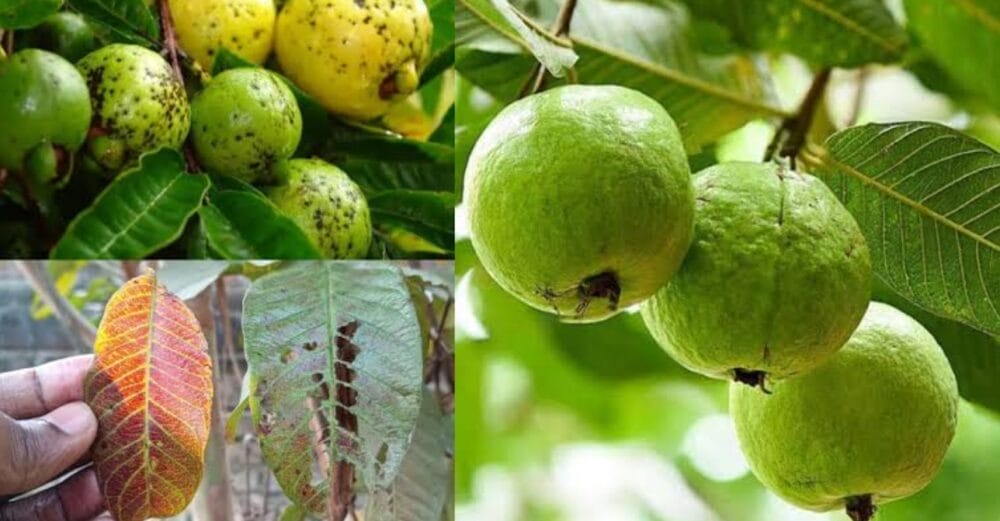
Diseases of Guava Tree
Guava (Psidium guajava) is one of the most important fruit crops grown in tropical and subtropical regions. It is valued for its high vitamin C content, pleasant taste, and wide adaptability. However, guava production is often affected by several diseases that reduce yield, fruit quality, and tree longevity.
Understanding the common diseases of the guava tree, their symptoms, causes, and management practices is essential for farmers and home gardeners to maintain healthy orchards and achieve profitable production.
1. Guava Wilt Disease
Guava wilt is the most destructive disease affecting guava trees, especially in India and other tropical regions.
Causes
This disease is mainly caused by soil-borne fungi such as Fusarium oxysporum, Fusarium solani, and Cephalosporium species. Poor soil drainage and continuous guava cultivation increase disease incidence.
Symptoms
- Yellowing and wilting of leaves
- Drooping of branches
- Sudden drying of the entire tree
- Browning of vascular tissues when the stem is cut
Management
- Use wilt-resistant varieties
- Ensure proper drainage in orchards
- Remove and destroy infected plants
- Apply neem cake or Trichoderma in soil
- Avoid waterlogging and crop rotation with non-host crops

Also Read: Diseases of Watermelon: Identification, Symptoms, and Management
2. Anthracnose Disease
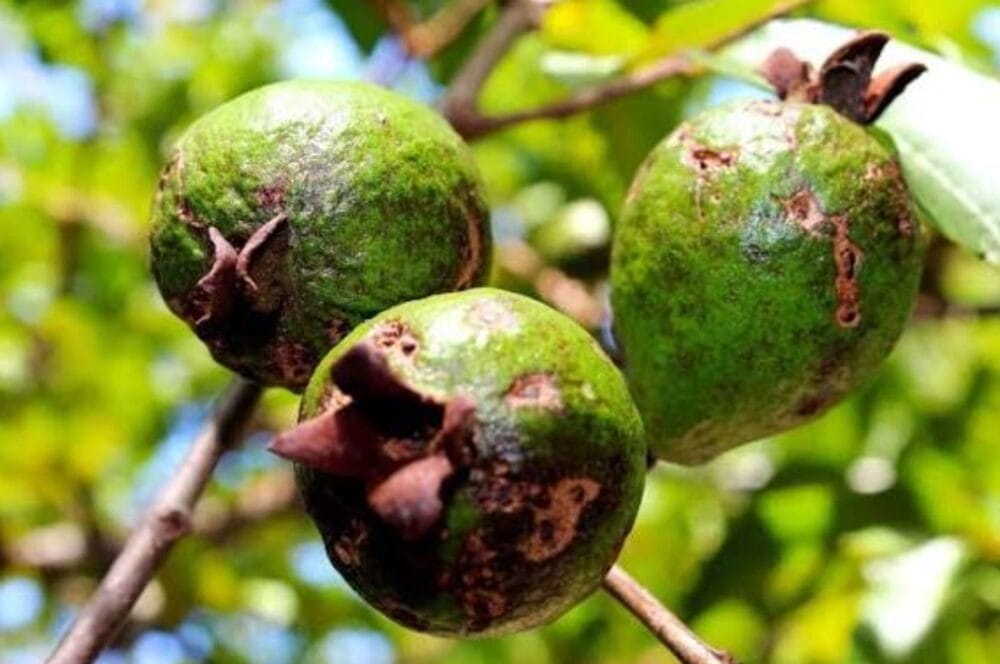
Anthracnose is a common fungal disease affecting guava leaves, flowers, and fruits.
Causes
It is caused by the fungus Colletotrichum gloeosporioides, which thrives in warm and humid conditions.
Symptoms
- Dark brown or black spots on leaves
- Sunken lesions on fruits
- Premature fruit drop
- Poor fruit quality and reduced market value
Management
- Prune infected branches
- Maintain orchard sanitation
- Spray copper-based fungicides or carbendazim
- Avoid overcrowding to improve air circulation
3. Guava Fruit Rot
Fruit rot mainly affects mature fruits, leading to heavy post-harvest losses.
Causes
This disease is caused by fungi such as Phytophthora, Aspergillus, and Penicillium species, especially during rainy seasons.
Symptoms
- Soft, watery patches on fruits
- Foul smell from infected fruits
- White or grey fungal growth on fruit surface
Management
- Harvest fruits at proper maturity
- Avoid fruit injuries during harvesting
- Improve field drainage
- Spray recommended fungicides during fruit development
4. Algal Leaf and Fruit Spot
This disease is common in humid and rainy climates.
Causes
It is caused by the alga Cephaleuros virescens.
Symptoms
- Circular, raised reddish-brown spots on leaves
- Greenish or rusty patches on fruits
- Reduced photosynthesis due to leaf damage
Management
- Prune and destroy infected parts
- Spray Bordeaux mixture or copper fungicides
- Maintain proper spacing between trees
5. Dieback Disease
Dieback disease affects the twigs and branches of guava trees, leading to reduced canopy growth.
Causes
It is caused by fungi such as Botryodiplodia theobromae.
Symptoms
- Drying of shoots from the tip backward
- Cracking of bark
- Reduced flowering and fruiting
Management
- Prune affected branches below the infected portion
- Apply fungicidal paste on cut ends
- Maintain balanced nutrition and irrigation
Also Read: Why Mango is Called Bathroom Fruit?
6. Leaf Spot Disease
Leaf spot disease reduces leaf area and weakens the guava tree.
Causes
Caused by fungi like Cercospora and Pestalotia species.
Symptoms
- Small brown or black spots on leaves
- Yellow halo around spots
- Premature leaf fall
Management
- Collect and destroy fallen leaves
- Spray mancozeb or chlorothalonil
- Maintain orchard hygiene
Integrated Disease Management (IDM)
Effective control of guava diseases requires an integrated approach combining cultural, biological, and chemical methods.
- Use healthy and certified planting material
- Maintain proper spacing and pruning
- Improve soil health with organic matter
- Monitor orchards regularly for early symptoms
- Use chemicals only when necessary and as per recommendations
Integrated disease management not only reduces disease severity but also promotes sustainable guava cultivation.
Conclusion
Diseases of the guava tree pose a serious threat to productivity and fruit quality if not managed timely. Early identification of symptoms, proper cultural practices, and the use of suitable control measures can significantly reduce losses.
By adopting integrated disease management practices, farmers can ensure healthy guava orchards, higher yields, and long-term sustainability.
Frequently Asked Questions (FAQ)
Q1. What is the most serious disease of guava tree?
Guava wilt is considered the most serious disease as it can kill the entire tree within a short period.
Q2. How can guava wilt be prevented?
Using disease-free planting material, improving drainage, applying organic amendments, and avoiding waterlogging help prevent wilt.
Q3. Which disease causes black spots on guava fruits?
Anthracnose disease commonly causes black or dark brown sunken spots on guava fruits.
Q4. Are guava diseases more common in rainy season?
Yes, high humidity and rainfall favor fungal and algal diseases in guava.
Q5. Can organic methods control guava diseases?
Yes, practices like neem cake application, Trichoderma use, pruning, and proper sanitation help manage diseases organically.
Q6. How often should fungicides be sprayed on guava trees?
Fungicide application depends on disease severity, but preventive sprays during humid seasons are recommended.
Also Read: Guava
Diseases of Guava Tree Review
Product Cost
Compatibility
Availability
Aggregate Customer Score
Overall Rating: Excellent
-

-
-
-
-
-

-
-

-
-
-
-
-
-

-
-
-

-

-

-

-
-
-

-

-

-

-

-

-

-
-

-

-
-
-
-
-

-

-
-
-

-

-

-

-
-
-
-
-

-