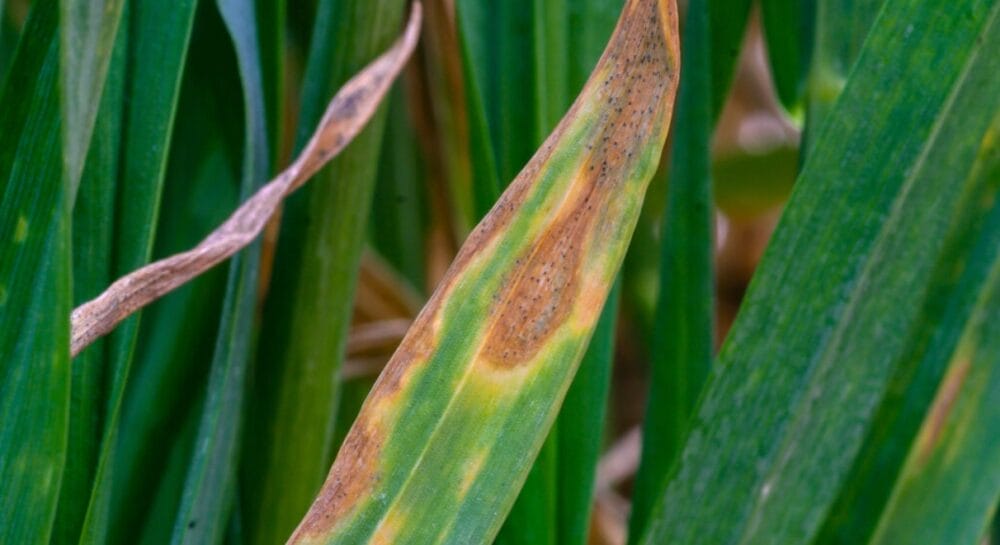
Two key changes in fungicide application strategies could dramatically extend the effective lifespan of SDHI (succinate dehydrogenase inhibitor) fungicides—potentially tripling how long they remain effective in controlling crop diseases, according to recent modelling and agronomy research.
SDHI fungicides are widely used to control fungal diseases in crops such as wheat, barley, fruits and vegetables by blocking fungal respiration through inhibition of the succinate dehydrogenase enzyme. However, because they act on a single biological target, pathogens can gradually develop resistance, reducing their effectiveness over time.
Researchers suggest that two practical changes in fungicide management could significantly delay this resistance.
The first change is mixing SDHI fungicides with multisite protectant fungicides. Multisite products attack pathogens at multiple biological points, making it far harder for fungi to evolve resistance. Studies modelling wheat disease management found that adding a multisite fungicide such as folpet to SDHI-azole mixtures could extend the effective life of the chemistry from about 13 years to between 21 and 27 years.
The second change involves reducing the dose of SDHI fungicides while maintaining protection through mixtures with other fungicide types. Lowering SDHI dosage decreases the selection pressure that drives resistant fungal strains to dominate. When lower SDHI rates were combined with multisite fungicides, modelling suggested the effective lifespan could stretch to around 28 years, more than doubling the original estimate.
Agronomists say these strategies form part of a broader integrated resistance-management approach. By rotating fungicide modes of action, limiting repeated applications, and using mixtures strategically, farmers can slow the evolution of resistant pathogens and maintain crop protection tools for longer.
Also Read: Top 10 Benefits of Organic NPK Fertilizers for healthy plants
With SDHI fungicides playing a crucial role in global food production, researchers stress that adopting such practices is essential to safeguard their effectiveness and ensure sustainable disease control in agriculture.
Also Read: agro news
-

-

-

-

-

-

-

-

-

-

-

-

-

-

-

-

-

-
-

-
-

-

-
-

-

-

-

-

-

-

-

-

-

-

-

-
-

-

-

-

-
-

-

-

-

-

-

-

-

-