
Growing Mulberry Trees
Mulberry trees are fast-growing, hardy fruit trees valued for their delicious berries, nutritious leaves, and multiple uses in agriculture and sericulture. Known for their adaptability and low maintenance, mulberry trees can be grown successfully in home gardens, farms, and orchards.
Whether you want to grow mulberries for fresh fruit, animal fodder, or silkworm rearing, this easy guide will help you understand how to cultivate mulberry trees successfully.
Table of Contents
What Is a Mulberry Tree?
Mulberry trees belong to the genus Morus and are native to Asia, Europe, and North America. The most commonly grown types are white mulberry (Morus alba), black mulberry (Morus nigra), and red mulberry (Morus rubra). In India, white mulberry is widely cultivated due to its importance in sericulture, as silkworms feed on its leaves.
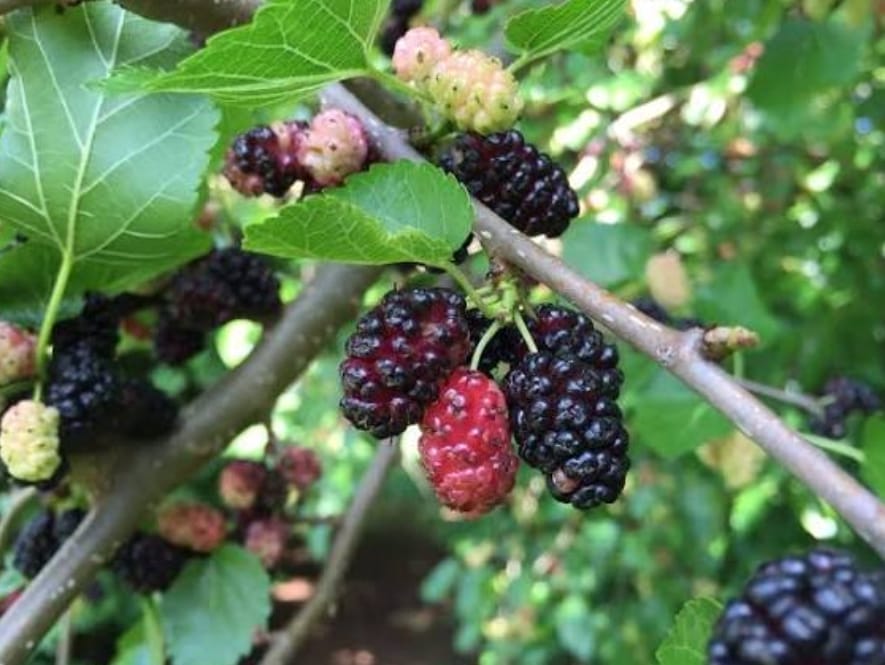
Mulberry trees produce small, sweet, blackberry-like fruits that are rich in vitamins, antioxidants, and minerals. The trees are deciduous and can live for several decades when properly cared for.




Climate and Soil Requirements
Mulberry trees grow well in tropical, subtropical, and temperate climates. They thrive best in areas with moderate rainfall and temperatures between 15°C and 35°C. Although mulberry trees can tolerate short periods of drought and frost, extreme weather conditions may affect fruit production.
Well-drained loamy soil is ideal for mulberry cultivation. However, mulberry trees are adaptable and can grow in sandy, clay, or slightly alkaline soils. The soil pH should ideally range between 6.2 and 6.8. Proper drainage is essential, as waterlogged soil can damage roots and reduce growth.
Propagation Methods
Mulberry trees can be propagated through seeds, cuttings, grafting, or budding. Among these methods, stem cuttings are the most common and easiest way to grow mulberry trees.
Healthy, disease-free cuttings of about 15–20 cm length are planted directly in the soil or nursery beds. These cuttings develop roots within a few weeks. Grafting and budding are used mainly for commercial cultivation to maintain uniform plant quality and high yields.
Planting and Spacing
The best time to plant mulberry trees is during the monsoon season or early spring when moisture is sufficient for root development. Pits of about 45 cm × 45 cm × 45 cm should be prepared and filled with a mixture of topsoil and organic manure.
Spacing depends on the purpose of cultivation. For fruit production, trees should be spaced 4–5 meters apart. For leaf production in sericulture, closer spacing such as 3 × 3 meters is commonly followed. Adequate spacing ensures good air circulation and sunlight penetration.
Also Read:Marigold Farming: A Complete Guide to Profitable Flower Cultivation
Watering and Nutrient Management
Mulberry trees require regular watering during the early stages of growth. Young plants should be watered every 7–10 days, while mature trees can tolerate less frequent irrigation. Overwatering should be avoided, as it may cause root rot.
Organic manure such as farmyard manure or compost improves soil fertility and promotes healthy growth. Nitrogen, phosphorus, and potassium fertilizers are applied in recommended doses to enhance leaf and fruit production. Split application of fertilizers is beneficial for sustained growth throughout the year.
Pruning and Training
Pruning plays an important role in mulberry cultivation. Regular pruning helps control tree height, encourages new shoot growth, and increases leaf and fruit yield. Pruning is usually done once or twice a year, depending on the variety and purpose of cultivation.
Training young plants helps develop a strong framework and improves productivity. Removing dead, diseased, and overcrowded branches keeps the tree healthy and well-shaped.
Pest and Disease Management
Mulberry trees are relatively resistant to pests and diseases, but occasional problems may occur. Common pests include leaf webbers, mealybugs, and mites, while diseases such as powdery mildew and leaf spot may affect leaves.
Maintaining proper field hygiene, timely pruning, and balanced fertilization helps prevent infestations. Organic pest control methods and recommended plant protection measures should be used when necessary.
Also Read:Top 8 Micronutrient Fertilizers: Importance, Types, Benefits, and Application
Harvesting and Uses
Mulberry fruits usually mature within 2–3 months after flowering. Ripe fruits are soft, juicy, and dark in color. They are harvested manually and consumed fresh or used for making jams, juices, syrups, and dried products.
Mulberry leaves are harvested regularly for feeding silkworms or livestock. The wood of the mulberry tree is also used for making sports equipment and furniture.
Benefits of Growing Mulberry Trees
Mulberry trees offer multiple benefits, including high nutritional value, low cultivation cost, and multiple income sources. They improve soil health, prevent erosion, and provide shade. Due to their fast growth and versatility, mulberry trees are an excellent choice for farmers and home gardeners alike.
Frequently Asked Questions (FAQ)
Q1. How long does a mulberry tree take to bear fruit?
Mulberry trees usually start producing fruits within 2–3 years after planting, depending on the variety and growing conditions.
Q2. Can mulberry trees grow in pots?
Yes, dwarf mulberry varieties can be grown in large pots with proper pruning, watering, and nutrient management.
Q3. How often should mulberry trees be watered?
Young plants require regular watering every 7–10 days, while mature trees need less frequent irrigation.
Q4. Are mulberry fruits healthy?
Yes, mulberry fruits are rich in vitamin C, iron, fiber, and antioxidants, making them highly nutritious.
Q5. What is the lifespan of a mulberry tree?
Mulberry trees can live for 25–50 years or more with proper care and management.
Also Read:How to a Grow a Mulberry Tree


