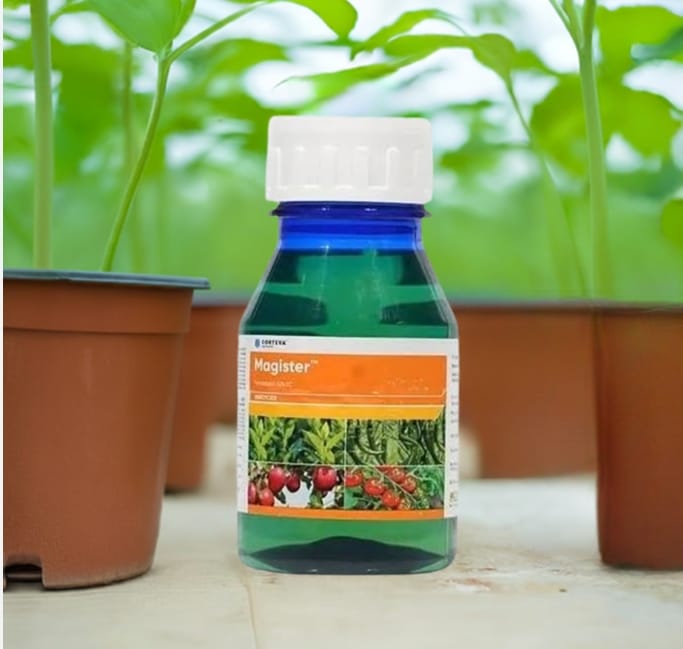
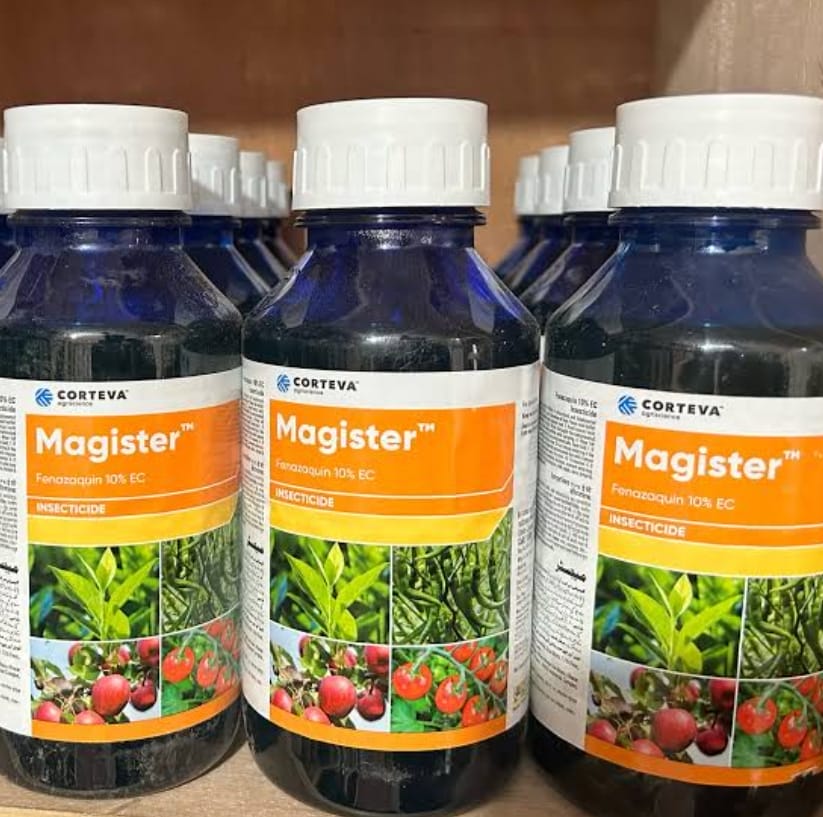
Magister Insecticide
Crop protection is a major challenge for farmers due to increasing pest resistance and changing climatic conditions. Among the many crop protection solutions available, Magister insecticide is widely used for its effective control of mites and other sucking pests.
Known for its strong contact action and long residual effect, Magister has become a trusted choice for many growers, especially in horticultural and cash crops.
Here is a short and clear table on Magister Insecticide:
| Aspect | Details |
|---|---|
| Product Name | Magister Insecticide |
| Active Ingredient | Fenazaquin 10% EC |
| Chemical Group | Quinazolinone |
| Mode of Action | Contact and stomach action |
| Target Pests | Mites (Red spider mite, Yellow mite) |
| Crops Used On | Cotton, chilli, brinjal, tea, apple |
| Recommended Dose | 1–2 ml per liter of water |
| Formulation | Emulsifiable Concentrate (EC) |
| Residual Effect | Long-lasting control |
| Safety Period | Follow label instructions |
What is Magister Insecticide?
Magister insecticide is a selective acaricide and insecticide primarily used to control mites such as red spider mites, yellow mites, and other harmful pests. Its active ingredient is generally Fenazaquin 10% EC, which works by disrupting the energy production system of mites, leading to their rapid death.
Magister is mainly applied in crops like cotton, chilli, tea, brinjal, tomato, apple, grapes, and ornamental plants. It is especially effective at different life stages of mites, including nymphs and adults.




Also Read:Bayer Pesticides Products List: A Comprehensive Overview.
How Magister Insecticide Works
Magister insecticide works through contact and stomach action. Once the pest comes into contact with the sprayed surface or feeds on treated plant parts, the chemical interferes with mitochondrial respiration. This results in reduced energy production, paralysis, and eventual death of the pest.
One of the key advantages of Magister is its long residual activity, which continues to protect crops for several days after application. This helps reduce the frequency of spraying and lowers overall pest management costs.
Key Benefits of Magister Insecticide
- Effective Mite Control
Magister provides excellent control of red spider mites, yellow mites, and other harmful mite species that cause leaf curling, yellowing, and yield loss. - Long-Lasting Protection
Due to its residual action, Magister remains effective for a longer period compared to many conventional insecticides. - Quick Knockdown Effect
It acts rapidly on pests, helping farmers see visible results within a short time after application. - Crop Safety
When used at recommended doses, Magister is safe for crops and does not cause phytotoxicity. - Resistance Management
Magister belongs to a unique chemical group, making it useful in resistance management programs when rotated with other insecticides. - Compatible with IPM
It can be integrated into Integrated Pest Management (IPM) strategies when used judiciously.
Recommended Crops and Target Pests
Magister insecticide is commonly recommended for:
- Cotton – Red spider mite
- Chilli & Brinjal – Yellow mite, red mite
- Tea – Tea red spider mite
- Apple & Grapes – Spider mites
- Ornamental plants – Mite infestation
Its versatility across crops makes it a preferred choice for both small and large-scale farmers.
Dosage and Application Method
The general recommended dosage of Magister insecticide is:
- 200–300 ml per acre
- Diluted in 150–200 liters of water per acre
Application should be done using a knapsack sprayer or power sprayer, ensuring uniform coverage on both upper and lower leaf surfaces, as mites often hide on the underside of leaves.
For best results:
- Spray during early stages of infestation
- Avoid spraying during strong winds or peak sunlight hours
- Maintain proper spray intervals as advised by agricultural experts
Safety and Precautions
While Magister insecticide is effective, safe handling is essential:
- Wear protective clothing, gloves, and masks during spraying
- Avoid direct contact with skin and eyes
- Do not mix with unknown chemicals without compatibility testing
- Keep away from children, livestock, and food materials
- Follow the waiting period before harvesting crops
Proper use ensures both farmer safety and environmental protection.
Environmental Impact
Magister insecticide is moderately toxic to beneficial insects and aquatic organisms, so care should be taken to avoid spray drift near water bodies. Targeted application and recommended dosage help minimize environmental risks.
Also Read:Basics of Composting at Home: A Complete Beginner’s Guide
Storage Guidelines
- Store in a cool, dry place
- Keep away from direct sunlight
- Always keep the container tightly closed
- Do not reuse empty containers for household purposes
Frequently Asked Questions (FAQ)
Q1. What is Magister insecticide mainly used for?
Magister insecticide is mainly used to control mites such as red spider mites and yellow mites in various crops.
Q2. What is the active ingredient in Magister insecticide?
The active ingredient is usually Fenazaquin 10% EC.
Q3. Is Magister safe for crops?
Yes, when applied at the recommended dosage, Magister is safe and does not harm crops.
Q4. Can Magister insecticide be mixed with other pesticides?
It can be mixed with compatible pesticides, but a jar test is recommended before mixing.
Q5. How long does Magister remain effective after spraying?
Magister has a long residual effect and can protect crops for several days after application.
Q6. Is Magister suitable for organic farming?
No, Magister is a chemical insecticide and is not approved for organic farming.
Q7. When is the best time to spray Magister insecticide?
Early morning or late evening is ideal, especially at the initial stage of pest infestation.
Also Read:Is Orange Juice Good for a Cold? 7 Benefits you should know
Magister Insecticide Review
Product Cost
Compatibility
Availability
Aggregate Customer Score
Overall Rating: Excellent