

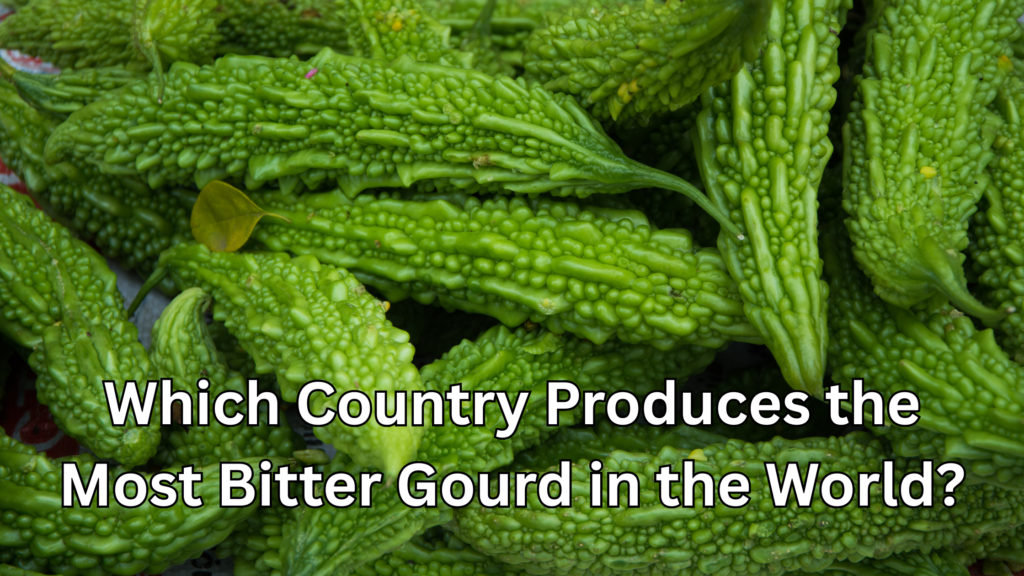
India is widely regarded as the world’s largest producer of bitter gourd, accounting for approximately 31% of global production. China ranks among the other leading producers and reportedly contributes about 22%. In this article, we are covering which country produces the most bitter gourd in the World.
However, international production rankings should be treated as estimates, as the Food and Agriculture Organisation (FAO) does not consistently publish a separate country-by-country dataset for bitter gourd. In some global databases, it is grouped with other gourds or vegetables.
Bitter Gourd: A Small Vegetable with Global Importance
Bitter gourd (Momordica charantia) is a tropical and subtropical vegetable belonging to the Cucurbitaceae family—the same botanical family as cucumber, pumpkin, squash, and watermelon.
Depending on the country, it is also called:
- Bitter melon in the United States
- Karela in India
- Ampalaya in the Philippines
- Goya in Japan, especially Okinawa
- Balsam pear or bitter squash in some regions
Although its intense bitter flavour may be unfamiliar to some consumers, bitter gourd has been an important part of Asian cuisine and traditional food culture for generations.
Table of Contents
India Is the World’s Leading Bitter Gourd Producer
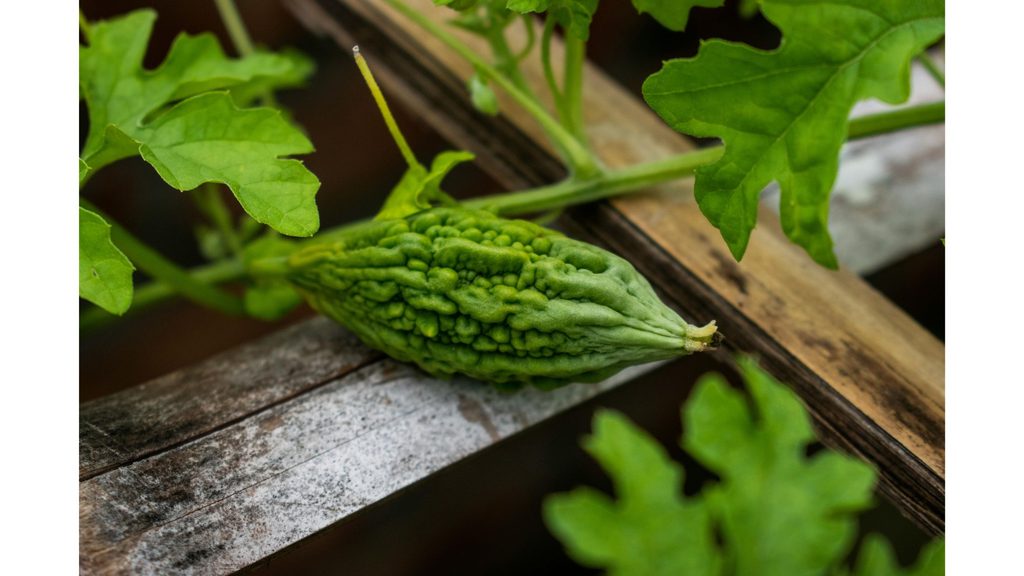
India is generally identified as the largest bitter gourd-producing country in the world. An agricultural study published in 2020 reported that India produced approximately 31% of the global crop, compared with China’s estimated 22%.
Other agricultural research also identifies India as a global leader in bitter gourd cultivation and seed production. The crop is particularly important to Indian small and medium-sized vegetable growers because it grows quickly, can be harvested repeatedly, and often commands attractive market prices.
India’s warm climate, long growing season, diverse varieties, extensive farming base, and strong domestic demand have helped the country secure its leading position.
Why Does India Produce So Much Bitter Gourd?
Several factors contribute to India’s dominance in bitter gourd production.
1. Favourable Tropical and Subtropical Climate
Bitter gourd grows best under warm, humid conditions. Many parts of India offer the ideal temperatures and long frost-free periods required for commercial cultivation.
The crop can be grown during different seasons depending on the region. With proper irrigation and crop management, farmers can produce it during summer, rainy, and off-season periods.
2. High Domestic Demand
Bitter gourd is widely consumed throughout India. It is prepared as fried vegetables, stuffed karela, curry, juice, pickles, and other regional dishes.
Its established place in Indian cooking creates steady demand in rural markets, supermarkets, wholesale vegetable markets, restaurants, and online grocery platforms.
3. Diverse Commercial Varieties
Indian farmers can choose from numerous open-pollinated and hybrid varieties. These varieties differ in:
- Fruit length and shape
- Colour and surface texture
- Bitterness
- Yield potential
- Disease tolerance
- Suitability for different seasons
- Consumer preferences
This varietal diversity allows farmers to produce bitter gourd for local markets as well as specialised export customers.
4. Suitable Small-Farm Production System
Bitter gourd can generate several harvests from the same crop. Once fruiting begins, farmers can pick marketable fruits at regular intervals.
Vertical trellising also helps growers use their available land more efficiently. When managed properly, trellises improve sunlight penetration, fruit appearance, ventilation, and harvesting convenience.
5. Established Seed and Supply Network
India has a strong network of vegetable seed companies, nurseries, input dealers, wholesalers, and commission agents. This agricultural infrastructure supports bitter gourd cultivation from seed selection to final sale.
How Much Bitter Gourd Does India Produce?
Recent Indian horticultural references place national bitter gourd production at roughly 1.3 million metric tons annually, although the figure varies by crop year and reporting source.
India’s Ministry of Agriculture and Farmers Welfare maintains crop-wise estimates of the area, production, and productivity of horticultural crops. Its statistics portal includes recent national and state-level horticulture estimates. Government of India horticulture statistics
Exact comparisons with other countries remain difficult because bitter gourd does not always appear as an independently reported commodity in global agricultural databases.
Which Indian State Produces the Most Bitter Gourd?
Madhya Pradesh was reported as India’s leading bitter gourd-producing state during 2023–24, followed by Gujarat. The state ranking can change from year to year because of differences in cultivated area, rainfall, market prices, and crop productivity.
Other important bitter gourd-growing states include:
- Chhattisgarh
- Odisha
- West Bengal
- Uttar Pradesh
- Bihar
- Maharashtra
- Andhra Pradesh
- Tamil Nadu
- Assam
The crop is grown across much of India, but commercial production is concentrated in areas with access to irrigation, vegetable markets, and suitable transportation.
Is China the Largest Producer of Bitter Gourd?
China is one of the world’s most important bitter gourd producers, but available research more commonly places India in first position.
Confusion arises because China is the world’s largest vegetable producer overall and grows bitter melon extensively, particularly in its warmer southern regions. Some publications consequently describe China as the leading producer, while other research ranks India first.
A frequently cited comparison assigns approximately 31% of global bitter gourd production to India and 22% to China. Because there is no regularly updated, universally accepted global table dedicated solely to this crop, it is safer to describe India as the “widely reported” or “generally recognised” leader.
Other Major Bitter Gourd-Producing Countries
Bitter gourd is grown throughout tropical and subtropical regions. Apart from India and China, notable producers include:
- Thailand
- Vietnam
- Philippines
- Bangladesh
- Pakistan
- Indonesia
- Sri Lanka
- Malaysia
The University of Florida describes bitter melon as a popular vegetable cultivated in China, India, Thailand, the Philippines, and Vietnam. It is also grown commercially on a smaller scale in Florida and other warm regions of the United States.
Where Is Bitter Gourd Grown in the United States?
Bitter melon remains a speciality vegetable in the United States, but demand has increased alongside interest in Asian, Caribbean, African, and Latin American cuisines.
Commercial production is concentrated mainly in warmer states, including:
- Florida
- California
- Hawaii
- Texas
It can also be grown as a seasonal summer crop in many other states. American growers generally start seeds after the threat of frost has passed and train the fast-growing vines on a strong trellis.
Local production can be attractive for speciality farmers because freshly harvested bitter melon is often preferred by ethnic grocery stores, farmers’ markets, Asian restaurants, and community-supported agriculture customers.
What Growing Conditions Does Bitter Gourd Need?
Bitter gourd performs best in warm weather, fertile soil, and full sunlight.
The crop generally requires:
- Temperatures of approximately 75°F to 95°F
- Full sun exposure
- Well-drained, fertile soil
- Regular irrigation
- Strong trellis support
- Pollinator activity or assisted pollination
- Protection from fruit flies and fungal diseases
The FAO’s EcoCrop resource notes that bitter gourd is typically grown in hot, humid tropical regions. Depending on the variety and production system, yields of approximately 10 to 30 metric tons per hectare may be possible.
Why Is Global Demand for Bitter Gourd Increasing?
Bitter gourd is moving beyond its traditional Asian markets. Its growing visibility in the United States and other Western countries is being driven by:
- Greater interest in international cuisines
- Expanding Asian and Caribbean communities
- Demand for unusual speciality vegetables
- Growth of farmers’ markets
- Interest in plant-based foods
- Increased availability of bitter melon juice, tea, powder, and supplements
Bitter gourd contains vitamin C, fibre, folate, and several naturally occurring plant compounds. However, consumers should not treat it as a replacement for prescribed medical care. Bitter melon supplements may interact with blood-sugar medications, so anyone with a medical condition should consult a qualified healthcare professional.
What Challenges Do Bitter Gourd Farmers Face?
Despite its commercial potential, bitter gourd production presents several challenges.
Fruit Fly Infestation
Cucurbit fruit flies can damage developing fruits and cause significant economic losses. Farmers may need field sanitation, traps, fruit protection, and integrated pest management practices.
Short Postharvest Life
Fresh bitter gourd loses moisture and quality relatively quickly. Efficient harvesting, grading, packaging, cooling, and transportation are essential—especially for export markets.
Irregular Fruit Shape and Quality
Poor pollination, nutrient imbalance, moisture stress, or pest damage may reduce marketable quality.
Price Fluctuations
When large quantities reach local wholesale markets simultaneously, prices can fall sharply. Staggered planting and direct marketing may help farmers reduce this risk.
Export Compliance
Exporters must satisfy pesticide-residue limits, phytosanitary requirements, traceability rules, and packaging standards established by destination countries.
Does India Export Bitter Gourd?
Yes. India exports fresh bitter gourd to markets with large South Asian communities, including the United Arab Emirates, United Kingdom, Qatar, Oman, Singapore, and other destinations.
Nevertheless, most of India’s bitter gourd production is consumed domestically. Its short shelf life and sensitivity to handling make international shipment more complicated than the export of less-perishable crops.
Improved cold chains, residue-compliant farming, export-grade packaging, and faster logistics could help India expand its presence in the global speciality-vegetable market.
Frequently Asked Questions
Which country produces the most bitter gourd?
India is widely reported as the largest bitter gourd producer in the world, contributing an estimated 31% of global production.
Which country is the second-largest bitter gourd producer?
China is generally considered the second-largest producer and is estimated to contribute around 22% of global supply.
What is bitter gourd called in the United States?
In the United States, it is most commonly called bitter melon. It may also be sold as bitter squash, karela, goya, or balsam pear.
Is bitter gourd a fruit or a vegetable?
Botanically, bitter gourd is a fruit because it develops from a flower and contains seeds. In cooking and agricultural marketing, however, it is treated as a vegetable.
Can bitter melon grow in the United States?
Yes. It grows especially well in warm areas such as Florida, California, Texas, and Hawaii. It can also be cultivated as a summer crop in cooler states after the risk of frost has passed.
Which state produces the most bitter gourd in India?
Based on reported 2023–24 estimates, Madhya Pradesh was India’s leading producer, followed by Gujarat.
The Bottom Line
India is generally recognised as the largest producer of bitter gourd in the world, with China occupying another leading position. India’s favourable climate, enormous domestic market, extensive farming network, and diverse commercial varieties support its dominance.
Still, readers should be cautious with exact global rankings because bitter gourd is not consistently reported as a separate commodity in international databases. The most accurate wording is that India is the world’s most widely reported leading bitter gourd producer.
Also Read: Bitter Gourd Health Benefits: Nature’s Bitter Gift to Wellness.
Also Read: 6 Benefits of Bitter Melon (Bitter Gourd) and its Extract