Diseases of Banana
Banana is one of the most important fruit crops grown in tropical and subtropical regions. It plays a vital role in food security and farmers’ income, especially in countries like India. However, banana cultivation is highly vulnerable to various diseases caused by fungi, bacteria, viruses, and nematodes.
These diseases can significantly reduce yield, fruit quality, and plantation life if not managed properly. Understanding the major banana diseases, their symptoms, and control measures is essential for successful banana farming.
Table of Contents
1. Panama Disease (Fusarium Wilt)
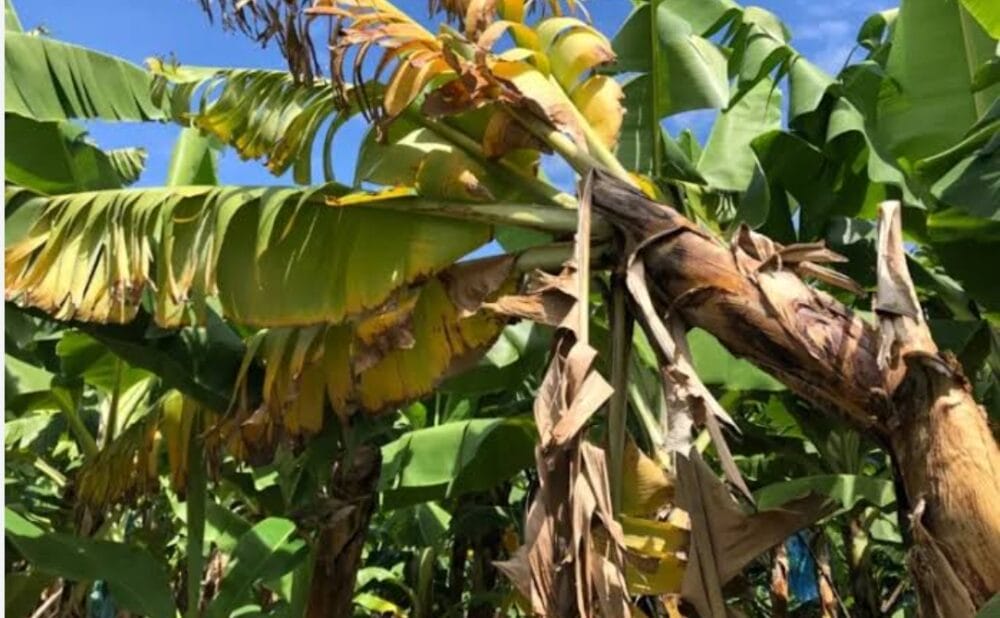
Panama disease is one of the most destructive diseases of banana, caused by the soil-borne fungus Fusarium oxysporum f. sp. cubense. The disease mainly affects the vascular system of the plant.
Symptoms:
- Yellowing of older leaves, starting from the margins
- Wilting and collapse of leaves
- Brown or reddish discoloration in the vascular tissues of the pseudostem
- Stunted plant growth and premature plant death
Management:
- Use disease-free and resistant varieties
- Avoid planting in infected fields
- Improve soil drainage
- Practice crop rotation and field sanitation

2. Sigatoka Leaf Spot Disease
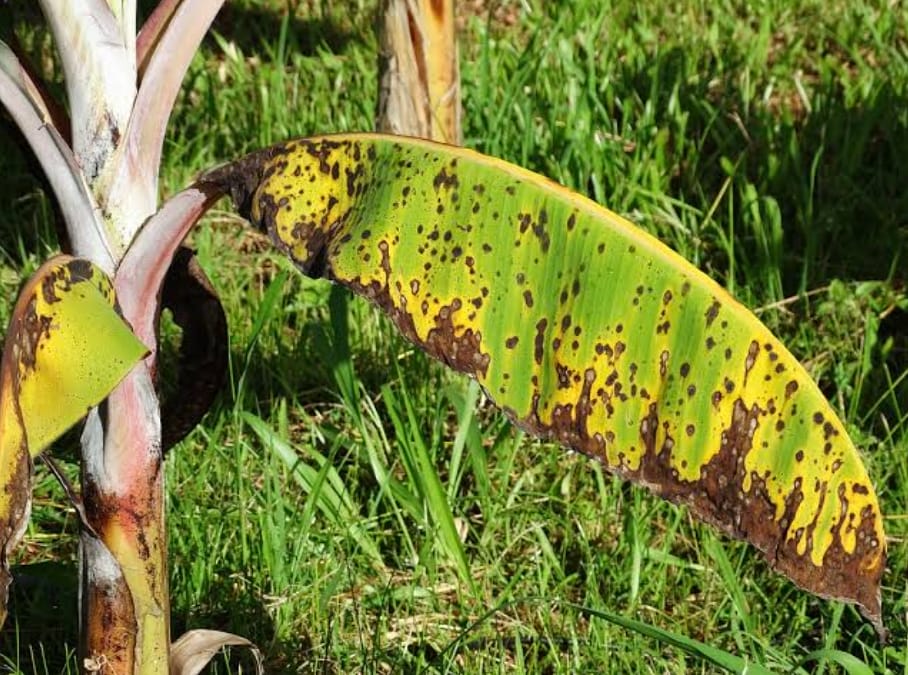
Sigatoka disease is caused by fungal pathogens and appears in two forms: Yellow Sigatoka and Black Sigatoka. Black Sigatoka is more severe and widespread.
Symptoms:
- Small yellow or brown streaks on leaves
- Dark brown or black spots with yellow halos
- Premature drying of leaves
- Reduced photosynthesis leading to smaller bunches
Management:
- Regular removal of infected leaves
- Proper spacing for air circulation
- Application of recommended fungicides
- Balanced nutrient management
Also Read:Efficon Insecticide: Advanced Pest Protection for Healthy Crops
3. Bacterial Wilt (Moko Disease)
Bacterial wilt, also known as Moko disease, is caused by Ralstonia solanacearum. It spreads rapidly through infected planting material, tools, and insects.
Symptoms:
- Sudden wilting of leaves
- Yellowing and necrosis
- Bacterial ooze from cut pseudostem
- Premature fruit ripening and rotting
Management:
- Use clean and certified planting material
- Disinfect farm tools regularly
- Remove and destroy infected plants
- Control insect vectors
4. Bunchy Top Disease
Bunchy top disease is a serious viral disease transmitted mainly by aphids.
Symptoms:
- Narrow, erect, and bunched leaves at the top
- Dark green streaks on leaf midrib
- Stunted plant growth
- Failure to produce fruits
Management:
- Plant virus-free suckers or tissue culture plants
- Control aphid population
- Remove and destroy infected plants
- Avoid ratooning in infected fields
Also Read:Top 5 Banana Producing Countries in the World
5. Banana Bract Mosaic Virus (BBMV)
Banana bract mosaic is another viral disease that affects banana production.
Symptoms:
- Pink or reddish mosaic patterns on bracts
- Distorted leaves
- Poor bunch development
- Reduced fruit quality
Management:
- Use healthy planting material
- Control aphids
- Remove infected plants promptly
- Maintain field hygiene
6. Anthracnose
Anthracnose is a common post-harvest disease caused by Colletotrichum species.
Symptoms:
- Black sunken spots on ripening fruits
- Fruit rotting during storage and transport
- Reduced market value
Management:
- Harvest fruits carefully to avoid injury
- Wash fruits with clean water
- Use recommended post-harvest treatments
- Maintain proper storage conditions
7. Nematode Diseases
Nematodes such as root-knot and burrowing nematodes attack banana roots and weaken the plant.
Symptoms:
- Poor plant growth
- Yellowing of leaves
- Lodging of plants
- Reduced bunch size
Management:
- Use nematode-free planting material
- Apply organic manures and neem cake
- Practice crop rotation
- Improve soil health
Preventive Measures for Banana Diseases
Prevention is always better than cure in banana cultivation. Farmers should adopt integrated disease management practices such as:
- Selection of resistant varieties
- Use of tissue-culture planting material
- Regular field inspection
- Balanced fertilization and irrigation
- Proper sanitation and tool disinfection
Conclusion
Diseases of banana can cause serious economic losses if not managed in time. Early identification of symptoms and adoption of appropriate control measures are crucial for maintaining healthy plantations. By following good agricultural practices and integrated disease management strategies, farmers can minimize disease incidence and achieve higher yields and better fruit quality.
Frequently Asked Questions (FAQ)
Q1. What is the most dangerous disease of banana?
Panama disease (Fusarium wilt) is considered the most dangerous due to its soil-borne nature and long survival period.
Q2. How can banana viral diseases be controlled?
Viral diseases can be controlled by using virus-free planting material, controlling insect vectors, and removing infected plants.
Q3. Can banana diseases spread through soil?
Yes, diseases like Panama disease and nematode infestations spread through contaminated soil.
Q4. Is chemical control effective for banana diseases?
Chemical control is effective for some fungal diseases, but integrated management is recommended for long-term control.
Q5. Why is tissue culture planting material recommended?
Tissue culture plants are disease-free, uniform in growth, and help reduce the spread of soil- and virus-borne diseases.
Also Read:Banana
-
-
-

-

-

-

-
-
-

-

-
-

-

-
-

-

-

-

-

-

-

-

-

-

-

-

-

-

-

-

-

-
-

-

-

-

-
-
-

-

-

-

-

-

-
-
-

-

-

-