

Vermicompost Business Plan
With the increasing demand for organic food and sustainable agriculture, the vermicompost business has emerged as a highly profitable and eco-friendly venture. Vermicomposting converts organic waste into nutrient-rich manure using earthworms, improving soil fertility and crop yield.
This business requires low investment, minimal risk, and offers steady income, making it ideal for farmers, entrepreneurs, and self-help groups.
Table of Contents
Here is a short and clear table on a Vermicompost Business Plan:
| Aspect | Details |
|---|---|
| Business Type | Organic fertilizer production |
| Raw Materials | Cow dung, agricultural waste, earthworms |
| Required Space | 500–1,000 sq. ft. (small scale) |
| Investment | ₹15,000 – ₹50,000 (small unit) |
| Earthworm Species | Eisenia fetida, Eudrilus eugeniae |
| Production Time | 45–60 days per cycle |
| Monthly Production | 1–3 tons (small scale) |
| Selling Price | ₹6–10 per kg |
| Monthly Income | ₹15,000 – ₹30,000 (approx.) |
| Major Customers | Farmers, nurseries, gardeners |
| Government Support | Subsidies under agriculture schemes |
| Profit Margin | 40%–60% |
What is Vermicompost?
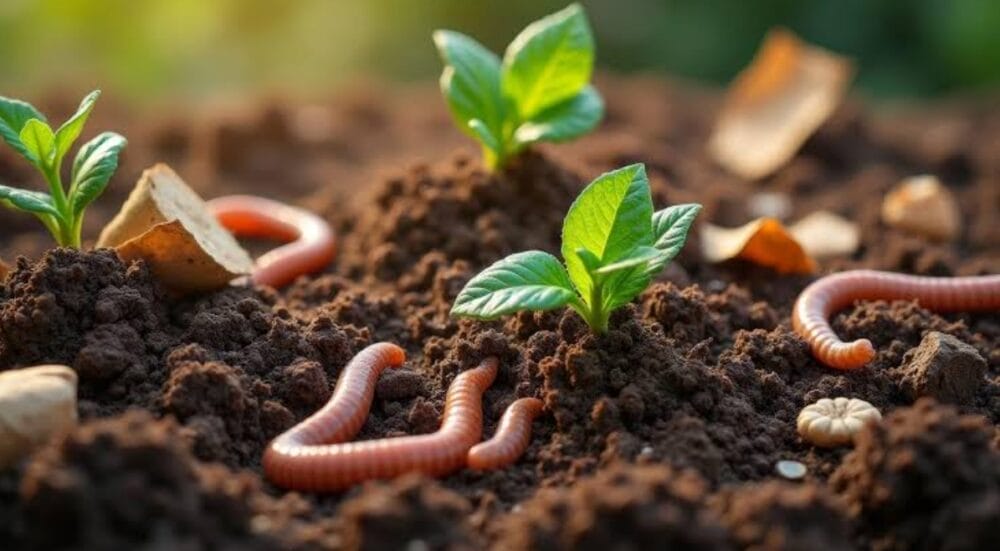
Vermicompost is an organic fertilizer produced through the decomposition of biodegradable waste by earthworms such as Eisenia fetida, Eudrilus eugeniae, and Perionyx excavatus. It contains essential nutrients like nitrogen, phosphorus, potassium, micronutrients, beneficial microbes, and enzymes that enhance plant growth naturally.
Why Start a Vermicompost Business?
The vermicompost business is gaining popularity due to several advantages:




- Growing demand for organic fertilizers
- Low startup cost and easy setup
- Utilizes agricultural and household waste
- Improves soil health and reduces chemical fertilizer use
- Government subsidies and training support
- Suitable for rural and urban areas
With proper planning, this business can generate regular income throughout the year.
Vermicompost Business Plan Overview
A well-structured vermicompost business plan includes location selection, raw materials, production process, investment, marketing, and profit estimation.
1. Location and Space Requirement
Vermicompost production can be started in a backyard, farm, shed, or open land with shade. A minimum 500–1,000 sq. ft. area is sufficient for a small-scale unit. The place should be well-drained, protected from direct sunlight and heavy rain, and have access to water.
2. Raw Materials Required
The main raw materials include:
- Cow dung (preferably partially decomposed)
- Agricultural waste (dry leaves, straw, crop residue)
- Vegetable and fruit waste
- Earthworms (Eisenia fetida is most commonly used)
- Water
Cow dung and farm waste are usually easily available, reducing raw material costs.
3. Vermicompost Production Process
The production process involves the following steps:
First, prepare beds or pits using bricks, wooden boxes, or cement tanks. Spread a base layer of dry straw or coconut husk. Add partially decomposed cow dung mixed with organic waste. Introduce earthworms evenly on the bed and cover it with moist gunny bags or straw.
Maintain moisture at 60–70% by sprinkling water regularly. Avoid waterlogging. Within 45–60 days, the waste converts into dark, granular vermicompost. Harvest the compost by separating earthworms and sieve it before packaging.
Also Read:Fish Farming: A Complete Guide to Profitable Aquaculture
4. Investment and Cost Estimation
The initial investment depends on scale:
- Small-scale unit (1 ton/month): ₹20,000–₹40,000
- Medium-scale unit (5 tons/month): ₹1–2 lakh
- Large-scale unit (10+ tons/month): ₹3–5 lakh
Costs include shed construction, earthworms, raw materials, labor, packaging, and marketing. Many state governments and NABARD provide subsidies and training for vermicompost units.
5. Packaging and Storage
Vermicompost is packed in 5 kg, 10 kg, 25 kg, or 50 kg bags. Use breathable bags with proper labeling including nutrient content, weight, and usage instructions. Store in a cool, dry place away from direct sunlight to maintain quality.
6. Marketing and Sales Strategy
Effective marketing is key to success. You can sell vermicompost through:
- Local farmers and nurseries
- Agricultural input shops
- Organic farming groups
- Online platforms and social media
- Government tenders and cooperatives
Building direct relationships with farmers ensures repeat customers and better margins.
7. Profit Margin and Income
Vermicompost is sold at ₹5–15 per kg, depending on quality and location. A small unit producing 1 ton per month can earn:
- Monthly revenue: ₹8,000–₹15,000
- Net profit: ₹5,000–₹10,000
With scale and efficient marketing, profits increase significantly. Additional income can be earned by selling earthworms and vermiwash.
Also Read :Basics of Composting at Home: A Complete Beginner’s Guide
Challenges in Vermicompost Business
Some common challenges include maintaining moisture and temperature, protecting worms from pests, and ensuring consistent quality. These issues can be managed with proper training and regular monitoring.
Conclusion
The vermicompost business plan offers a sustainable and profitable opportunity for farmers and entrepreneurs. With low investment, eco-friendly production, and rising demand for organic inputs, vermicomposting can become a reliable source of income.
Proper planning, quality control, and smart marketing are the keys to long-term success.
Frequently Asked Questions (FAQ)
Q1. Is vermicompost business profitable in India?
Yes, due to high demand for organic fertilizers and low production cost, vermicompost business is profitable.
Q2. Which earthworms are best for vermicomposting?
Eisenia fetida, Eudrilus eugeniae, and Perionyx excavatus are commonly used.
Q3. How long does it take to produce vermicompost?
It usually takes 45–60 days to produce ready vermicompost.
Q4. Can vermicompost be produced at home?
Yes, vermicompost can be easily produced at home using kitchen waste.
Q5. Are there government subsidies for vermicompost units?
Yes, many state governments and NABARD provide subsidies, loans, and training programs.
Q6. What is the shelf life of vermicompost?
If stored properly, vermicompost can be used for up to one year.


