Types of Mushrooms
Mushrooms are becoming increasingly popular in India due to their high nutritional value, medicinal properties, and rising demand in domestic and export markets. India’s diverse climate—ranging from tropical to temperate—supports the cultivation and natural growth of several mushroom varieties.
From commonly consumed edible mushrooms to medicinal and wild types, mushrooms play an important role in Indian cuisine, health care, and agribusiness. This blog explores the major types of mushrooms found and cultivated in India, along with their uses and benefits.
Table of Contents
1. Button Mushroom (Agaricus bisporus)
Button mushroom is the most widely cultivated and consumed mushroom in India. It accounts for more than 70% of total mushroom production in the country. These mushrooms are white, round, and have a mild flavor, making them suitable for various Indian and continental dishes.
Button mushrooms grow best in cool climates with temperatures between 14–18°C. In India, they are mainly cultivated in states such as Himachal Pradesh, Haryana, Punjab, Uttarakhand, and parts of Maharashtra. They are rich in protein, fiber, B-complex vitamins, and minerals like selenium and potassium.



2. Oyster Mushroom (Pleurotus species)
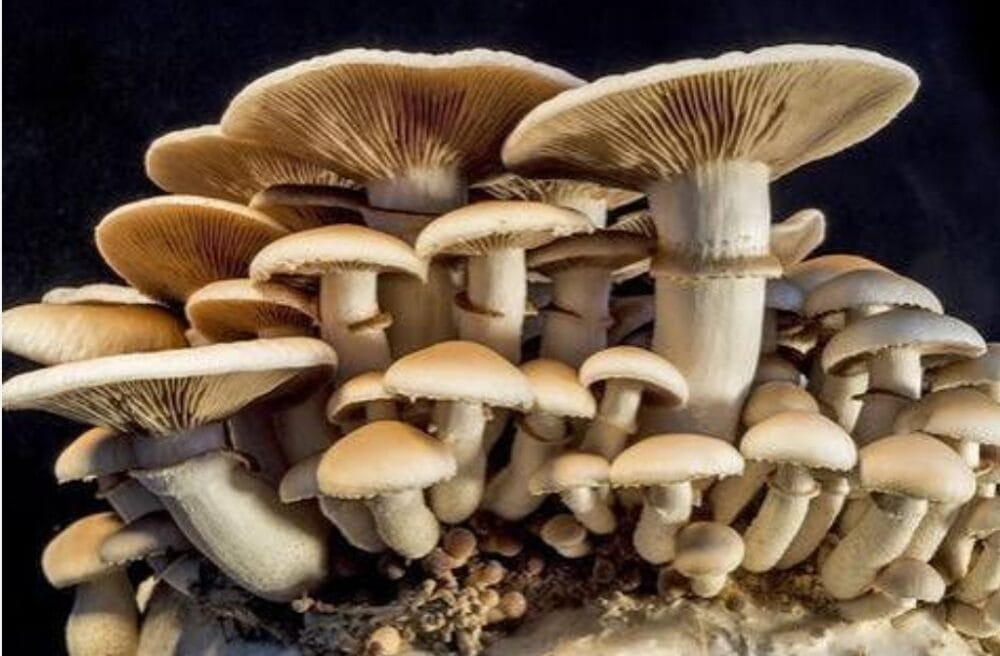
Oyster mushrooms are the second most popular mushrooms in India due to their easy cultivation and low investment requirement. They grow in clusters and resemble oyster shells in shape. These mushrooms are highly adaptable and can grow on agricultural waste like paddy straw, wheat straw, and sugarcane bagasse.
Oyster mushrooms are widely grown in Odisha, West Bengal, Bihar, Tamil Nadu, and Kerala. They are rich in protein, iron, calcium, and antioxidants. Due to their fast growth cycle and high yield, oyster mushrooms are ideal for small-scale and beginner farmers.
3. Paddy Straw Mushroom (Volvariella volvacea)
Paddy straw mushroom is commonly cultivated in tropical and subtropical regions of India. It thrives in warm and humid conditions with temperatures ranging from 30–35°C. These mushrooms are popular in South and East India, particularly in Tamil Nadu, Andhra Pradesh, Odisha, and West Bengal.
They grow on paddy straw and other agricultural residues and are known for their soft texture and delicate flavor. Paddy straw mushrooms are rich in vitamin C, protein, and essential amino acids. However, they have a short shelf life and are mostly consumed locally.
Also Read:Mushroom Agriculture : A Complete Beginner friendly guide
4. Milky Mushroom (Calocybe indica)
Milky mushroom is an indigenous variety developed in India and is well suited for tropical climates. It can be cultivated throughout the year in most parts of the country. These mushrooms are large, white, and fleshy with a firm texture.
Milky mushrooms are popular in southern states like Tamil Nadu, Karnataka, and Telangana. They have a longer shelf life compared to other tropical mushrooms and are rich in protein, carbohydrates, calcium, and iron. Their attractive appearance makes them suitable for fresh markets.
5. Shiitake Mushroom (Lentinula edodes)
Shiitake mushrooms are gaining popularity in India due to their medicinal properties and export potential. Traditionally grown in East Asia, they are now cultivated on a limited scale in cooler regions of India such as Himachal Pradesh and parts of the Northeast.
Shiitake mushrooms are known for boosting immunity, lowering cholesterol, and supporting heart health. They have a smoky flavor and are widely used in soups, stir-fries, and herbal medicines.
6. Ganoderma (Reishi Mushroom)
Ganoderma, also known as Reishi or Lingzhi, is a medicinal mushroom rather than a culinary one. It is used extensively in traditional medicine systems like Ayurveda and Chinese medicine. In India, Ganoderma is found in forest areas and also cultivated commercially for pharmaceutical use.
Reishi mushrooms are known for their immune-boosting, anti-inflammatory, and anti-cancer properties. They are usually consumed in powdered form, capsules, or herbal teas.
7. Morel Mushroom (Morchella species)
Morel mushrooms, locally known as Guchchi, are rare and highly prized wild mushrooms found in the Himalayan regions of Jammu & Kashmir, Himachal Pradesh, and Uttarakhand. They grow naturally in forests and cannot be cultivated easily.
Morels are expensive due to their limited availability and high demand in international markets. They have a unique honeycomb structure and are rich in protein, minerals, and antioxidants.
8. Termite Mushroom (Termitomyces species)
Termite mushrooms grow naturally near termite mounds during the monsoon season. They are found in central and southern parts of India and are highly valued for their rich flavor and nutritional quality.
These mushrooms are difficult to cultivate artificially and are mostly collected from forests. They are rich in protein and essential amino acids and are considered a seasonal delicacy.
Also Read:Vermicompost Business Plan: A Profitable Organic Farming Opportunity
Conclusion
India offers a wide variety of mushrooms, ranging from commonly cultivated edible types to rare medicinal and wild varieties. With growing awareness of healthy eating and sustainable farming, mushroom cultivation is emerging as a profitable agribusiness opportunity. Whether for nutrition, medicine, or income generation, mushrooms have significant potential in India’s agricultural future.
Frequently Asked Questions (FAQ)
Q1. Which mushroom is most commonly grown in India?
Button mushroom is the most commonly grown mushroom in India.
Q2. Which mushroom is easiest to cultivate for beginners?
Oyster mushroom is the easiest and most suitable for beginners due to low cost and simple techniques.
Q3. Are mushrooms healthy for daily consumption?
Yes, mushrooms are rich in protein, vitamins, minerals, and antioxidants, making them healthy for regular consumption.
Q4. Which mushroom is most expensive in India?
Morel mushroom (Guchchi) is the most expensive due to its rarity and wild nature.
Q5. Can mushrooms be grown at home?
Yes, oyster and button mushrooms can be grown at home with basic equipment and proper hygiene.
Q6. Are medicinal mushrooms grown in India?
Yes, medicinal mushrooms like Ganoderma and Shiitake are cultivated on a limited scale in India.