The Best Grow Lights for Seed Starting Indoors
Starting seeds indoors gives you a strong head-start on the growing season, protects tender seedlings from unpredictable weather, and allows you to grow a wider range of plants. But natural sunlight isn’t always enough — especially in early spring or winter months. That’s where grow lights come in. They mimic the sun’s spectrum, provide the right intensity, and help your seedlings develop into vigorous, healthy plants.
In this blog, we’ll walk you through the best grow lights for seed starting indoors, what features to look for, and how to choose the right setup for your space and budget.
Table of Contents
Why Use Grow Lights for Seed Starting?
When you start seeds indoors, adequate light is critical. Without enough light:
- Seedlings become leggy and weak
- Growth slows down
- Transplant shock increases
Grow lights ensure your seeds get consistent, full-spectrum light similar to the sun, promoting strong roots and compact growth so they’re ready for the garden or greenhouse.

Key benefits of using grow lights:
- Extend your growing season
- Improve germination and growth
- Prevent stretching and weak stems
- Offer adjustable control over light intensity
What to Look for in Grow Lights
Choosing a grow light can be overwhelming. Here are the most important factors:
1. Light Spectrum
Plants need different wavelengths throughout their life cycles:
- Blue light supports vegetative growth and compact seedlings.
- Red light supports flowering and transition phases.
For seed starting, aim for full-spectrum LED lights that mimic natural sunlight.
2. Light Intensity (PPFD)
Measured in micromoles (µmol/m²/s), PPFD tells you how much usable light seedlings receive. Young seedlings generally thrive with moderate intensity, while larger plants need more powerful light.
3. Coverage Area
Match the light’s coverage to your seed tray or shelf size. Too small, and seedlings will stretch toward the edges; too large, and you’ll waste energy.
4. Adjustability
A stand or adjustable hanging height lets you raise lights as plants grow — essential to prevent burning or stretching.
5. Energy Efficiency
LED lights are energy-efficient, cool running, and have long lifespans. They cost more upfront than fluorescent lights but save money on electricity.
Also Read: The Best Seed Starting Soil Mix, Trays, and LED Lights for Indoors
Top Grow Lights for Seed Starting Indoors
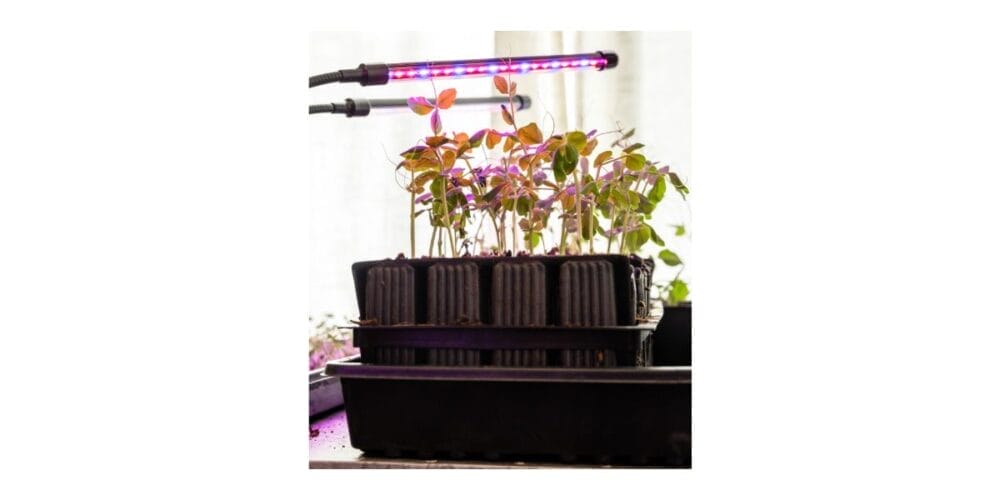
Here are some of the best grow lights available today, suitable for seed starting at home, apartments, or greenhouses.
1. Full-Spectrum LED Panel Grow Lights
Best for: Larger seed trays, vegetable and flower seedlings
Why it’s great:
- Provides consistent, balanced full spectrum
- High efficiency with low heat output
- Ideal for a wide range of seedlings
Features to look for:
- Adjustable dimming settings
- Large coverage area (e.g., 2’ x 2’ or more)
- Long lifespan (50,000+ hours)
2. LED Grow Light Strips
Best for: Seed racks, narrow shelves, small spaces
Why it’s great:
- Slim, space-saving design
- Easy to mount and position
- Typically more affordable
Features to look for:
- Full spectrum LEDs
- Flexible mounting options
- Low energy use
These are perfect if you have a vertical rack system or a narrow window bench. Place the strips close to seedlings for even light coverage.
3. Fluorescent T5 Grow Lights
Best for: Beginners on a budget
Why it’s great:
- Affordable and beginner-friendly
- Good light for seedlings and young plants
- Lower heat than older tube styles
Features to look for:
- Full-spectrum T5 bulbs
- Adjustable hanging kit
- Pair with reflectors to boost light
While LEDs are more efficient overall, T5 fluorescents still offer excellent value for small seed starts, especially in cooler households.
4. Clip-On LED or CFL Grow Lights
Best for: Very small spaces, a few trays, or microgreens
Why it’s great:
- Easy to set up and reposition
- Great for hobby growers and first-time users
- Portable and inexpensive
Features to look for:
- Full-spectrum or plant-specific bulbs
- Adjustable arms or clips
- Moderate intensity suited to small setups
Clip-on lights are great if you’re starting a few herbs or small batches of vegetables.
Also Read: How to Make Compost Fertilizer from Kitchen Waste: A Complete Guide
How to Set Up Your Grow Lights

Follow these steps to get the most out of your seed-starting setup:
1. Position Lights Close (But Not Too Close)
- Keep the light source 2–4 inches above seedlings
- As seedlings grow, gradually raise the lights
- Maintain even spacing for uniform growth
2. Set a Timer
Most seedlings need 12–16 hours of light per day. Using a timer helps mimic natural daylight and keeps plants on a regular schedule.
3. Watch Seedling Behavior
- Stretching upward? Raise the light or increase intensity.
- Leaves turning yellow or burned? Move lights farther away or reduce intensity.
Seed-Starting Tips for Success
To maximize your seed starting results:
- Use a light, sterile seed-starting mix
- Water from below to avoid damping-off disease
- Label your trays to track varieties
- Harden off seedlings before transplanting outdoors
Frequently Asked Questions
Q: How close should my grow lights be to seedlings?
A: Usually 2–4 inches above the seedlings during early stages, adjusting upward as they grow.
Q: Can I use regular household lights?
A: Household bulbs lack the full spectrum and intensity needed — seedlings often stretch or weaken.
Q: How long should lights stay on?
A: Aim for 12–16 hours per day, with a consistent on/off schedule.
Also Read: 5 Quick Tips for Gardening Indoors
Final Thoughts
Investing in quality grow lights dramatically improves seed starting success. Whether you choose full-spectrum LED panels, compact strip lights, T5 fluorescents, or clip-on LEDs, the key is to match the light to your space and seed tray needs. With the right setup, you’ll grow strong, healthy seedlings ready to thrive in your garden.
Also Read: About The Best Grow Lights for Seed Starting Indoors — A Complete Guide on gardenary.com Site