Cherry Farming: A Complete Guide to Growing Profitable and Healthy Cherry Orchards

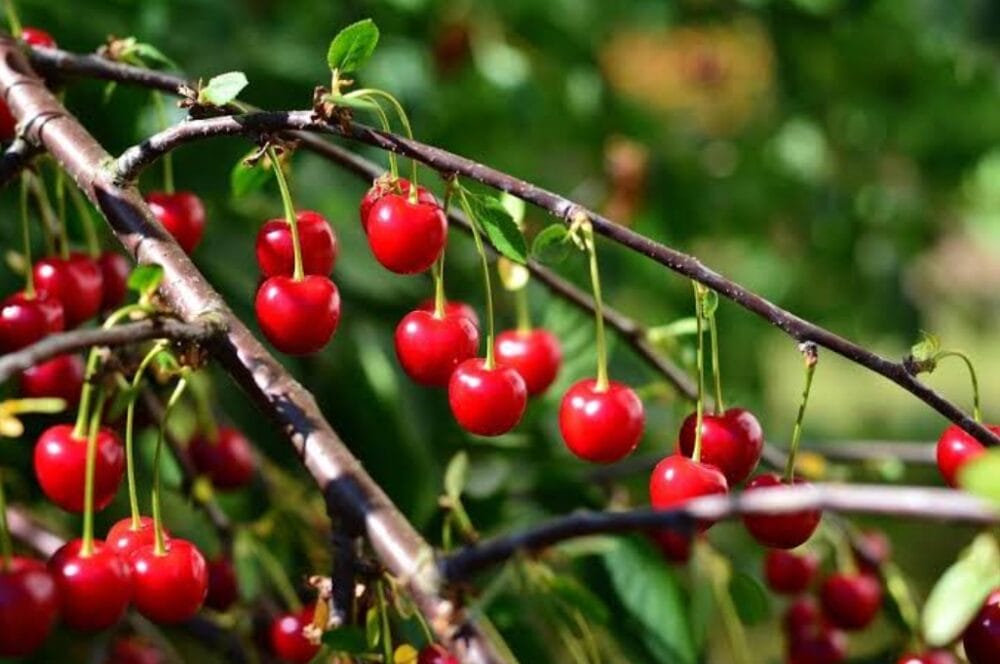
Cherry farming is gaining popularity among fruit growers due to its high market value, excellent taste, and nutritional benefits. Cherries are widely used for fresh consumption, bakery products, juices, jams, and processed foods.
Although cherry cultivation requires specific climatic conditions and careful management, it can be highly profitable when done correctly. This blog provides a complete guide to cherry farming, including climate, soil, varieties, planting, care, pests, harvesting, and marketing, followed by frequently asked questions.
Introduction to Cherry Farming
Cherries belong to the genus Prunus and are broadly classified into sweet cherries (Prunus avium) and sour cherries (Prunus cerasus). Sweet cherries are mainly consumed fresh, while sour cherries are used for processing.
Cherry trees are perennial and can produce fruits for 20–30 years, making them a long-term investment for farmers.


Climate and Temperature Requirements
Cherry plants thrive best in temperate climates. They require cold winters for dormancy and moderate summers for proper fruit development. Most cherry varieties need 800–1,200 chilling hours (temperature below 7°C) during winter.
Excessive heat, frost during flowering, or heavy rainfall can negatively affect fruit set and quality. In India, cherry cultivation is mainly practiced in Jammu & Kashmir, Himachal Pradesh, and parts of Uttarakhand.
Soil Requirements
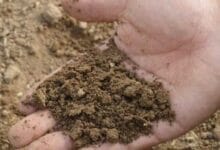
Well-drained loamy or sandy-loam soil is ideal for cherry farming. The soil should be rich in organic matter with a pH range of 6.0 to 7.5. Waterlogged or heavy clay soils should be avoided as they can cause root rot and poor tree growth. Before planting, soil testing is recommended to check nutrient status and pH.
Popular Cherry Varieties
Some commonly grown cherry varieties include:
- Sweet cherries: Bing, Lambert, Stella, Rainier
- Sour cherries: Montmorency, Early Richmond
- Low-chill varieties: Royal Lee, Minnie Royal (suitable for warmer regions)
Selecting the right variety based on climate and market demand is crucial for successful cherry farming.
Propagation and Planting
Cherry plants are usually propagated through grafting or budding on suitable rootstocks. Planting is done during the dormant season, usually in winter. Pits of size 1m × 1m × 1m are prepared and filled with a mixture of topsoil, compost, and well-rotted farmyard manure.
Spacing depends on the variety and rootstock used, generally ranging from 4–6 meters between plants. Proper spacing ensures good air circulation and sunlight penetration.
Irrigation Management
Cherry trees need regular but controlled irrigation. Young plants require frequent watering, while mature trees need irrigation during flowering, fruit set, and fruit development stages. Over-irrigation should be avoided as it may cause fruit cracking and root diseases.
Drip irrigation is highly recommended for efficient water use.
Manure and Fertilizer Management
Balanced nutrition plays an important role in cherry yield and fruit quality. Organic manure should be applied annually to improve soil fertility.
Nitrogen, phosphorus, and potassium fertilizers are applied based on tree age and soil test results. Excess nitrogen should be avoided as it promotes vegetative growth at the expense of fruiting.
Also Read: Top 7 Organic Fertilisers for Coconut Trees
Pruning and Training
Pruning is essential to maintain tree shape, improve sunlight exposure, and increase fruit production. Cherry trees are commonly trained in open center or central leader systems. Pruning should be done during the dormant season to remove dead, diseased, and overcrowded branches.
Pest and Disease Management
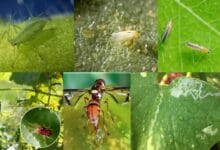
Common pests affecting cherry trees include aphids, fruit flies, and borers. Diseases such as brown rot, leaf spot, powdery mildew, and bacterial canker can cause serious yield losses. Integrated pest management (IPM), use of resistant varieties, proper sanitation, and timely spraying of recommended fungicides and insecticides help in controlling these problems.
Also ReadPomegranate Diseases: Identification, Causes, and Effective Management
Harvesting and Yield
Cherry trees start bearing fruits within 3–5 years after planting. Fruits are harvested when they attain full color, sweetness, and firmness. Harvesting is done manually to avoid damage to fruits and branches. Average yield ranges from 8–15 tons per hectare, depending on variety, age, and management practices.
Post-Harvest Management and Marketing
Cherries are highly perishable and require careful handling. Fruits should be cooled immediately after harvest and stored at low temperatures to maintain freshness. Proper grading, packaging, and transportation help in fetching better market prices.
Cherries have good demand in local markets as well as for export, making cherry farming a profitable venture.
Frequently Asked Questions (FAQ)
Q1. Is cherry farming profitable?
Yes, cherry farming can be highly profitable due to high market demand and premium prices, especially for quality fruits.
Q2. How long does a cherry tree take to bear fruit?
Cherry trees usually start bearing fruits 3–5 years after planting.
Q3. Can cherries be grown in tropical regions?
Cherries require chilling hours, so they are not suitable for tropical regions unless low-chill varieties are used.
Q4. What is the lifespan of a cherry tree?
A well-maintained cherry tree can produce fruits for 20–30 years.
Q5. Which irrigation method is best for cherry farming?
Drip irrigation is considered the best method as it saves water and maintains optimal soil moisture.
Q6. What are the main diseases of cherry plants?
Common diseases include brown rot, powdery mildew, leaf spot, and bacterial canker.
Q7. When is the best time to harvest cherries?
Cherries should be harvested when they are fully colored, firm, and sweet for best quality and market value.
Also Read: Cherry Farming