
Yellow Capsicum Cultivation
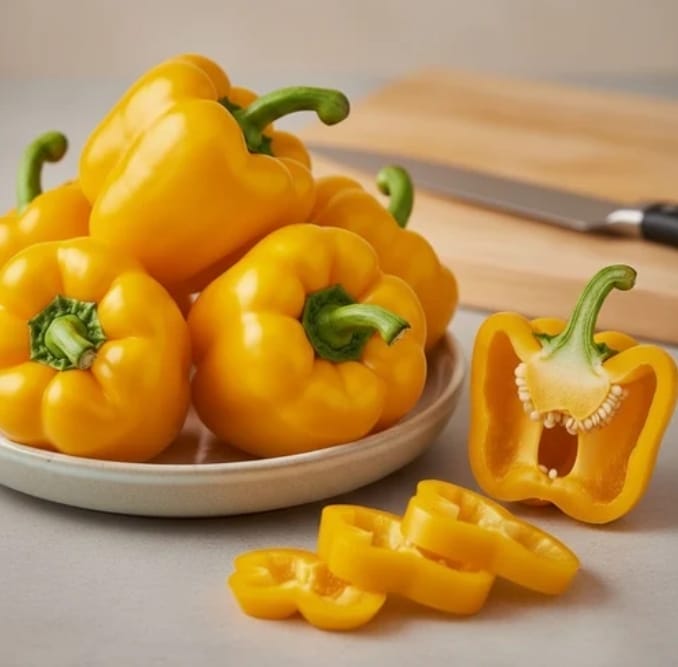
Yellow capsicum (Capsicum annuum), also known as yellow bell pepper, is a high-value vegetable crop widely grown for its sweet taste, bright color, and excellent nutritional benefits. Compared to green capsicum, yellow capsicum has a longer maturity period and higher market price, making it popular among commercial farmers.
It can be cultivated successfully in open fields, polyhouses, and greenhouses with proper management practices.
Table of Contents
Here is a nutritional profile of capsicum (bell pepper) :
Nutritional Profile of Capsicum (per 100 g)
| Nutrient | Amount |
|---|---|
| Energy | 20–31 kcal |
| Water | 92 g |
| Carbohydrates | 4.6–6.0 g |
| Sugars | 2.4–4.2 g |
| Dietary Fiber | 1.7–2.1 g |
| Protein | 0.9–1.3 g |
| Fat | 0.2–0.4 g |
| Vitamin C | 80–190 mg |
| Vitamin A | 150–370 µg |
| Vitamin B6 | 0.2–0.3 mg |
| Folate (B9) | 45–55 µg |
| Vitamin E | 0.4–1.6 mg |
| Vitamin K | 4–8 µg |
| Potassium | 170–210 mg |
| Calcium | 7–12 mg |
| Magnesium | 10–12 mg |
| Phosphorus | 20–26 mg |
| Iron | 0.3–0.5 mg |
| Zinc | 0.1–0.3 mg |
Climate Requirements
Yellow capsicum grows best in a mild and warm climate. The ideal temperature range for healthy growth is 18°C to 30°C. Temperatures below 15°C can slow plant growth, while temperatures above 35°C may cause flower drop and poor fruit setting. Capsicum is sensitive to frost, so cultivation should be planned accordingly. In India, yellow capsicum is commonly grown during winter and summer seasons, especially under protected cultivation.
Soil Requirements
Well-drained, fertile soils rich in organic matter are ideal for yellow capsicum cultivation. Sandy loam to loam soils with good aeration give the best results. The optimal soil pH ranges between 6.0 and 6.8. Avoid heavy clay soils and waterlogged fields, as they can lead to root diseases and poor plant growth.


Before planting, plough the field thoroughly and incorporate well-decomposed farmyard manure (FYM) at the rate of 20–25 tons per hectare to improve soil fertility and structure.
Also Read:Sunflower Cultivation: A Complete Guide for Farmers
Seed Selection and Nursery Raising
High-quality hybrid seeds are recommended for better yield and uniform fruit size. Seeds are first raised in a nursery or pro trays. For nursery preparation:
- Treat seeds with bio-fungicides or fungicides to prevent damping-off disease.
- Sow seeds in cocopeat or sterilized soil.
- Maintain proper moisture and temperature.
Seeds usually germinate within 7–10 days. Seedlings become ready for transplanting in 25–30 days when they have 4–5 true leaves.
Transplanting and Spacing
Transplant healthy seedlings in the main field during the evening hours to reduce transplant shock. The recommended spacing for yellow capsicum is:
- 45–60 cm between plants
- 60–75 cm between rows
Proper spacing ensures good air circulation, sunlight penetration, and reduces disease incidence.
Irrigation Management
Yellow capsicum requires regular and uniform irrigation. Overwatering can cause root rot, while water stress may result in flower drop and poor fruit quality.
- Provide light irrigation immediately after transplanting.
- Irrigate every 5–7 days depending on soil type and climate.
- Drip irrigation is highly recommended as it saves water and improves nutrient efficiency.
Nutrient Management
Capsicum is a nutrient-demanding crop. Balanced fertilization is essential for high yield and quality fruits.
- Apply nitrogen (N), phosphorus (P), and potassium (K) in split doses.
- Nitrogen promotes vegetative growth.
- Phosphorus supports root and flower development.
- Potassium improves fruit size, color, and shelf life.
Micronutrients like calcium, magnesium, and boron help prevent physiological disorders such as blossom end rot.
Also Read: Top 10 Benefits of Organic NPK Fertilizers for healthy plants
Weed Control and Mulching
Weeds compete with capsicum plants for nutrients, water, and light. Regular hand weeding is necessary during the early growth stage. Plastic mulching (silver-black mulch) is highly beneficial as it:
- Reduces weed growth
- Conserves soil moisture
- Improves fruit quality
- Maintains soil temperature
Pest and Disease Management
Common pests in yellow capsicum include aphids, thrips, mites, and fruit borers. These pests can cause significant yield loss if not controlled.
Major diseases include damping-off, powdery mildew, leaf spot, and bacterial wilt. Preventive measures include:
- Using disease-free seedlings
- Crop rotation
- Proper spacing and ventilation
- Integrated Pest Management (IPM) practices
Harvesting and Yield
Yellow capsicum fruits are harvested when they are fully mature and attain their characteristic bright yellow color. Harvesting usually starts 70–90 days after transplanting. Fruits should be picked carefully to avoid damage to plants.
Under good management practices, the average yield of yellow capsicum is:
- 25–35 tons per hectare in open fields
- 50–80 tons per hectare under protected cultivation
Market Value and Profitability
Yellow capsicum has strong demand in urban markets, hotels, and supermarkets. Due to its premium quality and nutritional value, it fetches a higher price than green capsicum, making it a profitable crop for small and large farmers.
Frequently Asked Questions (FAQ)
1. How long does yellow capsicum take to grow?
Yellow capsicum takes about 90–120 days from sowing to final harvest.
2. Can yellow capsicum be grown in open fields?
Yes, it can be grown in open fields, but protected cultivation gives higher yield and better quality.
3. What is the best season for yellow capsicum cultivation?
In India, it is best grown during winter and summer seasons, avoiding extreme temperatures.
4. Why are my capsicum flowers falling?
Flower drop can occur due to high temperature, water stress, nutrient imbalance, or pest attack.
5. How often should yellow capsicum be irrigated?
Irrigation should be done every 5–7 days, depending on soil moisture and climate.
6. What causes blossom end rot in capsicum?
Blossom end rot is caused by calcium deficiency and irregular watering.
7. Is yellow capsicum cultivation profitable?
Yes, due to its high market demand and better price, yellow capsicum farming is highly profitable.
Also Read:Capsicum Farming in Polyhouse- Cost, Yield & Profit


