Introduction Of Pirate Insecticide
In modern agriculture, pest infestations can be devastating, leading to major yield losses and poor crop quality. To combat this challenge, Pirate Insecticide has emerged as a trusted ally for farmers. Known for its broad-spectrum control and long-lasting action, Pirate Insecticide offers effective protection against several destructive pests that attack cotton, vegetables, and other field crops.
Let’s explore how Pirate Insecticide works, its benefits, recommended uses, and why it’s considered one of the most reliable insecticides in integrated pest management (IPM).
Table of Contents
What is Pirate Insecticide?
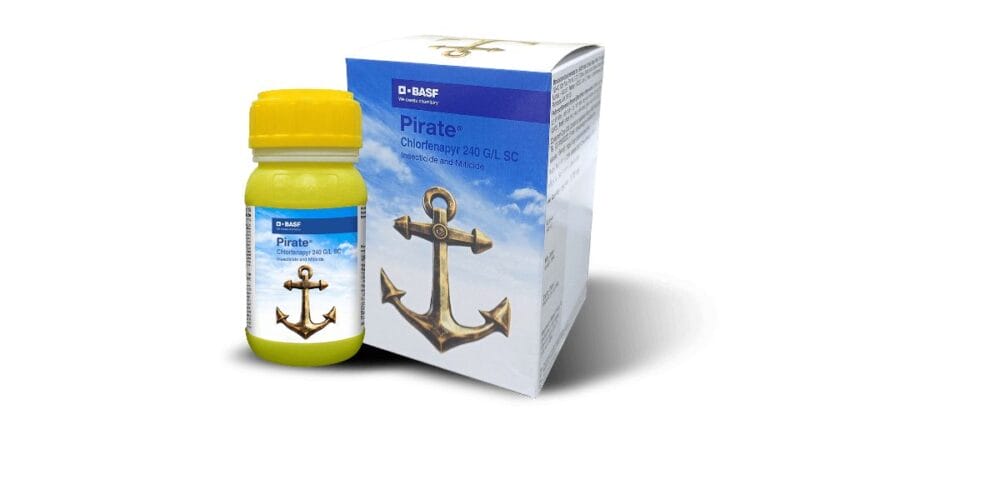
Pirate Insecticide is a highly effective contact and ingestion insecticide developed by BASF, a global leader in agricultural solutions. It contains Chlorfenapyr 10% SC (Suspension Concentrate) as its active ingredient.
Chlorfenapyr belongs to the pyrrole chemical group, which acts by disrupting the pests’ energy production process. Once ingested or absorbed, it causes a metabolic shutdown, leading to pest death within hours.



This unique mode of action makes Pirate different from traditional nerve-based insecticides, ensuring excellent control even on resistant pest populations.
Key Features of Pirate Insecticide
- Active Ingredient: Chlorfenapyr 10% SC
- Formulation Type: Suspension Concentrate
- Mode of Action: Contact and stomach poison
- Chemical Group: Pyrrole group
- Manufacturer: BASF India Ltd
Mode of Action: How Pirate Insecticide Works
Pirate Insecticide works through contact and ingestion activity. When pests come into contact with treated plant surfaces or consume treated leaves, the active ingredient blocks the energy production process (oxidative phosphorylation) in their cells.
This blockage causes the pest to stop feeding almost immediately and die within 24–48 hours. Because it acts on energy production rather than the nervous system, Pirate is effective against insect strains resistant to conventional insecticides, such as pyrethroids, organophosphates, or carbamates.
Benefits of Using Pirate Insecticide
1. Broad-Spectrum Pest Control
Pirate provides excellent control of lepidopteran (caterpillar) pests like bollworms, fruit borers, and leaf-eating caterpillars, which are among the most destructive pests in Indian agriculture.
2. Long-Lasting Protection
Pirate offers residual activity for up to 10–14 days, ensuring prolonged protection during critical crop growth stages.
3. Unique Mode of Action
Its distinct biochemical mode of action helps manage resistant pest populations, making it a key product for resistance management programs.
4. Safe to Crops
Pirate is selective and crop-safe when used as per recommendations, showing no phytotoxicity on major crops like cotton, chili, and vegetables.
5. Compatible with IPM Practices
It integrates well into Integrated Pest Management (IPM) strategies, reducing reliance on conventional insecticides and supporting sustainable farming.
Target Pests Controlled by Pirate Insecticide
Pirate effectively controls the following major pests:
- Cotton: Bollworms, Spodoptera, Helicoverpa armigera
- Chili: Fruit borer, Helicoverpa
- Tomato: Fruit borer
- Cabbage and Cauliflower: Diamondback moth, leaf-eating caterpillars
- Soybean: Spodoptera litura
Recommended Crops and Application Dose
| Crop | Target Pest | Dose/ha | Dilution in Water |
| Cotton | Bollworms, Spodoptera | 1.0 L/ha | 500 L water |
| Chili | Fruit borer | 1.0 L/ha | 500 L water |
| Cabbage | Diamondback moth | 1.0 L/ha | 500 L water |
| Tomato | Fruit borer | 1.0 L/ha | 500 L water |
Application Tip: Use a knapsack or power sprayer to ensure uniform coverage of the crop canopy. Avoid spraying during strong winds or rainfall to prevent runoff and ensure better pest contact.
Best Time and Method of Application
- Apply Pirate at the initial pest infestation stage to prevent heavy damage.
- For best results, monitor pest activity regularly and apply during early larval stages.
- Avoid mixing with alkaline substances or strong oxidizers.
- Rotate with insecticides having different modes of action to delay resistance development.
Precautions for Safe Use
- Always wear protective clothing, gloves, and masks while handling or spraying.
- Do not eat, drink, or smoke during application.
- Keep away from water sources and food storage areas.
- Wash equipment and hands thoroughly after use.
- Store in a cool, dry, and well-ventilated place, away from direct sunlight.
Alternate Products
If Pirate Insecticide is unavailable, farmers can consider the following alternatives (based on crop and pest type):
- Coragen (Chlorantraniliprole 18.5% SC) – for broad-spectrum lepidopteran control.
- Proclaim (Emamectin Benzoate 5% SG) – for effective caterpillar and fruit borer management.
- Belt Expert (Flubendiamide + Thiacloprid) – for dual-action pest control.
However, it’s best to consult an agronomist or crop advisor before switching products for compatibility and resistance management.
FAQs on Pirate Insecticide
Q1: What is the main ingredient in Pirate Insecticide?
A1: Pirate contains Chlorfenapyr 10% SC, a pyrrole-based insecticide.
Q2: How does Pirate control resistant pests?
A2: Pirate targets the pests’ energy metabolism instead of the nervous system, helping control resistant populations effectively.
Q3: Is Pirate safe for beneficial insects?
A3: When applied as recommended, Pirate shows minimal impact on beneficial insects and fits well in IPM programs.
Q4: Can Pirate be mixed with other insecticides?
A4: It is generally compatible, but always conduct a jar test before mixing and avoid alkaline materials.
Final Opinion
Pirate Insecticide stands out as a dependable and innovative pest control solution for Indian farmers. With its unique mode of action, prolonged protection, and broad-spectrum activity, it helps safeguard crops against the toughest caterpillar and borer pests.
By incorporating Pirate into a well-planned pest management program, farmers can achieve healthier crops, improved yields, and sustainable farming success.