Lima Beans Cultivation: Complete Step-by-Step Guide to Grow High-Yield Lema Beans


Lima Beans Cultivation
Lima beans, commonly called Lema beans, are nutritious legumes grown for their tender green pods or mature dry seeds. Rich in protein, fiber, vitamins, and minerals, lima beans are valued both as a food crop and a soil-improving legume.
With proper cultivation practices, farmers and home gardeners can achieve excellent yields. This guide explains everything you need to know about lima beans cultivation, from climate requirements to harvesting and storage.
Table of Contents
Introduction to Lima Beans
Lima beans (Phaseolus lunatus) belong to the legume family. They are available in bush varieties (short duration, compact plants) and pole varieties (climbing type with longer harvest periods). Lima beans are widely cultivated in tropical and subtropical regions due to their adaptability and nutritional benefits.
Climate and Soil Requirements
Climate
Lima beans grow best in warm weather conditions.


- Ideal temperature: 18°C to 30°C
- Sensitive to frost and cold stress
- Require moderate rainfall and good sunlight
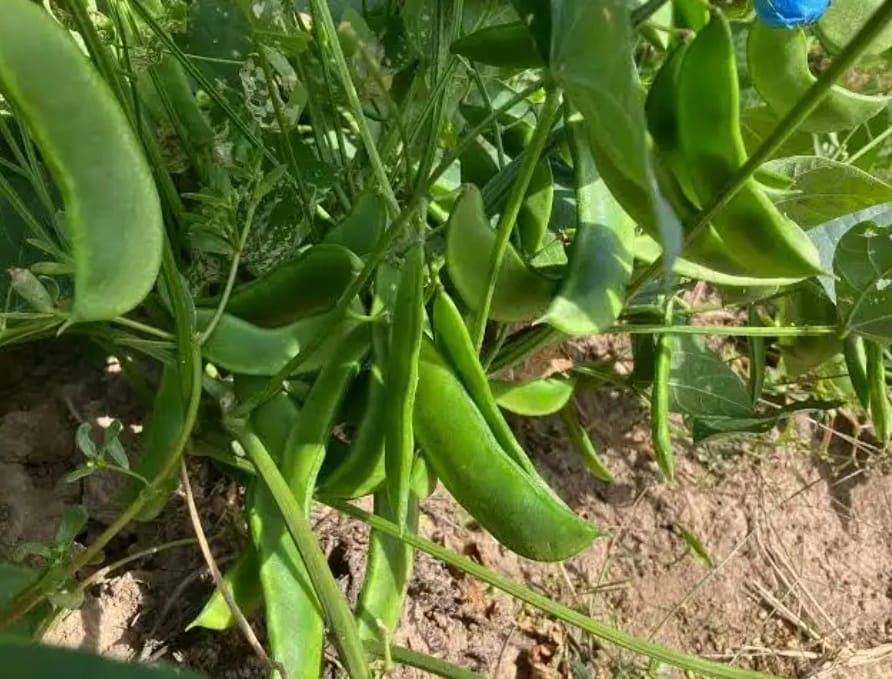
Excessive humidity during flowering may lead to poor pod setting, while prolonged drought affects seed development.
Also Read: Litchi Cultivation: Complete Guide for Successful Farming
Soil
Well-drained fertile soil is essential for good growth.
- Soil type: Sandy loam to loamy soil
- Soil pH: 6.0 to 7.5
- Avoid waterlogged and heavy clay soils
Adding organic matter improves soil structure and nutrient availability.
Land Preparation
Proper land preparation ensures healthy root development.
- Plough the field 2–3 times to achieve fine tilth
- Remove weeds, stones, and crop residues
- Incorporate well-decomposed farmyard manure (10–15 tons per hectare) during final ploughing
Raised beds are recommended in areas with poor drainage.
Seed Selection and Sowing
Seed Rate
- Bush varieties: 25–30 kg per hectare
- Pole varieties: 15–20 kg per hectare
Sowing Time
- Summer crop: February–March
- Kharif crop: June–July
- Rabi crop (in mild climates): October–November
Spacing
- Bush varieties: 45 × 20 cm
- Pole varieties: 75 × 30 cm
Seeds should be sown 3–5 cm deep. Treat seeds with Rhizobium culture to enhance nitrogen fixation.
Manure and Fertilizer Management
Lima beans are legumes and fix atmospheric nitrogen, reducing fertilizer needs.
- Basal dose:
- Nitrogen: 20–25 kg/ha
- Phosphorus: 40–50 kg/ha
- Potassium: 20–30 kg/ha
Apply full phosphorus and potassium and half nitrogen at sowing. The remaining nitrogen can be top-dressed at flowering stage if needed.
Also Read: Top 8 Micronutrient Fertilizers: Importance, Types, Benefits, and Application
Irrigation Management
Adequate moisture is crucial during critical growth stages.
- First irrigation after sowing
- Subsequent irrigations at flowering and pod formation
- Avoid over-irrigation to prevent root rot
Drip irrigation is ideal for water efficiency and better yield.
Weed Control
Weeds compete with crops for nutrients and water.
- First weeding: 20–25 days after sowing
- Second weeding: 40–45 days after sowing
Mulching or shallow hoeing helps suppress weed growth. Herbicides may be used carefully under expert guidance.
Pest and Disease Management
Common Pests
- Aphids
- Pod borers
- Bean beetles
Use neem-based insecticides or integrated pest management practices.
Common Diseases
- Powdery mildew
- Anthracnose
- Root rot
Use disease-resistant varieties, proper crop rotation, and fungicide sprays if necessary.
Harvesting
Harvesting depends on the intended use.
- Green pods: Harvest 60–75 days after sowing
- Dry seeds: Harvest when pods turn brown and dry
Regular harvesting encourages continuous pod formation in bush varieties.
Yield
- Green pod yield: 6–8 tons per hectare
- Dry seed yield: 1.2–1.8 tons per hectare
Yield depends on variety, climate, soil fertility, and crop management.
Post-Harvest Handling and Storage
Dry seeds should be properly sun-dried to reduce moisture content below 10%. Store in airtight containers or moisture-proof bags to prevent pest infestation. For long-term storage, use natural repellents like neem leaves.
Benefits of Growing Lima Beans
- Improves soil fertility through nitrogen fixation
- High nutritional value and market demand
- Suitable for crop rotation systems
- Low fertilizer requirement compared to other crops
Frequently Asked Questions (FAQ)
1. How long does it take to grow lima beans?
Lima beans mature in 60–90 days, depending on the variety and growing conditions.
2. Can lima beans grow in pots?
Yes, bush varieties can be grown in large pots with proper drainage and sunlight.
3. Do lima beans need full sunlight?
Yes, they require 6–8 hours of direct sunlight daily for healthy growth.
4. How often should lima beans be watered?
Water moderately, keeping soil moist but not waterlogged, especially during flowering and pod formation.
5. Are lima beans good for soil health?
Yes, as legumes, they fix atmospheric nitrogen and improve soil fertility.
Also Read: Growing Lima Beans 101


