How to Grow Pine Nuts
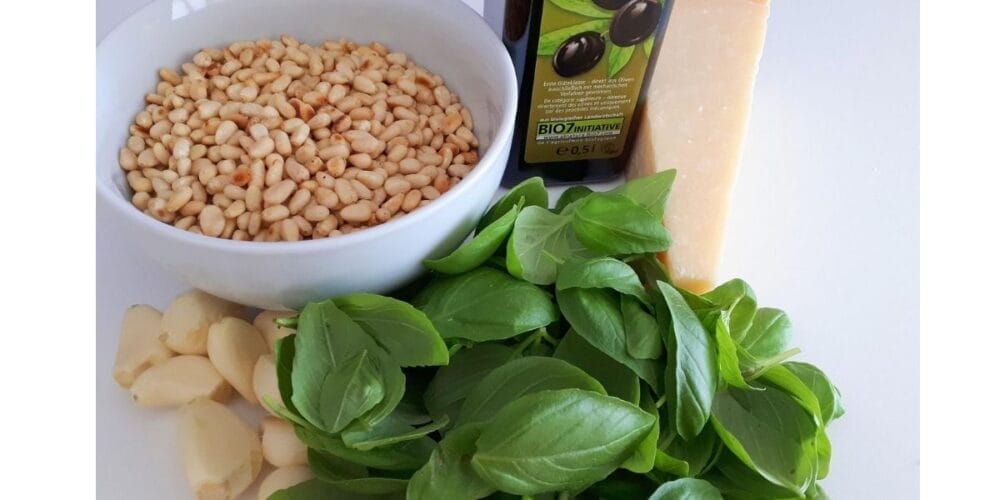
Pine nuts are nutrient-rich edible seeds harvested from certain pine tree species. They are widely used in cooking, especially in pesto, bakery items, and traditional dishes. Although pine trees take time to mature, growing pine nuts can be a rewarding long-term investment for farmers and gardeners. With proper planning, soil preparation, and patience, you can successfully grow pine nut-producing trees.
This guide explains everything you need to know about growing pine nuts, from climate requirements to harvesting and storage.
Table of Contents
What Are Pine Nuts?
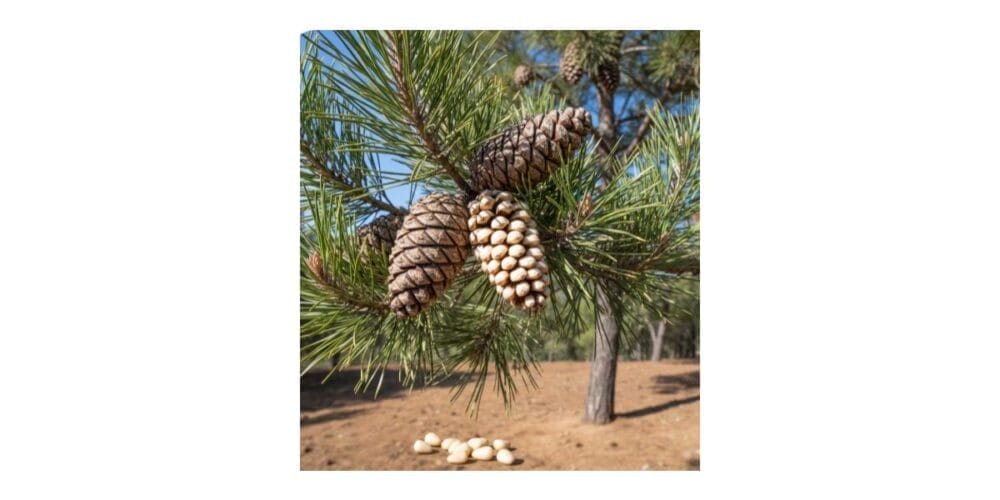
Pine nuts are seeds found inside pine cones of specific pine tree varieties. Not all pine trees produce edible nuts, so selecting the correct species is essential. Pine nut trees are perennial, long-living trees that can produce nuts for decades once mature.
Ideal Climate for Growing Pine Nuts
Pine nut trees grow best in temperate climates. They require:



- Cool winters
- Warm summers
- Low to moderate humidity
- Plenty of sunlight
They are generally suited to hilly or mountainous regions. However, some species adapt well to semi-arid conditions if irrigation is available.
Soil Requirements
Pine trees are adaptable but perform best in:
- Well-drained sandy or loamy soil
- Soil pH between 6.0 and 7.5
- Soil rich in organic matter
Avoid waterlogged soil, as excessive moisture can cause root rot and fungal diseases.
Before planting, mix compost or well-decomposed farmyard manure into the soil to improve fertility and drainage.
Also Read: How to Grow Asafoetida (Hing): Complete Cultivation Guide for Farmers and Gardeners
Propagation Methods
1. Growing from Seeds
This is the most common method.
Steps:
- Collect mature pine cones
- Extract seeds and dry them
- Cold stratify seeds (store in moist sand in refrigerator for 4–8 weeks)
- Sow seeds in nursery trays or polybags
- Transplant seedlings after 1 year
2. Nursery Saplings
Buying nursery-grown saplings saves time and ensures better survival rates. Choose disease-free and healthy plants.
Planting Pine Nut Trees
Spacing
Maintain proper spacing because pine trees grow large.
- Recommended spacing: 6–10 meters between trees
Planting Season
- Best planting time: Early spring or monsoon season
Planting Steps
- Dig a pit (60 cm × 60 cm × 60 cm)
- Fill with topsoil + compost mixture
- Place sapling carefully
- Water immediately after planting
Irrigation Management
Young trees require regular watering.
- First year: Water weekly
- Second to third year: Water every 10–15 days
- Mature trees: Minimal irrigation needed (except drought periods)
Avoid overwatering.
Fertilizer Management
Pine trees are not heavy feeders but respond well to organic nutrition.
Recommended Nutrition
- Apply compost once or twice per year
- Use balanced NPK fertilizer during early growth stage
- Mulching helps conserve moisture and improve soil fertility
Weed Management
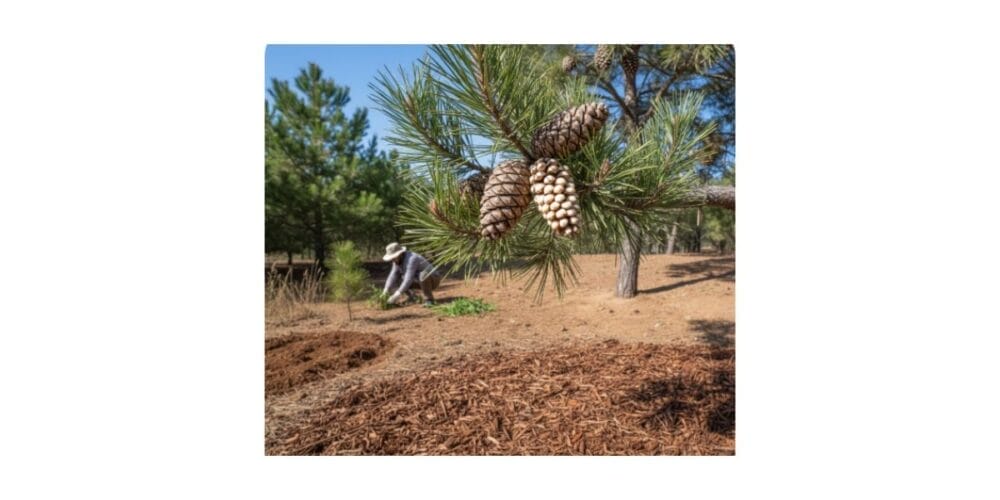
Weeds compete for nutrients and water, especially in early growth stages.
Control methods:
- Manual weeding
- Organic mulching
- Cover cropping
Pest and Disease Management
Pine trees are relatively hardy but may face some issues.
Common Pests
- Bark beetles
- Pine weevils
- Aphids
Common Diseases
- Root rot
- Needle blight
- Fungal infections
Prevention Tips
- Maintain proper spacing
- Avoid waterlogging
- Remove infected plant parts
- Use organic pest control when needed
Growth Timeline and Patience
Pine nut farming requires long-term commitment.
- Seedling stage: 1–3 years
- Tree maturity: 8–15 years
- Full production: 15–25 years
Once mature, trees can produce nuts for decades.
Also read: How to Grow Cinnamon Sticks (Complete Cultivation Guide)
Harvesting Pine Nuts
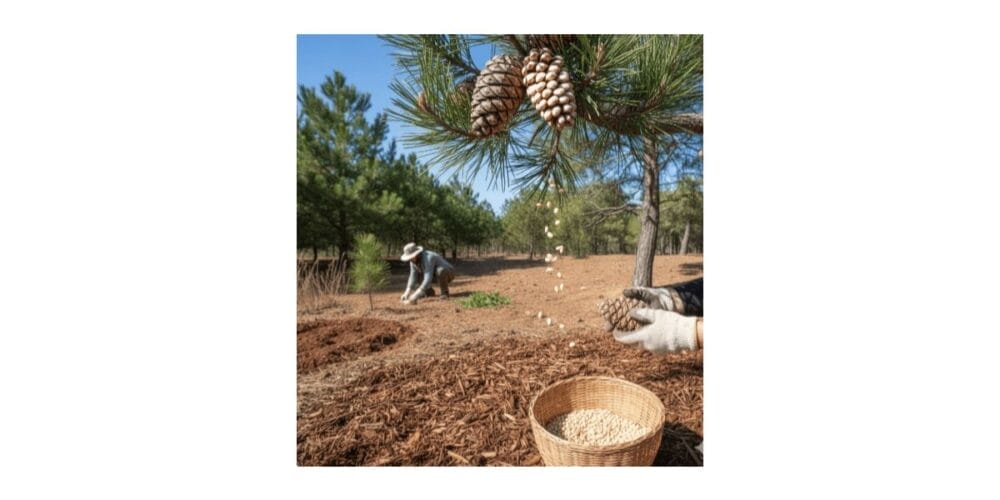
Pine cones take about 18–24 months to mature.
Signs of Maturity
- Cones turn brown
- Cones start opening naturally
Harvesting Method
- Collect cones from tree or ground
- Dry cones in sunlight
- Extract seeds manually or mechanically
Post-Harvest Processing
Steps include:
- Removing shell
- Drying seeds
- Storing in airtight containers
Store pine nuts in cool, dry places to prevent rancidity.
Yield Expectations
Yield varies based on species and growing conditions.
- Mature tree yield: 3–10 kg nuts per tree annually
- Yield improves with tree age
Benefits of Growing Pine Nuts
Economic Benefits
- High market value
- Long-term income source
- Export potential
Environmental Benefits
- Prevents soil erosion
- Improves biodiversity
- Long-living trees store carbon
Nutritional Value
Pine nuts are rich in:
- Healthy fats
- Protein
- Magnesium
- Vitamin E
Challenges in Pine Nut Farming
- Long waiting period before yield
- Requires land space
- Climate limitations in some regions
However, proper planning can overcome most challenges.
Also Read: How to Grow Licorice: Complete Cultivation Guide for Healthy Root Yield
Tips for Success
- Choose suitable species for your climate
- Maintain good drainage
- Use organic manure regularly
- Protect young plants from grazing animals
- Be patient – pine nut farming is long-term
Frequently Asked Questions (FAQs)
Q1. Can pine nuts grow in tropical climates?
Some species adapt to subtropical areas, but most prefer temperate climates.
Q2. How long do pine nut trees live?
Many pine trees can live 50–100 years or more.
Q3. Are pine nuts profitable?
Yes, due to high market demand and premium pricing.
Q4. Can pine nut trees grow in containers?
Only during early nursery stages. Mature trees need open land.
Final Thoughts
Growing pine nuts is a long-term but highly rewarding agricultural investment. With proper climate selection, soil preparation, and consistent care, pine nut trees can provide steady income for generations. While the initial years require patience, the long productive life of pine trees makes them valuable for both commercial farmers and agroforestry systems.
If you focus on healthy seedlings, proper spacing, and organic soil management, you can build a sustainable pine nut plantation with excellent economic and environmental benefits.