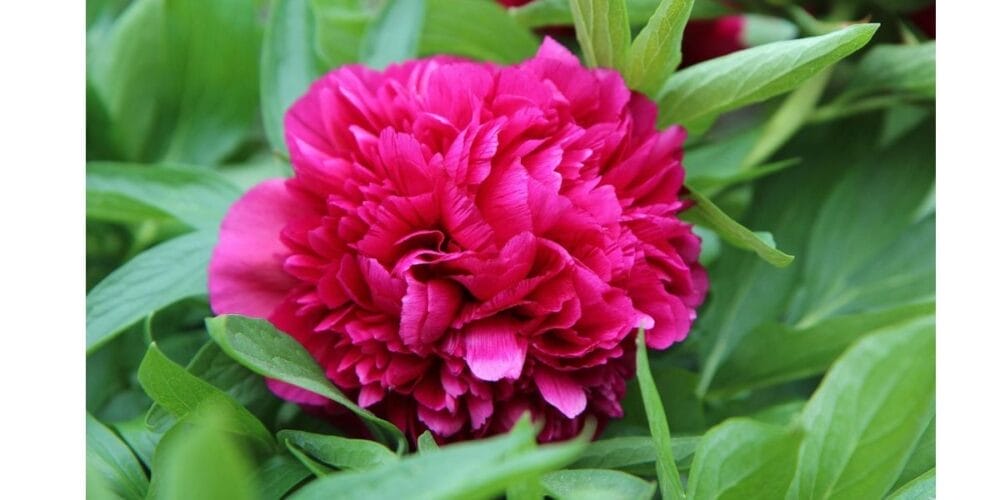
How to Grow Peony
Peonies are among the most beautiful and long-lasting flowering plants you can grow in your garden. Known for their large, fragrant, and colorful blooms, Peony plants can thrive for decades when properly cared for. Whether you’re a beginner gardener or an experienced grower, this comprehensive guide will help you successfully grow healthy and vibrant peonies.
Table of Contents
Introduction to Peony Plants
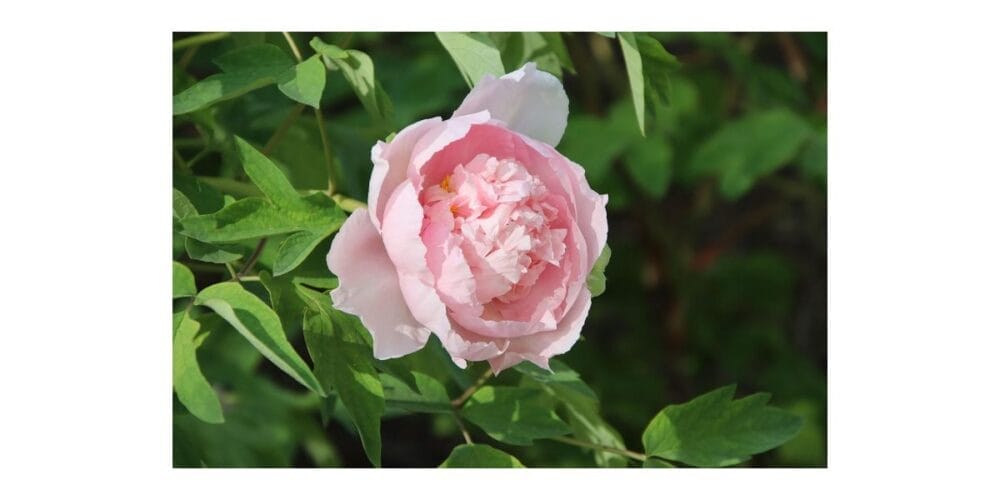
Peonies are perennial flowering plants that bloom in late spring to early summer. They are available in shades of pink, red, white, yellow, and even coral. There are three main types of peonies:
- Herbaceous Peonies – Die back to the ground each winter.
- Tree Peonies – Woody shrubs that retain their structure year-round.
- Intersectional (Itoh) Peonies – A hybrid between herbaceous and tree peonies.
Peonies are popular in landscaping, cut flower production, and ornamental gardening because of their longevity and low maintenance once established.


Ideal Climate and Growing Conditions
Peonies grow best in temperate climates. They require cold winters to bloom properly, as they need a chilling period to break dormancy.
Temperature
- Ideal winter chilling: Below 7°C (45°F) for several weeks
- Growing season temperature: 15–25°C (59–77°F)
Peonies are best suited for regions with distinct winter seasons. In warmer climates, select early-blooming varieties.
Sunlight
Peonies require:
- 6–8 hours of full sunlight daily
- Light afternoon shade in very hot regions
Insufficient sunlight may result in fewer blooms.
Soil Requirements for Peony Cultivation
Peonies prefer fertile, well-drained soil.
Soil Type
- Loamy soil rich in organic matter
- Well-drained and slightly acidic to neutral pH (6.5–7.0)
Soil Preparation
- Mix well-rotted compost or farmyard manure before planting.
- Avoid waterlogged areas, as peonies dislike wet feet.
Raised beds are beneficial in heavy clay soils to improve drainage.
Also Read: Marigold Farming: A Complete Guide to Profitable Flower Cultivation
Propagation Methods
Peonies are mainly propagated through root division.
Root Division (Best Method)
- Best time: Autumn (September–October)
- Carefully dig up a mature plant.
- Divide the root clump so each section has 3–5 eyes (buds).
- Replant immediately.
Avoid planting too deep. The eyes should be only 1–2 inches below the soil surface. Planting too deeply is a common reason for failure to bloom.
Planting Peonies

Spacing
- Space plants 2–3 feet apart for proper air circulation.
Planting Steps
- Dig a hole about 12–18 inches deep.
- Add compost and mix with soil.
- Place the root division with eyes facing upward.
- Cover lightly with soil.
- Water thoroughly after planting.
Do not mulch heavily over the crown, as it may prevent blooming.
Watering and Irrigation
Peonies require moderate watering.
- Water deeply once a week during dry spells.
- Keep soil moist but not soggy.
- Reduce watering after flowering.
Overwatering can lead to root rot and fungal diseases.
Fertilizer Management
Peonies are not heavy feeders, but balanced nutrition improves bloom quality.
Recommended Fertilizer
- Apply balanced fertilizer (10-10-10) in early spring.
- Use compost or organic manure annually.
Avoid excessive nitrogen, as it promotes leaf growth at the expense of flowers.
Pruning and Maintenance
Deadheading
- Remove spent flowers to encourage healthy plant growth.
Seasonal Pruning
- Herbaceous peonies: Cut back foliage to ground level in late autumn.
- Tree peonies: Prune lightly to maintain shape.
Staking
Large blooms can become heavy and droop. Use plant supports or rings to keep stems upright.
Common Pests and Diseases
Peonies are generally hardy but may face a few problems.
Common Issues
- Botrytis blight (gray mold)
- Powdery mildew
- Aphids
Management Tips
- Ensure proper spacing for airflow.
- Remove infected foliage promptly.
- Use organic fungicides if necessary.
Avoid overhead watering to reduce fungal infections.
Also Read: Pansy Flowers Cultivation: A Complete Guide for Beginners
Flowering and Harvesting
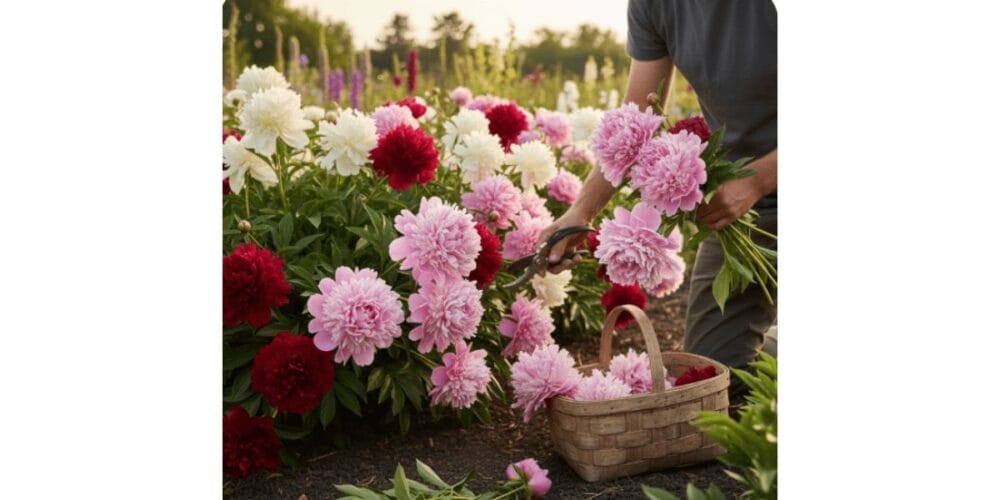
Peonies typically bloom in late spring to early summer.
Flowering Timeline
- Blooming begins in the second or third year after planting.
- Each plant may produce multiple blooms once mature.
Harvesting for Cut Flowers
- Cut when buds are soft like a marshmallow.
- Use sharp, clean tools.
- Leave enough foliage to support root growth.
Peonies make excellent cut flowers and can last up to a week in a vase.
Growing Peonies in Containers
Yes, peonies can be grown in pots!
Container Tips
- Choose a large container (at least 18 inches deep).
- Ensure proper drainage holes.
- Use high-quality potting mix.
- Protect roots from extreme winter freezing.
Container-grown peonies may require more frequent watering.
Benefits of Growing Peonies
- Long lifespan (can live 50+ years)
- Low maintenance once established
- Fragrant and attractive blooms
- Excellent for landscaping and floral arrangements
- Deer-resistant plant
Peonies add elegance and value to any garden.
Frequently Asked Questions (FAQs)
1. Why is my peony not flowering?
Common reasons include planting too deep, insufficient sunlight, or immature plants.
2. How long do peonies take to bloom?
Usually 2–3 years after planting.
3. Can peonies grow in tropical climates?
They prefer cold winters, so blooming may be limited in tropical regions.
4. Do peonies need a lot of fertilizer?
No, moderate feeding is sufficient.
Also Read: Sunflower Cultivation: A Complete Guide for Farmers
Final Thoughts
Growing peonies is a rewarding experience for any gardener. With proper sunlight, well-drained soil, and correct planting depth, these magnificent flowers will bloom year after year with minimal care. Their longevity and breathtaking blooms make them one of the best perennial plants for home gardens.
If you’re looking for a flowering plant that combines beauty, fragrance, and durability, peonies are an excellent choice. Start planting this autumn, and enjoy stunning blossoms for decades to come!