How to Grow Black Pepper
Black pepper, also known as Piper nigrum, is one of the most valuable spice crops in the world and is often called the “King of Spices.” It is widely grown in tropical regions and is highly profitable due to strong global demand. Whether you want to grow it in your garden or on a farm, black pepper cultivation is rewarding when done correctly.
This guide explains climate, soil, planting, care, and harvesting — everything you need to successfully grow black pepper.
Table of Contents
Introduction to Black Pepper
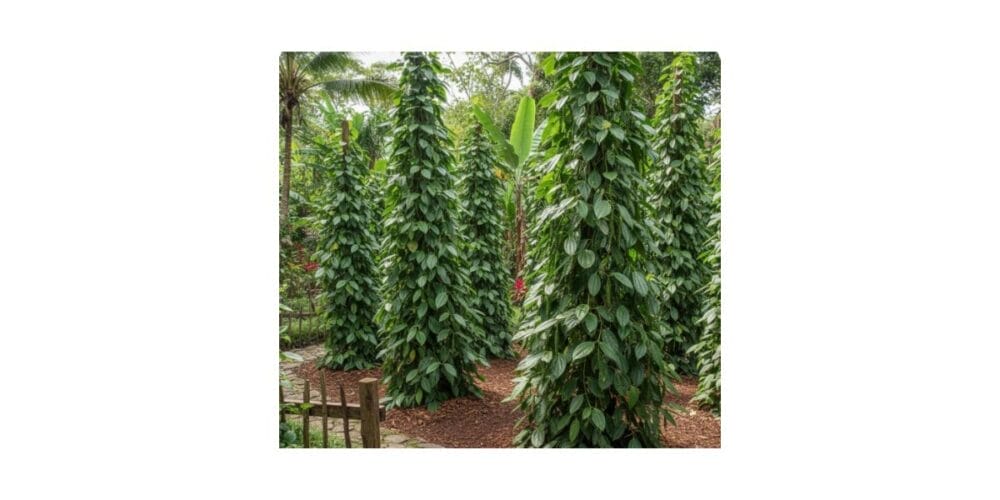
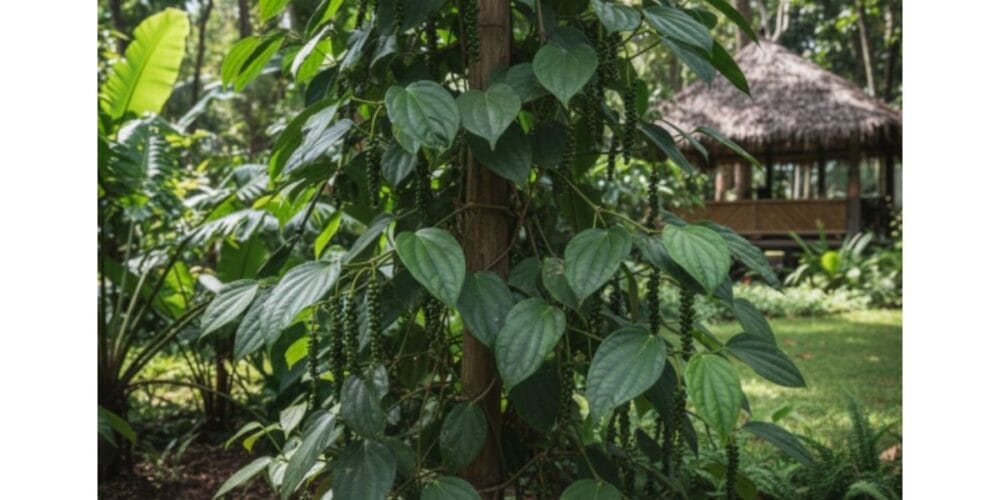
Black pepper is a perennial climbing vine grown for its dried berries (peppercorns). It requires support to climb and can grow up to 10 meters in height under proper conditions.
The crop thrives in tropical climates and plays an important role in global spice trade and local farming income.


Ideal Climate for Growing Black Pepper
Black pepper grows best in warm, humid tropical climates.
Key Climate Requirements:
- Temperature: 20°C – 30°C ideal range
- Rainfall: Around 2000–3000 mm annually
- Humidity: 70–90% preferred
- Partial shade is beneficial, especially during early growth stages
High humidity and evenly distributed rainfall help improve flowering and berry formation.
Soil Requirements
Black pepper prefers fertile, well-drained soil rich in organic matter.
Ideal Soil Conditions:
- Soil Type: Red loam, sandy loam, or clay loam
- Soil pH: 4.5 – 6.5 slightly acidic soil
- Must have excellent drainage (waterlogging causes root rot)
Adding compost, farmyard manure, or organic matter improves soil fertility and moisture retention.
Also Read:How to Grow Caraway: Complete Cultivation Guide for Beginners and Farmers
Propagation and Planting
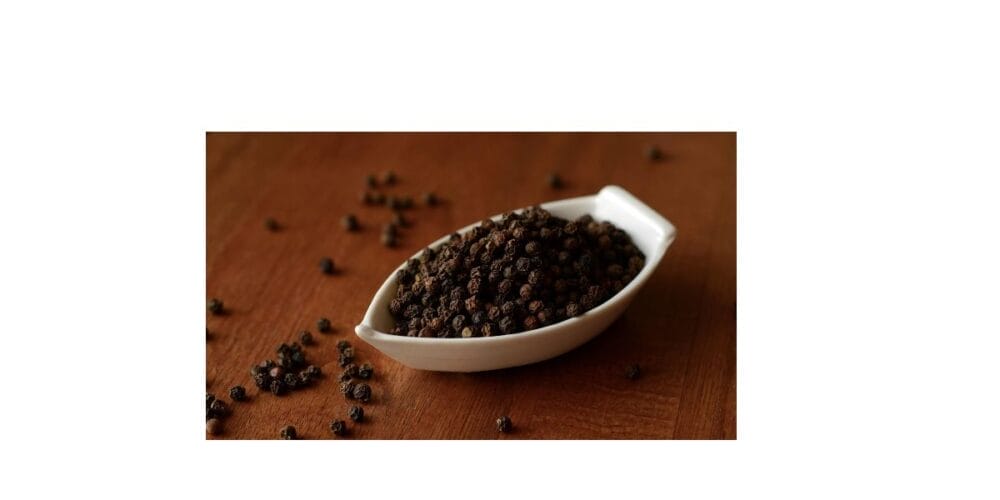
Black pepper is usually grown from stem cuttings.
Propagation Steps:
- Use runner shoot cuttings with 2–3 nodes
- Root cuttings in nursery beds or polybags before transplanting
Planting Time:
- Best planting season: May to September (monsoon period)
Spacing:
- Maintain spacing of 3–5 meters between plants
Support System:
Since black pepper is a climber, it needs support like:
- Arecanut tree
- Coconut tree
- Mango tree
- Artificial poles or trellis
Manure and Fertilizer Management
Proper nutrition is important for vine growth and yield.
Recommended Nutrient Practices:
- Apply 10 kg farmyard manure per plant annually
- Balanced NPK fertilizers improve plant growth
- Apply nutrients about 30 cm away from plant base
Organic manure improves soil structure and supports long-term productivity.
Irrigation and Water Management
Black pepper requires consistent moisture but cannot tolerate waterlogging.
Irrigation Guidelines:
- Irrigate once every 2 weeks during winter
- Provide more frequent irrigation during summer
- Stop irrigation during heavy rains
Mulching helps conserve soil moisture and control temperature.
Pruning and Training
Pruning helps improve yield and plant health.
- Remove excess terminal shoots
- Control unwanted vine growth
- Train vines properly on support trees
Proper training allows better sunlight exposure and airflow.
Also Read: How to Grow Bay Leaf (Complete Cultivation Guide)
Pest and Disease Management
Common pests and diseases include:
- Flea beetles
- Scale insects
- Quick wilt disease
- Slow wilt disease
Regular monitoring and proper soil drainage help reduce disease risk.
Flowering and Harvesting
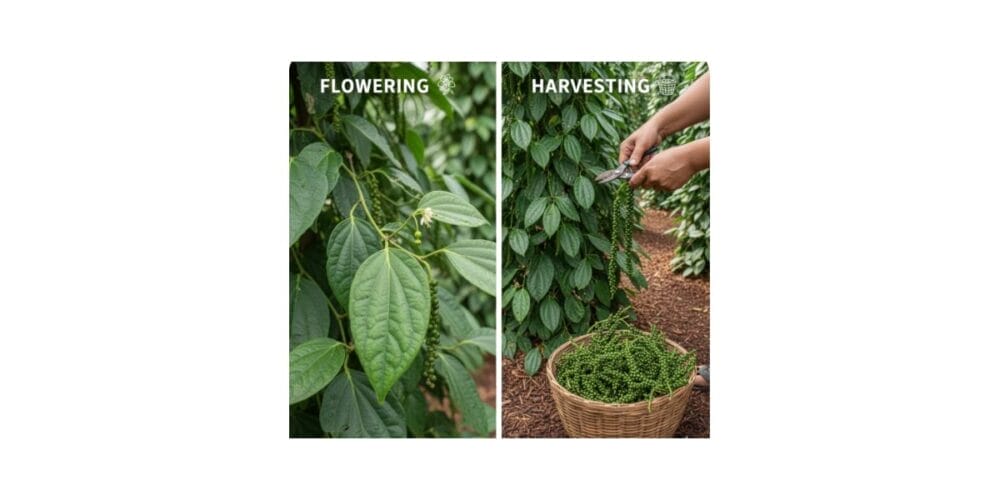
Black pepper plants usually start bearing after a few years depending on conditions.
Harvesting:
- Harvest when berries turn mature green to slightly yellow
- Harvest season usually November to March
Hand harvesting ensures better quality spice.
Yield Expectation
Yield depends on variety and management.
- First year yield: About 500 kg per acre
- Mature plants: 1000–1500 kg per acre
Proper care can maintain production for several years.
Tips for Successful Black Pepper Cultivation
Grow in partial shade
Maintain good drainage
Use organic manure regularly
Provide strong support for vines
Maintain high humidity
Also Read: How to Grow Mace: Complete Cultivation Guide for Farmers and Gardeners
Benefits of Growing Black Pepper
- High market demand and export value
- Long-term perennial crop
- Suitable for mixed cropping systems
- Profitable spice crop
Conclusion
Growing black pepper requires warm climate, fertile soil, proper support, and good moisture management. Once established, the crop can provide yield for many years with proper care. Farmers and gardeners in tropical regions can successfully grow black pepper by following scientific cultivation practices.
If managed properly, black pepper can become a highly profitable and sustainable spice crop.