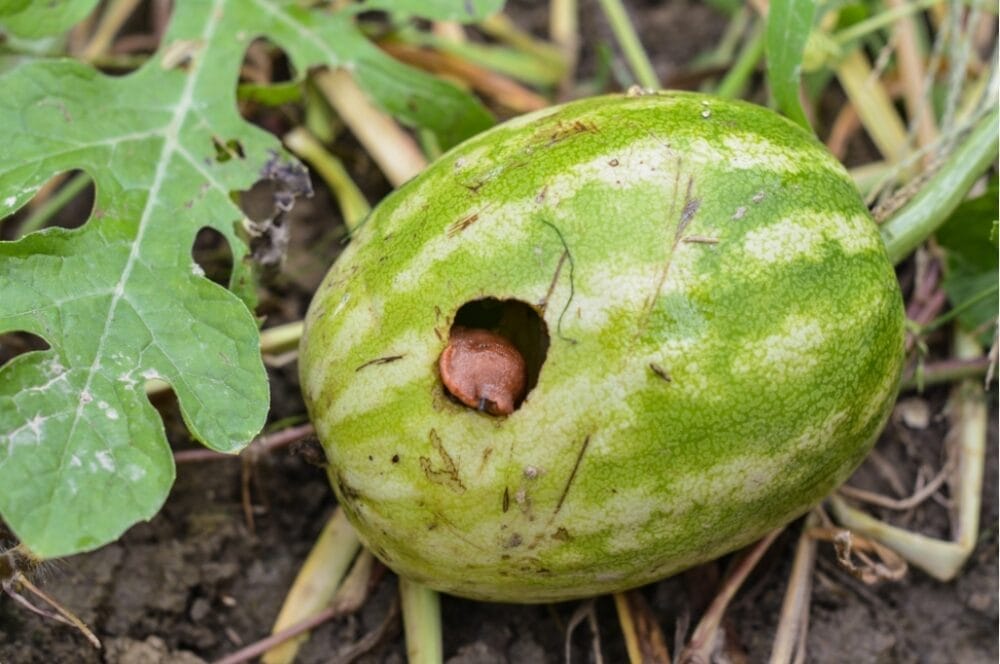
Diseases of Watermelon
Watermelon is one of the most popular summer fruits grown across tropical and subtropical regions. It is valued for its refreshing taste, high water content, and good market demand. However, watermelon cultivation is often affected by various diseases caused by fungi, bacteria, viruses, and nematodes.
These diseases can reduce yield, deteriorate fruit quality, and sometimes cause complete crop failure if not managed properly. Understanding the common diseases of watermelon, their symptoms, and control measures is essential for successful cultivation.
Table of Contents
1. Fusarium Wilt
Fusarium wilt is one of the most destructive fungal diseases of watermelon, caused by Fusarium oxysporum f. sp. niveum. It is a soil-borne disease and can persist in the soil for many years.
Symptoms:
Initial symptoms include yellowing of older leaves, followed by wilting during the daytime that may recover at night. As the disease progresses, the entire plant wilts permanently and dies. When the stem is cut open, brown discoloration of vascular tissues can be observed.


Management:
Use disease-resistant varieties, practice crop rotation with non-cucurbit crops for 3–4 years, and ensure good soil drainage. Soil solarization and seed treatment with fungicides or biocontrol agents like Trichoderma can help reduce infection.
Also Read: Pomegranate Diseases: Identification, Causes, and Effective Management
2. Anthracnose
Anthracnose is caused by the fungus Colletotrichum orbiculare and is common in warm and humid conditions.
Symptoms:
Small, dark, water-soaked spots appear on leaves, which enlarge and turn brown or black. On fruits, circular sunken lesions develop, often with pinkish spore masses in the center. Severe infection leads to defoliation and fruit rot.
Management:
Use certified disease-free seeds, avoid overhead irrigation, and maintain proper field sanitation. Regular spraying of recommended fungicides and growing resistant varieties can effectively manage anthracnose.
3. Downy Mildew
Downy mildew, caused by Pseudoperonospora cubensis, is a serious foliar disease of watermelon.
Symptoms:
Yellow, angular spots appear on the upper surface of leaves, while grayish-purple fungal growth develops on the underside. Leaves dry up rapidly, leading to reduced photosynthesis and poor fruit development.
Management:
Plant early to escape peak disease periods, ensure good air circulation, and apply fungicides at the first sign of disease. Removing infected plant debris also helps prevent spread.
4. Powdery Mildew
Powdery mildew is caused by fungi such as Erysiphe cichoracearum and Podosphaera xanthii.
Symptoms:
White, powdery fungal growth appears on leaves, stems, and sometimes fruits. Infected leaves turn yellow, dry, and fall off prematurely, affecting fruit size and sweetness.
Management:
Grow resistant varieties, avoid excessive nitrogen fertilization, and spray sulfur-based or systemic fungicides as needed.
Also Read: Can coconut really fight disease?
5. Gummy Stem Blight
This disease is caused by Didymella bryoniae and affects leaves, stems, and fruits.
Symptoms:
Brown to black lesions appear on stems and leaves. Sticky, amber-colored gummy ooze may be seen on infected stems. Fruits develop dark, sunken spots and may rot.
Management:
Use disease-free seeds, practice crop rotation, remove infected plant parts, and apply fungicides during humid conditions.
6. Bacterial Fruit Blotch
Bacterial fruit blotch is caused by Acidovorax citrulli and is particularly damaging to watermelon fruits.
Symptoms:
Water-soaked spots appear on young fruits, which later enlarge and become dark green or brown. Cracks may develop, and fruits become unmarketable.
Management:
Use pathogen-free seeds, avoid working in wet fields, and follow strict field sanitation. Copper-based bactericides can provide partial control.
7. Mosaic Virus Diseases
Watermelon is affected by several viruses such as Watermelon mosaic virus (WMV) and Cucumber mosaic virus (CMV).
Symptoms:
Mosaic patterns of light and dark green appear on leaves, along with leaf distortion and stunted plant growth. Fruits may be malformed and show uneven coloring.
Management:
Control insect vectors like aphids, remove infected plants immediately, use reflective mulches, and grow virus-resistant varieties when available.
8. Root-Knot Nematode
Although not a disease in the traditional sense, root-knot nematodes cause severe damage to watermelon roots.
Symptoms:
Roots develop galls or knots, leading to poor nutrient uptake. Plants show stunted growth, yellowing, and reduced yield.
Management:
Practice crop rotation, use nematode-resistant rootstocks, apply organic amendments, and maintain healthy soil conditions.
Conclusion
Diseases are a major challenge in watermelon cultivation, but timely identification and integrated disease management can significantly reduce losses. Using resistant varieties, maintaining field hygiene, practicing crop rotation, and applying appropriate control measures are key to producing healthy and high-yielding watermelon crops.
Frequently Asked Questions (FAQ)
Q1. What is the most common disease in watermelon?
Fusarium wilt and anthracnose are among the most common and damaging diseases of watermelon.
Q2. How can I prevent watermelon diseases naturally?
Crop rotation, proper spacing, good drainage, use of organic compost, and biocontrol agents help reduce disease incidence naturally.
Q3. Are watermelon diseases seed-borne?
Yes, some diseases like anthracnose and bacterial fruit blotch can be transmitted through infected seeds.
Q4. Can viral diseases in watermelon be cured?
No, viral diseases cannot be cured. Prevention through vector control and removal of infected plants is the best approach.
Q5. When should fungicides be applied in watermelon?
Fungicides should be applied preventively or at the first appearance of disease symptoms, especially during humid and rainy weather.
Also Read: An Ultimate Guide To Watermelon Diseases: Causes, Symptoms And Control Measures