Diseases of Spinach
Spinach (Spinacia oleracea) is a fast-growing leafy vegetable valued for its rich nutrient content and high market demand. However, spinach cultivation is often challenged by several diseases that can significantly reduce yield and leaf quality.
Because spinach is mainly grown for its tender leaves, even minor disease symptoms can make the crop unmarketable. Understanding the common diseases of spinach, their symptoms, causes, and control measures is essential for farmers and home gardeners alike.
Table of Contents
1. Downy Mildew
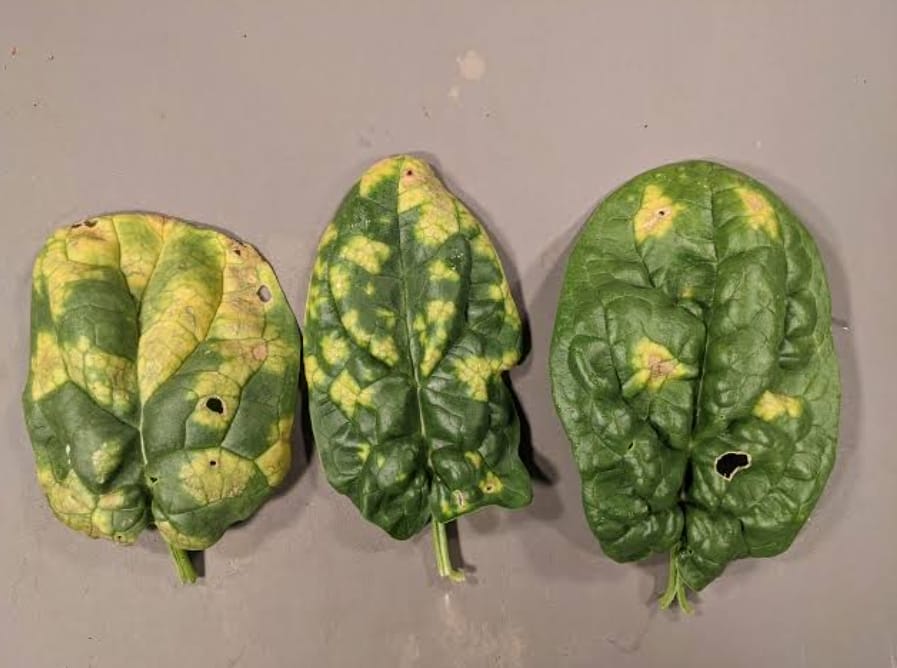
Downy mildew is the most destructive disease of spinach worldwide. It is caused by the fungus-like organism Peronospora farinosa f. sp. spinaciae.
Symptoms:
Yellow to pale green spots appear on the upper surface of leaves, while a grayish-purple mold develops on the underside. In severe cases, leaves curl, turn brown, and die prematurely.



Favorable conditions:
Cool temperatures (10–18°C) and high humidity or prolonged leaf wetness encourage disease development.
Management:
- Grow resistant or tolerant spinach varieties
- Avoid overhead irrigation
- Ensure proper plant spacing for air circulation
- Remove infected plant debris
- Use recommended fungicides if disease pressure is high
Also Read: Why Tomato Cages Are Actually Terrible
2. Damping-Off
Damping-off is a common problem during the seedling stage, caused by soil-borne fungi such as Pythium, Rhizoctonia, and Fusarium species.
Symptoms:
Seeds fail to germinate, or young seedlings collapse at the soil line and die. Infected roots appear brown and decayed.
Favorable conditions:
Poorly drained soils, excessive watering, and cool, wet conditions.
Management:
- Use well-drained, sterilized soil
- Avoid overwatering
- Treat seeds with fungicide or bio-control agents
- Practice crop rotation
3. White Rust
White rust, caused by Albugo occidentalis, is a serious disease affecting spinach leaves and stems.
Symptoms:
White, blister-like pustules appear on the underside of leaves, while yellow spots form on the upper surface. Severely infected leaves become distorted and unfit for consumption.
Favorable conditions:
Cool and moist weather conditions favor rapid disease spread.
Management:
- Remove and destroy infected plants
- Avoid dense planting
- Practice crop rotation
- Apply suitable fungicides when necessary
4. Cercospora Leaf Spot
This fungal disease is caused by Cercospora beticola and can significantly reduce leaf quality.
Symptoms:
Small, circular to irregular brown spots with gray centers appear on older leaves. As the disease progresses, spots enlarge and may coalesce, causing leaf blight.
Favorable conditions:
Warm temperatures and high humidity.
Management:
- Remove infected leaves
- Maintain field sanitation
- Avoid overhead irrigation
- Apply fungicides if the disease becomes severe
Also Read: Diseases of Marigold: Identification, Symptoms, and Management
5. Anthracnose
Anthracnose is caused by Colletotrichum species and affects spinach leaves, petioles, and stems.
Symptoms:
Water-soaked spots develop on leaves, which later turn dark brown or black. Lesions may expand and cause leaf tearing.
Favorable conditions:
Warm, humid weather and frequent rainfall.
Management:
- Use disease-free seeds
- Practice crop rotation
- Remove infected plant debris
- Apply appropriate fungicides
6. Fusarium Wilt
Fusarium wilt is a soil-borne disease caused by Fusarium oxysporum.
Symptoms:
Yellowing of older leaves, wilting during the day, and stunted plant growth. Roots show discoloration and decay.
Favorable conditions:
Warm soil temperatures and continuous spinach cultivation in the same field.
Management:
- Use resistant varieties
- Improve soil drainage
- Follow long crop rotations
- Avoid planting in infected fields
7. Viral Diseases (Spinach Mosaic Virus)
Spinach is also affected by viral diseases such as Spinach mosaic virus (SMV), transmitted mainly by aphids.
Symptoms:
Mosaic patterns, leaf curling, stunted growth, and reduced leaf size.
Management:
- Control aphid populations
- Remove infected plants promptly
- Use virus-free seeds
- Maintain weed-free fields
General Prevention Tips for Spinach Diseases
- Select certified, disease-free seeds
- Maintain proper spacing and good air circulation
- Follow crop rotation with non-host crops
- Avoid excessive nitrogen fertilization
- Keep fields clean and free from plant debris
Integrated disease management combining cultural, biological, and chemical methods is the most effective way to protect spinach crops from diseases.
Frequently Asked Questions (FAQ)
Q1. What is the most common disease of spinach?
Downy mildew is the most common and economically damaging disease of spinach, especially in cool and humid conditions.
Q2. Can spinach diseases spread through seeds?
Yes, some diseases like damping-off and certain fungal infections can be seed-borne. Using certified disease-free seeds is highly recommended.
Q3. How can I control spinach diseases organically?
Organic control methods include crop rotation, proper spacing, compost use, neem-based sprays, and bio-fungicides such as Trichoderma.
Q4. Is it safe to eat spinach affected by diseases?
Leaves with visible disease symptoms should not be consumed, as they may have poor quality and reduced nutritional value.
Q5. How does weather affect spinach diseases?
Cool, wet, and humid weather favors fungal diseases like downy mildew and white rust, while warm and humid conditions promote leaf spot diseases.
Q6. Can crop rotation reduce spinach diseases?
Yes, rotating spinach with non-leafy crops for 2–3 years helps break the disease cycle and reduces soil-borne pathogens.
Q7. When should fungicides be applied to spinach?
Fungicides should be applied preventively or at the first sign of disease, following recommended guidelines and safety intervals.
Also Read: Protect Spinach All Season Long