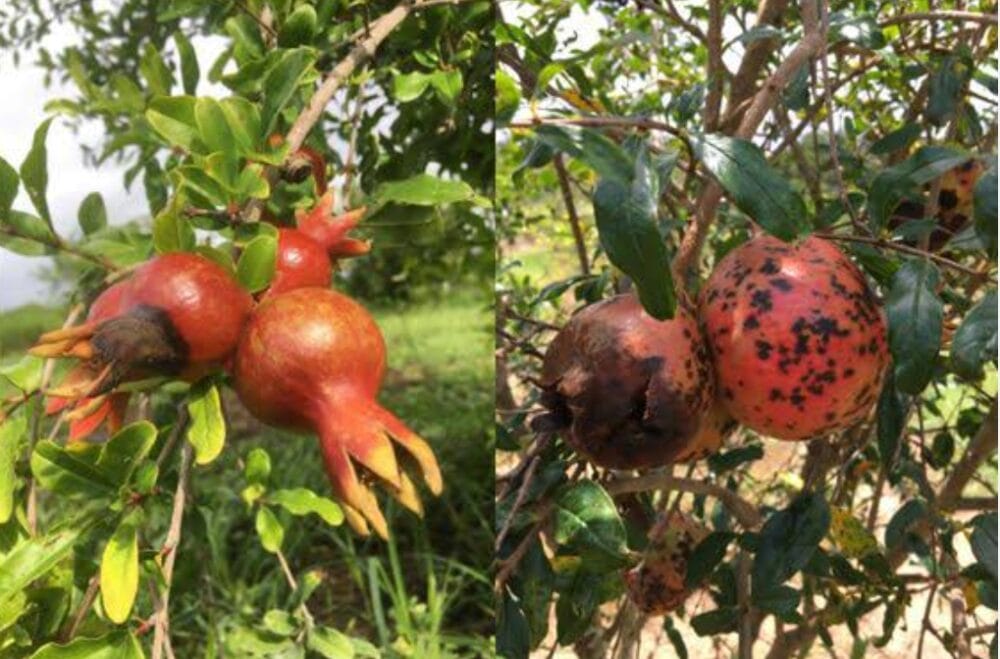
Pomegranate Diseases
Pomegranate (Punica granatum) is a high-value fruit crop widely cultivated in India due to its strong market demand, nutritional benefits, and export potential. However, pomegranate cultivation faces several challenges, especially from diseases that can severely affect plant health, fruit quality, and yield.
Proper identification and timely management of pomegranate diseases are essential for sustainable and profitable farming.
This article discusses the major diseases affecting pomegranate plants, their causes, symptoms, and effective control measures.
Table of Contents
Importance of Disease Management in Pomegranate
Diseases in pomegranate can cause flower drop, fruit cracking, premature fruit fall, and even complete crop loss if not managed properly. Most diseases spread rapidly under high humidity, poor orchard sanitation, and improper irrigation practices. Integrated disease management combining cultural, biological, and chemical methods helps reduce losses and improves fruit quality.


Major Diseases of Pomegranate
1. Bacterial Blight
Bacterial blight is one of the most destructive diseases of pomegranate, commonly found in tropical and subtropical regions.
Symptoms:
- Small water-soaked spots on leaves that turn black
- Cracking and black lesions on fruits
- Premature fruit drop
- Twig dieback in severe cases
Causes:
This disease is caused by Xanthomonas axonopodis and spreads through rain splash, wind, infected planting material, and pruning tools.
Management:
- Use disease-free planting material
- Prune infected branches and destroy them
- Spray copper-based fungicides or streptocycline at recommended doses
- Maintain proper plant spacing and airflow
Also Read: Major Diseases of Maize (Corn) and Their Management
2. Fruit Rot
Fruit rot is a common post-flowering disease that reduces market value and shelf life.
Symptoms:
- Soft, brown or black patches on fruit surface
- Fungal growth on affected fruits
- Foul smell during advanced stages
Causes:
Caused by fungi such as Alternaria, Aspergillus, and Penicillium, especially under humid conditions.
Management:
- Avoid waterlogging and overhead irrigation
- Remove and destroy infected fruits
- Spray fungicides like carbendazim or mancozeb
- Harvest fruits carefully to avoid injuries
3. Leaf Spot Disease
Leaf spot disease affects photosynthesis and overall plant vigor.
Symptoms:
- Small brown or black spots on leaves
- Yellowing and premature leaf fall
- Reduced fruit size and yield
Causes:
This disease is mainly caused by fungal pathogens such as Cercospora and Colletotrichum.
Management:
- Maintain orchard hygiene
- Avoid overcrowding of plants
- Apply neem oil or appropriate fungicides
- Ensure balanced nutrient application
4. Wilt Disease
Wilt disease can kill young and mature pomegranate plants.
Symptoms:
- Sudden wilting of leaves
- Yellowing followed by drying of the entire plant
- Root discoloration and decay
Causes:
Soil-borne fungi such as Fusarium and Rhizoctonia are responsible.
Management:
- Improve soil drainage
- Apply Trichoderma-based biofungicides
- Avoid continuous monocropping
- Remove severely affected plants
Also Read: Sunflower Cultivation: A Complete Guide for Farmers
5. Anthracnose
Anthracnose mainly affects leaves, flowers, and fruits.
Symptoms:
- Dark sunken lesions on fruits
- Leaf spots with yellow halos
- Flower drop and poor fruit set
Causes:
Caused by Colletotrichum gloeosporioides, thriving in warm and humid climates.
Management:
- Regular pruning to improve air circulation
- Spray copper fungicides or chlorothalonil
- Avoid excessive nitrogen fertilization
Preventive Measures for Pomegranate Diseases
- Select resistant varieties where available
- Maintain proper spacing and pruning
- Use drip irrigation instead of flood irrigation
- Follow crop rotation practices
- Apply organic manures and biofertilizers
- Monitor orchards regularly for early disease detection
Conclusion
Diseases pose a serious threat to pomegranate cultivation, but with proper knowledge and timely action, their impact can be minimized. Integrated disease management practices, including good orchard hygiene, balanced nutrition, biological control, and judicious use of chemicals, play a crucial role in maintaining healthy pomegranate plants.
Farmers who adopt preventive measures and regular monitoring can ensure higher yields, better fruit quality, and improved profitability.
Frequently Asked Questions (FAQ)
Q1. What is the most common disease in pomegranate?
Bacterial blight is the most common and damaging disease affecting pomegranate crops.
Q2. How can bacterial blight be controlled naturally?
Regular pruning, orchard sanitation, neem oil sprays, and proper spacing help reduce infection.
Q3. Does high humidity increase pomegranate diseases?
Yes, high humidity and rainfall create favorable conditions for fungal and bacterial diseases.
Q4. Can pomegranate diseases spread through tools?
Yes, infected pruning tools can spread diseases; tools should be disinfected regularly.
Q5. Which irrigation method is best to prevent diseases?
Drip irrigation is best as it prevents excess moisture and reduces disease spread.
Q6. Are biofungicides effective for pomegranate diseases?
Yes, biofungicides like Trichoderma are effective against soil-borne diseases.
Q7. When should fungicides be applied?
Fungicides should be applied at early disease stages or as a preventive spray during humid conditions.